Quieting the Mind: Using Art to Combat Anxiety in Teens and Young Adults
Today's teens face unprecedented levels of stress and anxiety. In the United States, approximately 31.9 % of adolescents have experienced an anxiety disorder. More recently, one national study found the percentage of children and adolescents reporting anxiety symptoms increased from 7.1 % in 2016 to 10.6 % in 2022. These trends are amplified by academic pressures, social media comparison, economic uncertainty, and existential concerns. These factors make the teenage years feel less stable and more vulnerable than ever before. Because anxiety often shows up not only in thoughts, but in the body and behavior, young people may have a hard time articulating what's happening or finding tools that feel personal and effective.
Creative expression through art, however, offers a powerful bridge. When words fail or feel insufficient, art helps young people externalize their worries, visualize calm, and engage in self regulation through color, texture, and form. For teens grappling with anxiety, art therapy and expressing through art provide a safe, accessible, and nonverbal way to process complex emotions.
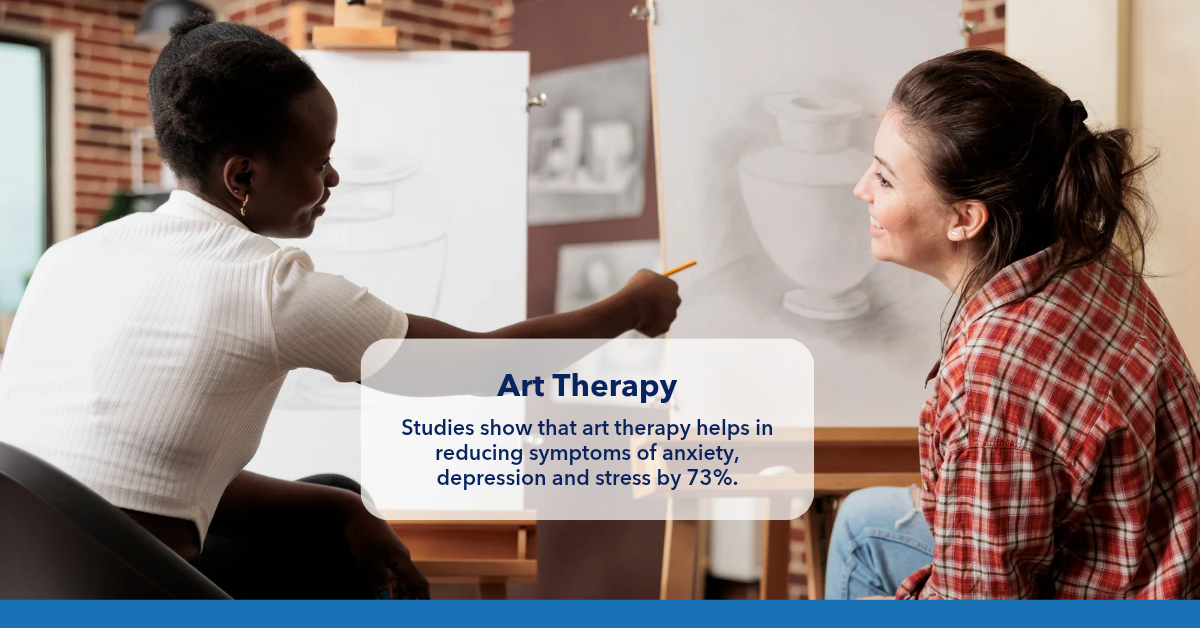
Psychiatric Mental Health Nurse Practitioners (PMHNPs) may incorporate art therapy as an adjunctive intervention in the treatment of anxiety disorders to facilitate emotional expression and stress reduction. Creative modalities provide patients with a nonverbal outlet for externalizing distress, enhancing self-awareness, and promoting adaptive coping. In many psychiatric settings, art based activities are integrated into the plan of care, and PMHNPs must remain informed about all therapeutic interventions to ensure coordinated, patient centered treatment. Additionally, art making can be encouraged as a self directed strategy, offering patients a healthy, sustainable way to manage anxiety outside clinical encounters.
By incorporating these creative strategies into school or college wellness programs, counselors, educators, healthcare professionals, and other school and community leaders can offer students not just coping skills, but a new language of hope, resilience, and self-expression.
Organizations
American Art Therapy Association (AATA)
The AATA is a U.S. non-profit professional and educational organization dedicated to advancing art therapy as a regulated mental-health profession. They support practitioners, students, research, and policy. For children and adolescents: their "Children" section highlights how art making allows expression beyond words, helps create safety, and offers coping tools.
Free Arts focuses on engaging underserved youth through culturally and linguistically responsive art workshops. Their programs provide safe, supportive spaces where children and teens can begin healing from trauma or mental health needs and build communication, critical thinking, and advocacy skills.
Art4Healing offers workshops for children, teens, and families facing crises. For example, they have programs for at-risk adolescents ("Raging Colors: Expressive Painting for Teens") where the process of creating abstract art is used as a vehicle to reflect on feelings, frustrations, and life challenges.
Kids & Art uses arts to heal children's hearts and minds while their bodies are undergoing serious illness or treatment, acknowledging stress/anxiety/trauma from diagnosis and treatment. They position the art programs as a "healing pathway to the imagination" that offers relief from anxiety.
Save the Children – HEART (Healing & Education Through the Arts)
The HEART program uses expressive arts (drawing, painting, drama, music) to help children and youth (ages approximately 3–25) process feelings, experiences, and ideas in emotionally supportive settings. It has a strong evidence base for stress reduction, well-being, and psychosocial support.
Research
The Effects of Art Therapy Interventions on Anxiety in Children and Adolescents: A Meta-analysis
This meta-analysis included six studies with a total of 422 participants (children and adolescents) investigating the impact of art therapy interventions (versus control) on anxiety symptoms. The standardized mean difference indicated a sizeable effect of art therapy for reducing anxiety in this population. They also highlight that the effect appeared stronger for state anxiety (anxiety in particular situations) than trait anxiety (enduring predisposition).
Art Therapy for Psychosocial Problems in Children and Adolescents
This review looked at art therapy (AT) interventions for children and adolescents with psychosocial problems (including anxiety, depression, behavioral issues) up to January 2020. Out of 1,299 studies screened, 37 met criteria (16 RCTs, 8 controlled trials, 13 pre-post designs). The review found significant positive effects of AT across various psychosocial outcomes.
This randomized experimental study involved 40 children and adolescents (with osteosarcoma) who were assigned to either usual care or usual care + eight sessions of Group Drawing Art Therapy. The intervention group had significantly lower anxiety after intervention compared to control. Self‐acceptance (SAQ) also improved significantly in the intervention group.
This study involved 21 adolescents aged 13–18 with Type 1 Diabetes Mellitus. They completed pre- and post-measures (Beck Anxiety Inventory, Beck Depression Inventory, Pediatric Quality of Life Scale) during a 12-week art therapy program (90 minutes once per week). After the intervention, significant improvements were found in anxiety, depression, and quality of life.
This quasi-experimental study included preschool children experiencing hospitalization (23 in art therapy group, 25 in play therapy group). Each group underwent 3 sessions of 30 minutes of their assigned intervention (drawing for art therapy; play for play therapy). Both groups showed significant decreases in anxiety (Facial Affective Scale) after intervention.
This older but influential article discusses how clinical art therapy with adolescents can be particularly effective because adolescents often resist traditional talk-therapies; art therapy offers a non-threatening medium for expression. The paper highlights that distressed adolescents may be disinterested in seeking help from adults, but artmaking opens a route for them to express inner concerns that are hard to verbalize. It reports on clinical observations that art therapy supports adolescents facing abuse, depression, low self‐regard, or academic/social failure.
This systematic review examined creative arts‐based interventions for youth with traumatic stress, anxiety, negative mood. The results suggest that these interventions may be effective in reducing symptoms.
Online Art Therapy in Elementary Schools
This article examines online/digital arts‐based interventions (including art therapy) implemented in elementary school settings during COVID-19, focusing on psychological distress (including anxiety, depression, and inattention). The study suggests that arts activities delivered virtually in schools can help reduce psychological distress in young children, including anxiety.
Effect of Art Therapy on Adolescents' Mental Health
This study (or review) examines art therapy's impact on adolescent mental health broadly, finding positive effects regardless of prior artistic experience. The authors note that the benefits span emotional and physical health, and argue for integrative approaches, further research into diagnoses, and educational settings.
Art Therapy for Treating Anxiety in Adolescents with Psychosomatic Diseases
This article investigated adolescents with psychosomatic disorders (PSD) and anxiety. The authors conclude that art therapy contributed to normalizing emotional state, provided new problem-solving experiences, and improved quality of life.
In College
Art Therapy: How Your Inner Bob Ross Will Relieve Your Anxiety
This article is written from a graduate-student perspective, emphasizing how art therapy can help during high-stress academic periods. It emphasizes that you don't have to be good at "art" to benefit. The point is creative expression and shifting into a different mode of mind than intense thinking. The author explains that engaging in painting, sculpting, or drawing provides a break from the cognitive load of grad school and helps reduce anxiety.
Brushing Away Stress: 21 Art Therapy Activities for Self-Expression and Healing
This is a comprehensive list of 21 art-therapy style projects and prompts suitable for people of any level of skill, including college-aged individuals. Activities include: mandala drawing, self-portrait work, collage making, clay sculpting, painting to music, nature-inspired art, color-your-mood, abstract art, vision boards, mask-making, etc. The article explains the "why" behind each activity and emphasizes that the process matters more than the product.
Art Therapy Helps College Students Cope with Mental Woes
This article looks at how college students themselves are using art therapy and artmaking to manage anxiety, depression, and stress. It includes student quotes: one student says drawing "forces my brain to focus on motor control and eye/hand coordination so I can't think about much else." Another describes using collage to externalize thoughts and lighten emotional load. Also discusses how simply engaging in creative activity can help reduce anxiety, and points to activities such as journaling, coloring, digital art, and collages.
Relieving Stress and Anxiety Through Art Therapy
This article describes a credit-bearing course at Lebanon Valley College titled "ART 170 Creative Wellness Studio" designed for all majors, with the express purpose of reducing stress and anxiety through creative projects (oil, pastel, collage, acrylic paint, even AI). The class is pass/fail, so grades/competition stress are removed, and the aim is wellness through art.
Art Therapy in Orange County, CA: Navigating College Stress
This blog article focuses on art therapy for college students navigating stress, anxiety, transitions, identity issues, and mental health challenges. It includes discussion of how art therapy can be integrated into clinical care (for example, art therapy sessions offered through campus counseling or community clinics) and gives suggestions for individual practice: choosing your medium, creating visual metaphors for stress/worry, building an "art kit" for emergency use when anxious.
Benefits of Art Therapy for Mental and Physical Health
This article outlines the broad evidence base for art therapy: how the creative process helps reduce anxiety, stress, boost emotional resilience, self confidence, and cognitive functioning. It notes that making art can reduce cortisol levels, support flow states, allow non-verbal emotional processing, and be integrated into daily routines. It also emphasizes that art therapy is not just for children but for "people of all ages and backgrounds."
Experiencing Art Creation as a Therapeutic Intervention to Reduce Anxiety Among College Students
This is a peer-reviewed research article exploring how direct art creation interventions (including the use of clay board slapping, etc.) reduced anxiety among participants. While not limited to college students, the study offers data on anxiety reduction through tangible art processes. The key finding: art creation helped reduce anxiety, especially when the activity allowed for bodily engagement and externalization of emotion.
This academic review focuses specifically on graduate populations, exploring how art therapy helps reduce anxiety and depression. It examines how factors such as identity development, academic pressure, transition to adult roles, and heavy workloads make this demographic unique, and how creative expressive therapies fit their needs.
Art Therapy Worksheets for Teens
Many of these worksheets are adaptable for older adolescents/college-aged students who may still appreciate structured art therapy prompts, identity explorations, mask-making, self reflective drawing, etc. The worksheets include downloadable PDFs, prompts, and facilitator notes.
Books
Art Therapy for Kids and Teens: A Creative Guide to Nurturing Confidence and Calm
This guide is specifically written for both children and adolescents and offers creative art-therapy techniques aimed at reducing anxiety, improving focus, and building self confidence. It includes projects like rock painting, journaling with art, visualizing safe/peaceful places, and prompts for managing worry. For teens especially, the focus on "confidence and calm" pairs well with anxiety reduction.
Essential Art Therapy Exercises: Effective Techniques to Manage Anxiety, Depression, and PTSD
This book is less age specific but highly relevant: it provides a cognitive‐behavioral framework of art therapy exercises aimed at managing anxiety, depression, and trauma. While the audience is older (adolescents and adults in many cases), many of the techniques are readily adaptable for teens. The exercises provoke reflection, externalization of thoughts/feelings via art, and building coping skills.
Art Therapy for Anxious Teens: A Coloring Book to Calm Your Mind
This is a coloring/activity book geared explicitly for anxious teens: combining art therapy principles with coloring, patterns, and prompts to calm and regulate. The format is accessible to teens by framing it as more of a self-help/creative workbook. Because coloring is low-threat, many anxious teens may engage with it more readily than with talk therapy only. It includes mindful coloring pages, prompts to reflect on feelings, and spaces for drawing.
Coloring Book For Teens: Anti‑Stress Designs Vol 1
This coloring book is designed for teens, featuring "anti‐stress designs" (mandalas, geometric patterns, teen oriented imagery) and emphasizing the meditative, therapeutic benefits of coloring. The book highlights how coloring can increase focus, be meditative, and reduce stress, which are key elements in anxiety reduction.
Square the Circle: Art Therapy Workbook
This workbook emphasizes art‐therapy prompts that help the mind quiet, focus, and shift from internal dialogue to the creative process. It has visuals, drawings, prompts, and spaces for creation.
Anxiety Relief Coloring Book for Teens: Creativity to Find Calm
This coloring book explicitly positions itself as for teens dealing with stress/anxiety. It highlights colors, patterns, and creativity as tools to improve mood and enter a calmer headspace. The description emphasizes that coloring is a great way to relax and offers fun, inspiring images for mood improvement.
The Anxiety Workbook for Teens: Activities to Help You Deal with Anxiety & Worry
This is a workbook aimed at teens dealing with anxiety. It includes activities to build coping skills, recognize anxious thoughts, and develop self confidence. This could be paired with art based prompts.
Arts Therapies with Children and Adolescents
This is a scholarly collection focusing on arts therapies (including visual arts, music, drama, dance) with children and adolescents. It includes research, theory, and practice examples. It presents evidence and frameworks for how expressive arts support young people's mental health.
This coloring book is for Adults & Teens and emphasizes stress and anxiety relief through intricate patterns and mindful artmaking. For teens, it offers a low-threat, self directed creative activity to decompress, focus, and regulate emotion.
Videos
Art Therapy Activity for Anxiety, Grounding, & Mindfulness: Therapeutic Art Projects at Home
This video walks viewers through a creative art activity designed for grounding and mindfulness when anxious or overwhelmed. It suggests simple materials and provides a variation to make it engaging. The host emphasizes that you don't need to have great drawing skills: the emphasis is on process, not product.
Using Art Therapy to Communicate with Children
In this video, art therapist Melissa Weaver (ATR, MA) from Bradley Hospital talks about how everyday materials (household items) can be used in collaborative art projects for children, to facilitate communication between children and parents (or children and therapists).
Leaf Mandala Painting ‑ Art Therapy Series for Adolescents
Designed for adolescents, this video focuses on leaf mandala painting; a structured, soothing art activity. The video explains that the mandala symbolizes unity/harmony/balance, and creating it helps slow the mind and focus attention. For teens experiencing anxiety, this kind of structured art can help shift attention, regulate arousal, and provide a tangible outcome they can be proud of.
Emotional Check In Through Art (Art Therapy Activity)
Hosted by Erica Pang Art, this video invites viewers to do an emotional check-in via art: to pause, acknowledge how they feel, and then create a visual piece that gives voice to what's inside. The host encourages a consistent self check practice. After the art portion, the video invites reflection.
Art Therapy Activity for Stress Management
This beginner-friendly art therapy project by Thirsty for Art guides viewers in an intuitive art creation (imagery + intuition) aimed at coping with stress. The focus is on tapping into internal calm, using art as a mechanism for processing, soothing, and externalizing internal states.
How to Draw Your Feelings + Painting Emotions
This video demonstrates how to draw feelings and paint emotions using mediums like oil pastels and watercolor. The host guides through the process step-by-step, emphasizing that this is about expression and exploration rather than perfect art. The underlying concept is that anxiety often involves feelings that don't have words; this activity gives an expressive channel.
This video is designed for kids & teens and introduces the Circle of Control" therapeutic tool. It helps learners sort out what's within their control vs. what's outside, a central concept in managing anxiety. The video explains that focusing energy on what can be controlled rather than ruminating on what cannot helps reduce worry and stress.
Self‑Care for Teens: Art Therapy at Home
In this video, a professional art therapist (ToniAnn Eisman) shows how teens can practice art therapy at home as part of self care. It emphasizes that you don't need a therapy room or special equipment and provides ideas for creative activity tied to emotional regulation and stress/anxiety relief.
Art Therapy Exercise ‑ Exploring Emotional Needs
This video presents a home based art therapy exercise using only crayons/paper (or simple materials) to explore emotional needs: "What do I need? What do I want? What would make me feel better?" etc.
Podcasts
Paint It Out Boxing and Creativity with Robyn Spodek-Schindler
In this episode of Creative Therapy Umbrella, art therapist Robyn Spodek‑Schindler (LCAT, LPC, ATR-BC) discusses how she works with children and adolescents experiencing anxiety, depression, anger, self-esteem issues, and peer/family challenges. The interview explores one of her specialty interventions called "Paint it Out Boxing," a creative process where youth use paint and expressive movement to externalize stress/anxiety.
How Art and Music Can Improve Mood, Decrease Anxiety, and Empower Today's Youth
This episode features Brette Genzel‑Derman, founder of a youth-focused therapy program integrating art and music. She speaks about how youth anxiety increased during the pandemic and how creative expression in group therapy helped adolescents.
Hosted by Karly Nimmo, this podcast engages mental-health professionals and explores how creativity and self-expression relate to mental well-being. Episodes include stories of lived experience and exploration of creative arts as therapeutic or supportive practice.
This Teenage Life – Episode: "How Art Helps Us"
In this episode from the series about teenage life experiences, teens talk about how they use art in their lives particularly in times of stress, loneliness or emotional struggle. The episode reflects youth voices directly. It provides rich insight into how young people themselves experience creative expression and its link to emotional well-being.
A podcast produced by a Canadian art therapist, it poses the question "What is Art Therapy?" and explores art-therapy in its many forms. Episodes cover different populations and contexts.
Fair Use Statement: Please share our content for editorial or discussion purposes. Please link back to this page and give proper credit to RegisteredNursing.org.
Latest Articles & Guides
One of the keys to success as a registered nurse is embracing lifelong learning. Our articles and guides address hot topics and current events in nursing, from education to career mobility and beyond. No matter where you are on your nursing journey, there’s an article to help you build your knowledge base.
Browse our latest articles, curated specifically for modern nurses.