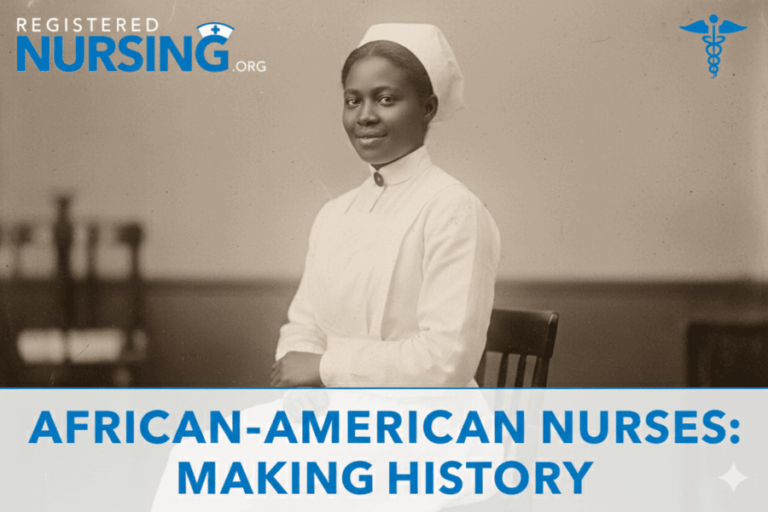
African American nurses have played a foundational role in shaping U.S. healthcare, advancing both the nursing profession and health equity despite systemic barriers. From early pioneers who broke racial and professional boundaries to modern leaders in education, advocacy, and clinical care, their contributions have expanded access, elevated standards, and strengthened culturally competent care. Their legacy continues through ongoing leadership, mentorship, and professional organizations dedicated to improving outcomes for diverse communities.
KEY TOPICS -
Foundational impact: African American nurses have been essential to U.S. healthcare, advancing patient care despite systemic racial barriers.
Pioneering leadership: Early Black nurses broke professional and educational boundaries, helping legitimize nursing as a respected field.
Equity and advocacy: These nurses drove integration, expanded access to training, and promoted culturally competent care.
Enduring legacy: Their influence continues through leadership, education, and organizations focused on workforce diversity and health equity.
Notable African-American Nurse Pioneers: A Timeline Shaping U.S. Healthcare
The nursing profession has a long and prestigious history of African-American nurses who dared to break cultural norms to offer care to their communities. Black nurses such as Harriet Tubman, Mary Eliza Mahoney, and Lillian Holland Harvey did not let the sentiments of their time prevent them from improving not only the lives of those around them but the profession of nursing as a whole.
Mid-19th Century: Care Under Constraint
This era reflects informal but essential nursing care delivered amid slavery, war, and extreme racial barriers.
Harriet Tubman
Harriet Tubman (1820-1913), the American Abolitionist, is famously known for her work helping slaves travel the Underground Railroad to seek freedom. As a Civil War nurse, Ms. Tubman was essential to the troops who were infected with dysentery and smallpox, using natural and herbal remedies for treatment and healing. She was also essential to the Union military commanders as a spy with her knowledge of the surrounding areas and her ability to blend into Confederate-controlled areas. After the war, Harriet Tubman continued her nursing work and started a home for the elderly. She was eventually awarded a military pension for her service during the Civil War and was buried with military honors upon her death.
Late 19th Century: Entry Into Professional Nursing
Mary Eliza Mahoney
Mary Eliza Mahoney (1845-1926) is noted for being the first African American nurse to be licensed. In 1878, at 33 years old and 10 years after beginning her employment at The New England Hospital for Women and Children, Mary Eliza was admitted to one of the first integrated nursing schools in the United States. Out of 42 students who entered the program, Mary Eliza was one of four who completed the year-long intensive program, and the only African American. Ms. Mahoney spent many years as a private nurse, during which she continued to advocate for the profession of nursing and for the integration of Black nurses into institutions. She joined the Nurses Associated Alumnae of the United States and Canada, which later became the American Nurses Association (ANA), but found the organization uninviting to black nurses. In 1908, Mary Eliza co-founded the National Association of Colored Graduate Nurses (NACGN) and was a lifetime member. Prior to her death, Mary Eliza championed women's rights and was among the first women to register to vote in Boston in 1920. To this day, the ANA (which incorporated the NACGN in 1949) honors the Mary Mahoney Award to those nurses who exemplify integration in their field.
Her achievement marked a turning point, signaling the formal entry of Black women into the nursing profession despite widespread exclusion.
Early 20th Century: Organization and Advocacy
Martha Minerva Franklin
Martha Minerva Franklin was a trailblazer in nursing organization and professional advocacy. As a co-founder of the National Association of Colored Graduate Nurses with Adah Belle Thomas, she worked tirelessly to combat exclusion from state and national nursing associations. Franklin was known for her strategic use of conferences, publications, and lobbying to challenge segregation in nursing. Her efforts laid the groundwork for the later integration of African American nurses into the American Nurses Association.
Their work focused on combating segregation in nursing education, professional associations, and public service roles, laying the foundation for systemic change.
World Wars I & II: Military Service and Integration
Adah Belle Thoms
Adah Belle Thoms was a pioneering nurse leader and civil rights advocate who played a critical role in integrating African American nurses into the U.S. military and professional nursing organizations. She served as acting director of nursing at Tuskegee Institute and was instrumental in pushing for Black nurses' inclusion in the American Red Cross during World War I. Thoms also co-founded the National Association of Colored Graduate Nurses (NACGN), strengthening collective advocacy at a national level. Her leadership helped formalize pathways for African American nurses into mainstream nursing institutions.
Nancy Leftenant-Colon
Nancy Leftenant-Colon was the first African American nurse commissioned as an officer in the U.S. Army Nurse Corps. Facing overt racial discrimination, she persisted and became a powerful symbol of military integration within nursing. Her service helped accelerate the desegregation of military nursing roles during the mid-20th century. Leftenant-Colon's career represents a pivotal intersection of nursing, civil rights, and military history.
Mid-20th Century: Educational Leadership and Policy Influence
This period reflects a shift from access to influence, as Black nurses began shaping policy, curriculum, and professional standards nationwide.
Estelle Massey Osborne
Estelle Massey Osborne was the first African American nurse to earn a master's degree in nursing and one of the most influential nurse educators of the 20th century. She worked to desegregate nursing education and expand opportunities for Black nurses at historically white institutions. Osborne later served on the faculty at New York University and became the first Black nurse elected to the American Nurses Association board. Her work helped elevate nursing education standards nationwide while advancing racial equity within the profession.
Late 20th Century–Present: Institutional Impact and Legacy
Professional organizations such as the National Black Nurses Association continue this legacy through leadership development, advocacy, and health equity initiatives.
Lillian Holland Harvey
Lillian Holland Harvey (1912-1994) received her nursing diploma in 1939, her first step in a long journey of education. Her bachelor's degree in 1944 led to a master's in 1948 and eventually her doctorate from Columbia University in 1966. Dr. Harvey's intensity toward education and learning landed her the first director of nurse training at the Tuskegee School for Nurses, a historically black nursing school that offered only 3-year degree programs. Once she became Dean, Dr. Harvey initiated the process to turn the diploma program school into a full baccalaureate nursing program, becoming the first in the state of Alabama. During WWII, she used her position as Dean to create training programs and opportunities for black nurses to join the Army Nurse Corps. Dr. Harvey served as the Dean of Nursing at Tuskegee Institute for 25 years until her retirement in 1973. During her reign, she strove to improve integration on many levels in the state of Alabama, including attending the Alabama Nurses Association where she was required to sit in a separate section. A recipient of the Mary Mahoney Award from the ANA, Dr. Harvey also has an award in her name by the Alabama Nurses Association, among many of her legacy achievements.
African-American Nurses Improving Healthcare: Organizational Milestones and Institutional History
Professional Exclusion and the Need for Collective Action
The advancement of African American nurses has been shaped not only by individual pioneers but by the creation of professional organizations formed in response to systemic exclusion. In the late 19th and early 20th centuries, African American nurses were routinely denied membership in state nursing associations and national professional bodies, limiting their access to employment, leadership roles, and professional recognition. These barriers made collective organization essential to advancing equity within the nursing profession.
The National Association of Colored Graduate Nurses (NACGN)
Founded in 1908, the National Association of Colored Graduate Nurses (NACGN) was established to advocate for African American nurses who were excluded from mainstream nursing organizations, including the American Nurses Association. The NACGN provided a unified national platform for professional advocacy, educational advancement, and civil rights engagement within healthcare. Through sustained lobbying and public advocacy, the organization played a critical role in advancing desegregation in nursing education, military nursing service, and professional membership. In 1951, the NACGN formally dissolved after African American nurses were granted full membership in the American Nurses Association, marking a significant institutional milestone.
Integration and Its Limitations
While integration into national nursing organizations represented a major step forward, it did not eliminate disparities in leadership representation, professional advancement, or health outcomes affecting Black communities. Structural inequities persisted within the profession, highlighting the limits of formal inclusion without dedicated advocacy. This period revealed that integration alone was insufficient to address the unique challenges facing African American nurses and the populations they served.
The National Black Nurses Association (NBNA)
In response to these ongoing challenges, the National Black Nurses Association (NBNA) was founded in 1971. Unlike earlier efforts focused primarily on access, the NBNA emphasized leadership development, policy influence, and health equity. The organization sought to strengthen the professional voice of African American nurses while directly addressing disparities in healthcare delivery, workforce diversity, and educational opportunity.
Enduring Institutional Impact
Today, the National Black Nurses Association represents tens of thousands of nurses through a nationwide network of local chapters. It continues to play a central role in advancing culturally competent care, supporting the nursing education pipeline through scholarships and mentorship, and influencing public health policy. Together, the NACGN and NBNA demonstrate how African American nurses built enduring institutions that reshaped the profession and expanded its ethical and social responsibility.
Latest Articles & Guides
One of the keys to success as a registered nurse is embracing lifelong learning. Our articles and guides address hot topics and current events in nursing, from education to career mobility and beyond. No matter where you are on your nursing journey, there’s an article to help you build your knowledge base.
Browse our latest articles, curated specifically for modern nurses.
Amanda Bucceri Androus is a Registered Nurse from Sacramento, California. She graduated from California State University, Sacramento in 2000 with a bachelor's degree in nursing. She began her career working night shifts on a pediatric/ med-surg unit for six years, later transferring to a telemetry unit where she worked for four more years. She currently works as a charge nurse in a busy outpatient primary care department. In her spare time she likes to read, travel, write, and spend time with her husband and two children.