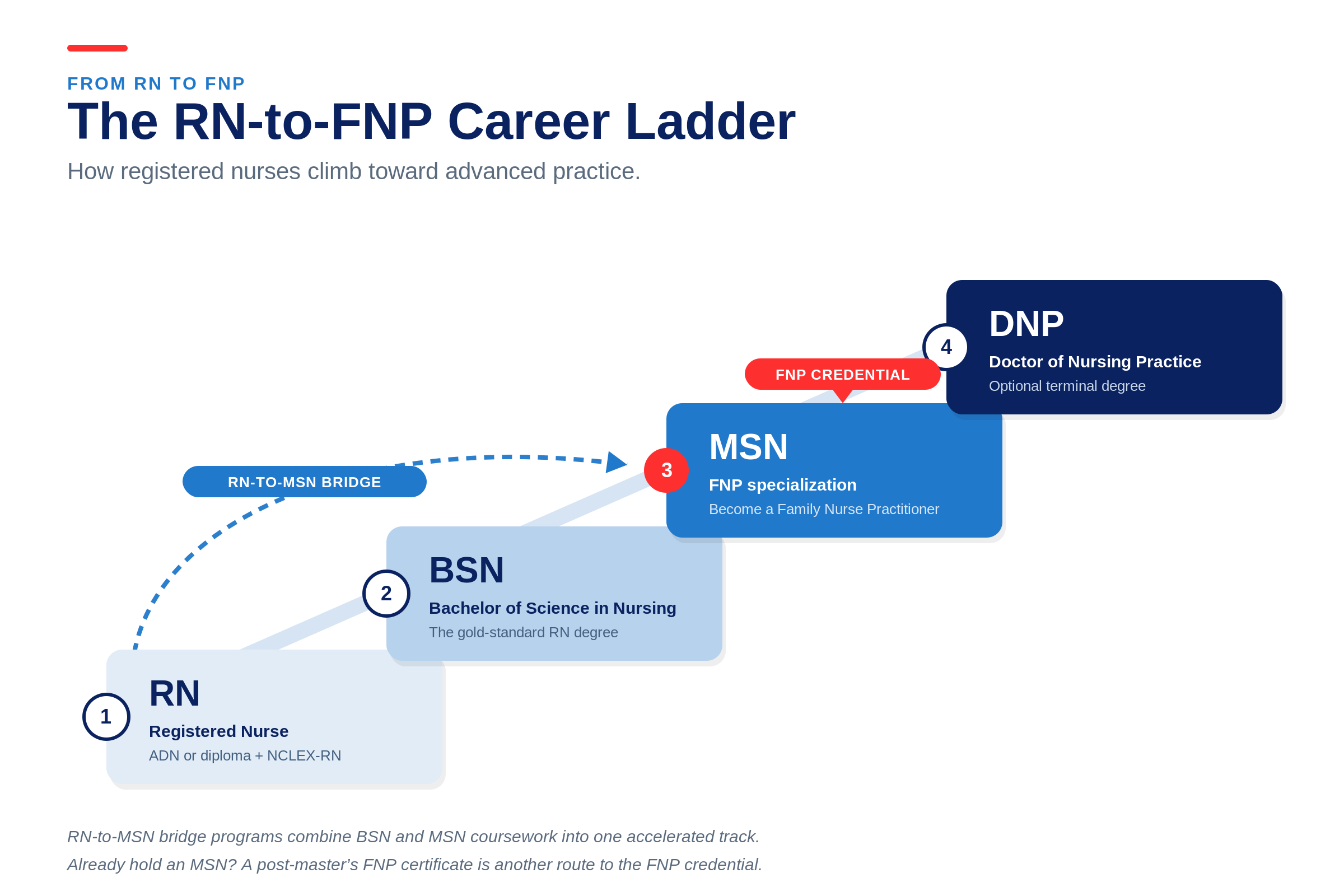
When registered nurses (RNs) are ready to advance their careers, many choose to pursue certification as family nurse practitioners (FNPs). FNPs deliver primary care to patients from birth to the elderly years. This specialty can seem like a natural next step for RNs seeking greater clinical autonomy and the ability to make a broader impact on patient health.
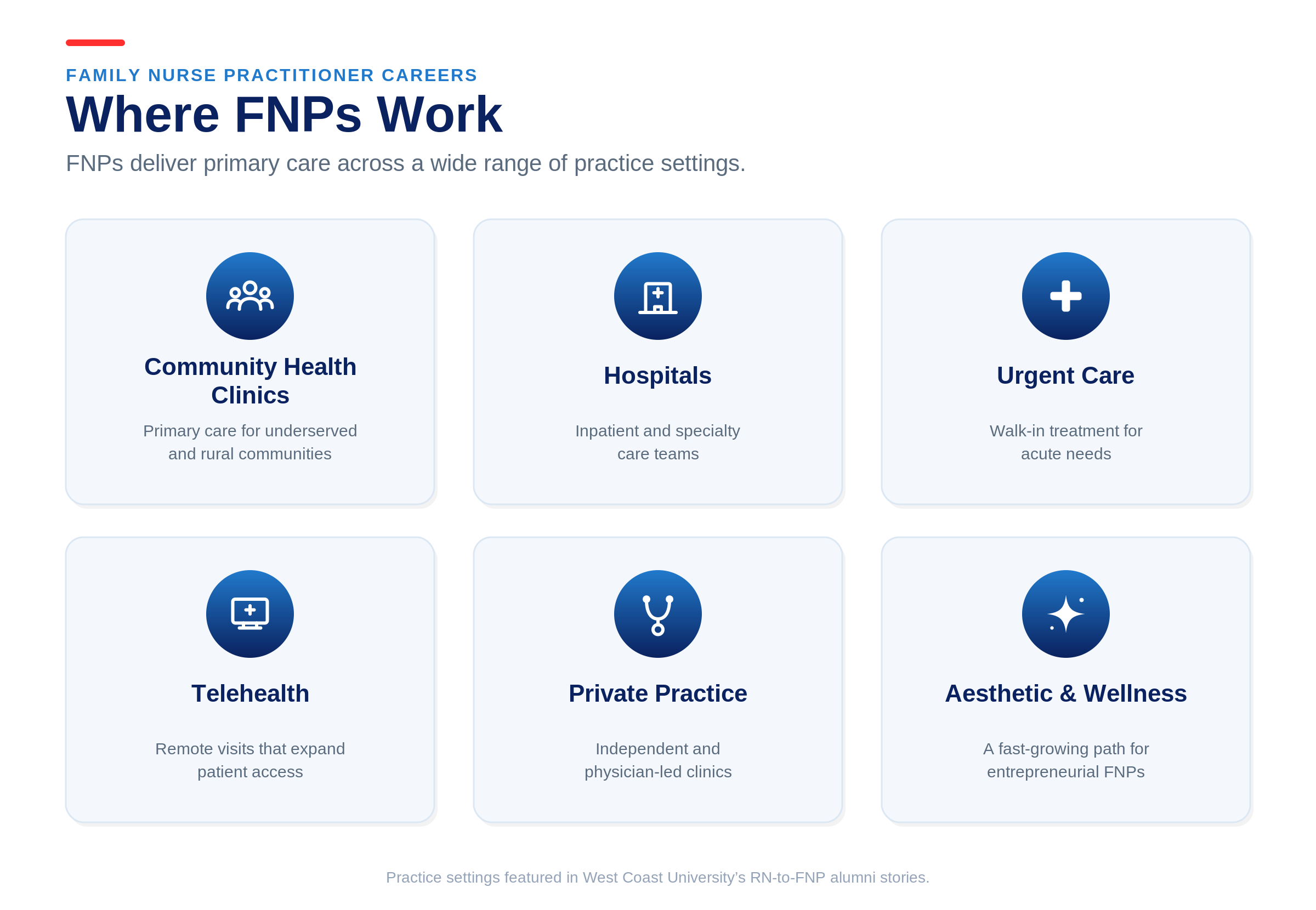
What makes the FNP path particularly compelling to RNs is the range of practice settings it opens up. FNPs don't just work in private practices. They can work in community health clinics, hospitals, urgent care centers, telehealth, and more. Alumni of West Coast University (WCU) know about this variety firsthand. Here are three WCU graduates whose journeys from RN to FNP illustrate the many career directions FNPs can take.
Sally V., Community Health Champion
Sally V. knew from an early age that nursing was her calling, and she was determined to answer that call. When she decided to go to nursing school, she was raising her son, Anthony, as a single mother and working more than 30 hours a week. She enrolled at WCU's Ontario campus for its flexible scheduling options and graduated with her Bachelor of Science in Nursing (BSN) in 2014.
After earning her BSN, Sally spent seven years working at a community health clinic and earned a Master of Public Health (MPH) degree. Working on the front line inspired Sally to want to do more. After working alongside a practicing physician at the clinic, she realized that she wanted to provide that same level of care to patients. She came back to WCU and earned her Master of Science in Nursing (MSN) with an FNP specialization in May 2021.
Beyond her primary care practice, Sally also supports the next generation. She's a nursing instructor at American Career College and president of the WCU-Ontario Alumni Chapter.
FNPs: A Lifeline for Underserved Communities
Sally's story highlights a common FNP career path: community and public health. FNPs connect communities to vital care when healthcare resources are scarce.
A 2024 survey by the California Health Care Foundation found that 56 percent of practicing NPs in the state worked with underserved communities. The most common practice settings for those NPs were community health centers, rural health clinics, or Federally Qualified Health Centers (FQHCs). FQHCs are nonprofit clinics that provide primary care with sliding-scale fees for underserved communities.
From the Clinic to the Corner Office: Dr. Nune Stepanyan
Dr. Nune Stepanyan's résumé is the calling card of a determined trailblazer. A three-time WCU graduate, she earned her BSN in 2016, her MSN with a Family Nurse Practitioner specialization in 2019, and her Doctor of Nursing Practice (DNP) in 2021.
Nune decided against a traditional clinical career path. Instead, she launched The Stepanyan Clinic in Los Angeles. She combines her clinical expertise and experience with a passion for wellness, offering treatments ranging from dermal fillers to advanced laser and radiofrequency procedures. She builds customized plans for every patient. Her goal is to help patients feel like their best selves.
Nune is one example of an FNP finding her fit in the rapidly growing field of aesthetic and wellness medicine, and an example of how entrepreneurial FNPs can use their training to start and run their own clinics. Nune also gives back to WCU as a nursing instructor, bringing real-world business and clinical experience into the classroom.
FNPs as Entrepreneurs
The autonomy available to FNPs in many states enables them to open their own clinics. The skills FNPs develop in their training also prepare them for business. NPs interviewed for a 2025 article in The Nurse Practitioner about NPs and entrepreneurship repeatedly stressed that the clinical reasoning and collaboration skills effective nursing care requires served them well as they set out to start their own enterprises.
"What do entrepreneurs and NPs have in common?" said Margaret Fitzgerald, one of the contributors and Founder of the FHEA, to the article, "We are focused problem-solvers!"
Paying It Forward: Shanna J.
Shanna J.'s journey to becoming an FNP is a story of continuous growth. She began her healthcare career in 2002 with a medical assistant diploma. From there, she became a licensed vocational nurse, then earned her associate degree in nursing and passed the RN exam in 2009.
Shanna continued to climb, earning her bachelor's and master's degrees online with WCU in 2012 and 2013. She then completed a post-master's FNP certificate in 2019 and ultimately earned her DNP.
Because she's so familiar with what nurses need to grow, Shanna now focuses on mentorship. She's a board member of The Nurses Pub, a nonprofit organization that serves future nurses with resources ranging from mentoring and scholarships to workforce development. She's also a dedicated member of WCU's Alumni Association, participating in everything from commercials and new student orientation videos to the annual alumni awards ceremony.
FNPs as Mentors and Leaders
Shanna's story shows how the leadership and advocacy development that comes with FNP credential reaches beyond the exam room. The advanced knowledge and professional standing that come with FNP certification provide a platform for systemic impact. Nurses like Shanna can use that platform to shape the future of the nursing profession.
Many Paths, One Foundation
Sally, Nune, and Shanna each took a different route from RN to FNP. One works in community health. Another runs an aesthetic medicine clinic. The third leads a nonprofit dedicated to the next generation of nurses. What they share is a professional foundation built during their FNP training at West Coast University.
Pursuing an FNP credential offers nurses the opportunity not just to advance their clinical skills, but to build their careers on their own terms.
Latest Articles & Guides
One of the keys to success as a registered nurse is embracing lifelong learning. Our articles and guides address hot topics and current events in nursing, from education to career mobility and beyond. No matter where you are on your nursing journey, there’s an article to help you build your knowledge base.
Browse our latest articles, curated specifically for modern nurses.