Best Adult-Gerontology Nurse Practitioner Programs in Connecticut
- 2026 Best Adult-Gerontology Nurse Practitioner Programs in Connecticut
- Two Tracks, Two Career Paths: AGPCNP vs. AGACNP
- Program Types: MSN, DNP, and Post-Master’s Certificates
- Format Matters: Online, Hybrid, and On-Campus Programs
- Clinical Training in Connecticut: Sites and What to Expect
- AGNP Practice in Connecticut: Licensure, Employers, and Salary
- Frequently Asked Questions
- Latest Articles & Guides
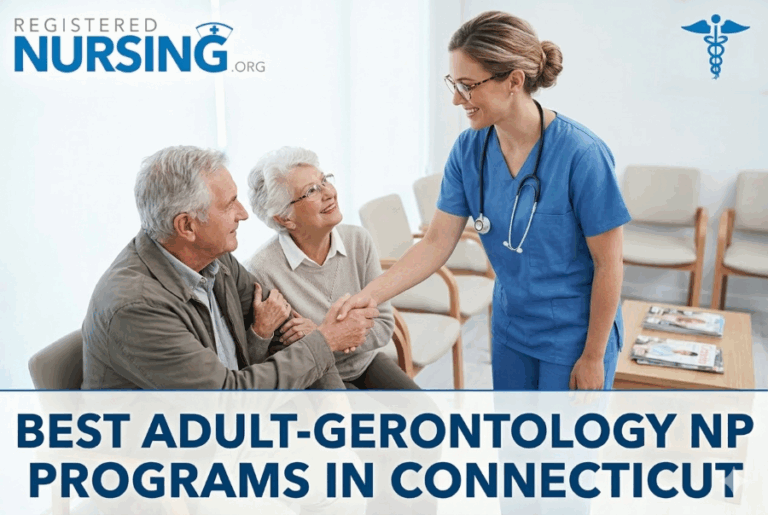
Connecticut has one of the oldest populations in the Northeast, and the healthcare workforce is racing to keep up. With nearly 18% of state residents aged 65 or older and a dense network of academic medical centers, community health systems, and long-term care facilities, the demand for Adult-Gerontology Nurse Practitioners (AGNPs) is substantial and growing. For Connecticut RNs considering an advanced practice degree, the timing has rarely been better.
This guide covers everything a prospective student in the state needs to know: program types, delivery formats, clinical training realities, and what AGNP practice looks like across Connecticut’s diverse healthcare landscape.
In this article, you’ll learn:
- How the primary care (AGPCNP) and acute care (AGACNP) tracks differ and which fits your goals
- What MSN, DNP, and post-master’s certificate programs each require
- How online, hybrid, and campus AGNP program formats work in practice, and which suits different situations
- Where Connecticut students complete clinical hours and what facilities to know
- What AGNP graduates earn and who hires them in Connecticut
2026 Best Adult-Gerontology Nurse Practitioner Programs in Connecticut
Western Connecticut State University
Danbury, CT - Public 4-Year - wcsu.edu

BSN to MSN - Master of Science in Nursing (Acute Care Nurse Practitioner)
Online & Campus Based - Visit Website
Western Connecticut State University's Master of Science in Nursing prepares advanced practice nurses for specialized leadership roles through a comprehensive, flexible hybrid program. Students can choose concentrations like Acute Care Nurse Practitioner, developing expertise in complex patient management. The 41-47 credit program offers part-time study over approximately four years, featuring a rigorous curriculum combining foundational nursing theory, specialized role training, and extensive 500-hour clinical practicum experiences. Graduates emerge prepared for certification examinations and equipped to deliver high-quality, evidence-based healthcare across diverse clinical settings.
- Hybrid part-time study format
- 500+ clinical practicum hours
- Multiple advanced practice roles
- CCNE accredited program
- Minimum 1-year nursing experience required
- Six-year maximum program completion
- Advanced practice certification preparation
BSN to DNP - Doctor of Nursing Practice (DNP) (Adult Gerontology Primary Care Nurse Practitioner)
Online Learning - Visit Website
The Doctor of Nursing Practice (DNP) at Western Connecticut State University is tailored for advanced practice nurses aiming for a terminal degree focused on clinical practice. This online program emphasizes evidence-based practice, healthcare policy, and leadership, preparing graduates to significantly impact healthcare delivery. With a concentration in Adult Gerontology Primary Care Nurse Practitioner, students delve into specialized care for aging populations. The program requires a master's degree, RN and APRN licenses, and a 3.0 GPA for admission. It combines rigorous coursework with 505 clinical hours, ensuring graduates are ready to lead in diverse healthcare settings.
- Online program flexibility.
- Adult Gerontology Primary Care focus.
- Requires master's degree for admission.
- 3.0 GPA minimum requirement.
- 505 clinical hours included.
- 40 credits total.
- Focus on evidence-based practice.
- Leadership in healthcare policy.
- RN and APRN license required.
- Prepares for DNP project.
University of Connecticut
Storrs, CT - Public 4-Year - uconn.edu

BSN to MSN - Adult Gerontology Acute Care Nurse Practitioner
Online Learning - Visit Website
The Adult Gerontology Acute Care Nurse Practitioner (AGACNP) program at UConn prepares licensed registered nurses for advanced practice roles in complex acute care settings. Designed for professionals with at least two years of acute care experience, this 100% online master's and doctoral degree track equips nurses with specialized clinical skills to manage critically ill adult and geriatric patient populations. The comprehensive curriculum focuses on developing expert-level acute care competencies, enabling graduates to provide exceptional patient care in high-intensity medical environments.
- 100% Online Program
- Master's and DNP Options
- Advanced Acute Care Focus
- Requires 2+ Years Experience
- For Licensed RNs
Graduate Certificate - Adult Gerontology Acute Care Nurse Practitioner
Online Learning - Visit Website
The University of Connecticut offers an online Adult Gerontology Acute Care Nurse Practitioner program, including a Post-Graduate Certificate option. This program prepares registered nurses to care for acutely ill adult and gerontology patients. It requires a bachelor's degree in nursing and at least two years of acute care experience. Courses are delivered online with two on-campus intensive sessions. Graduates can pursue certification through AACN or ANCC. The program is accredited by CCNE. Costs and specific admissions details are available through the school. Application deadlines are rolling, with entry in the fall semester.
- Online program delivery.
- Post-Graduate Certificate available.
- Requires BSN degree.
- Two years acute care experience.
- Two on-campus intensives.
- Accredited by CCNE.
- Prepares for AACN/ANCC certification.
- Clinical hours: 500 PGC.
- Rolling admissions basis.
- Fall semester entry.
MSN to DNP - Adult Gerontology Acute Care Nurse Practitioner
Online Learning - Visit Website
The Adult Gerontology Acute Care Nurse Practitioner (AGACNP) program at UConn prepares advanced practice nurses to manage complex care for critically ill adult and elderly patients. Designed for experienced registered nurses, this online master's and doctoral degree provides comprehensive clinical skills in acute care settings. The program targets licensed RNs with a bachelor's degree and at least two years of acute care experience, offering a flexible pathway to specialized healthcare expertise.
- 100% Online Degree Program
- Master's and Doctoral Options
- Requires 2+ Years Acute Care Experience
- Advanced Practice Nursing Focus
- Targets Licensed RNs
Quinnipiac University
Hamden, CT - Private 4-year - qu.edu

BSN to MSN - Adult-Gerontology Primary Care Nurse Practitioner
Online & Campus Based - Visit Website
Quinnipiac University's Master of Science in Nursing for Adult-Gerontology Primary Care Nurse Practitioners prepares advanced practice nurses to deliver comprehensive healthcare to adult and elderly populations. This hybrid program equips students with advanced clinical skills, critical thinking abilities, and specialized knowledge in primary care settings. Graduates emerge as highly skilled practitioners capable of conducting patient assessments, diagnosing conditions, and developing personalized treatment plans for complex adult health challenges.
- Hybrid Program Delivery
- Advanced Nursing Practice
- Adult-Gerontology Specialization
- Clinical Skill Development
- Comprehensive Patient Care
BSN to MSN - Adult-Gerontology Acute Care Nurse Practitioner
Online & Campus Based - Visit Website
Quinnipiac University's Adult-Gerontology Acute Care Nurse Practitioner MSN prepares healthcare professionals to excel in high-intensity medical environments. This dynamic online program, complemented by three focused campus immersions, equips nurses with advanced skills to deliver comprehensive acute care. Designed for registered nurses with at least one year of acute care experience, the 48-credit curriculum covers advanced health assessment, pathophysiology, pharmacology, and specialized clinical practica. Graduates become eligible for national certification, positioning themselves for leadership roles in critical care settings. The program offers a flexible learning model that combines rigorous academic training with practical clinical experience.
- Online with 3 campus immersions
- 48-credit comprehensive program
- Prepares for national certification
- Requires 1+ year acute care experience
- Hybrid learning format
- Advanced clinical skill development
- Specializes in acute care practice
- GPA requirement: 3.00
- Leadership-focused curriculum
- Interprofessional team collaboration
Yale University
New Haven, CT - Private 4-year - yale.edu

BSN to MSN - Adult/Gerontology Primary Care Nurse Practitioner
Campus Based - Visit Website
Yale's Adult-Gerontology Primary Care Nurse Practitioner (AGPCNP) program prepares advanced nursing professionals to deliver comprehensive healthcare across the adult lifespan, from adolescents to geriatric patients. Emphasizing preventive care and wellness, the curriculum integrates innovative age-friendly health system concepts. Students receive robust clinical training in diverse healthcare settings, gaining expertise in maintaining patient health through evidence-based practices. Top-ranked and nationally recognized, the program offers flexible full and part-time study options, enabling students to become certified through leading nursing credentialing organizations.
- Top ten MSN program nationally
- Full and part-time study options
- State-of-the-art simulation labs
- Multiple entry pathways
- Age-friendly health systems focus
- Interdisciplinary clinical experiences
- Advanced practice nursing education
- Certification exam preparation
- Diverse clinical placement opportunities
- Supportive academic community
BSN to MSN - Adult/Gerontology Acute Care Nurse Practitioner
Campus Based - Visit Website
Yale's Adult/Gerontology Acute Care Nurse Practitioner program prepares advanced nursing professionals to manage complex patient care across acute healthcare settings. Students develop comprehensive skills in patient assessment, diagnostic reasoning, and high-acuity treatment strategies. The rigorous two-year curriculum combines advanced health assessment, pharmacology, and clinical immersion experiences, positioning graduates for specialized certification through national credentialing bodies. Designed for ambitious healthcare professionals, the program offers intensive training in critical care and advanced diagnostic techniques.
- Two-year Master's specialty program
- Advanced health assessment focus
- Critical care clinical immersion
- National certification preparation
- Comprehensive acute care training
- Advanced diagnostic skills development
- Pathophysiology and pharmacology courses
- Individualized clinical placements
Graduate Certificate - Adult/Gerontology Acute Care Nurse Practitioner
Campus Based - Visit Website
Yale University's Post-Master's Adult/Gerontology Acute Care Nurse Practitioner Certificate prepares master's-prepared clinical nurse specialists for advanced practice in acute care. This campus-based program builds on existing AGACNP curriculum, excluding research courses. Graduates become eligible for certification exams from ANCC and AACN. The program focuses on clinical training for adult and gerontology populations in acute settings. Students must complete all required AGACNP courses at Yale School of Nursing or demonstrate equivalent previous coursework. This certificate pathway leads to advanced practice licensure opportunities.
- Post-Master's Certificate program
- Adult/Gerontology Acute Care focus
- Campus-based learning format
- Prepares for certification exams
- ANCC and AACN exam eligibility
- Builds on AGACNP curriculum
- Excludes research courses
- For master's-prepared nurses
- Clinical nurse specialist pathway
- Advanced practice licensure preparation
Post University
Waterbury, CT - Private 4-year - post.edu

BSN to MSN - Master of Science in Nursing – Adult Gerontology Primary Care Nurse Practitioner
Online Learning - Visit Website
Post University's online MSN Adult Gerontology Primary Care Nurse Practitioner program prepares nurses to care for adults across the lifespan. This 28-month program offers flexible online classes with monthly starts. It requires a BSN and one year of nursing experience. The curriculum covers advanced assessment, pharmacology, and aging concepts. Students complete individualized clinical preceptorships. The program holds CCNE accreditation. Costs and admission details are available on the university website. Graduates gain skills for primary care settings, focusing on chronic and acute condition management.
- Online program format.
- 28-month program length.
- 42-45 credit hours.
- Monthly start dates available.
- BSN degree required.
- One year work experience needed.
- Individualized clinical preceptorships.
- CCNE accreditation.
- Focuses on adult gerontology care.
- Covers advanced pathophysiology.
Two Tracks, Two Career Paths: AGPCNP vs. AGACNP
The single most consequential decision in AGNP education happens before you even apply: choosing between the primary care and acute care tracks. These are separate certifications with different clinical focuses, and programs are not always structured to offer both.
| AG Primary Care (AGPCNP) | AG Acute Care (AGACNP) | |
| Patient Setting | Outpatient clinics, primary care, assisted living | Hospitals, ICUs, EDs, surgical units |
| Certification | AANP or ANCC Adult-Gerontology PC | ANCC Adult-Gerontology AC |
| Clinical Focus | Chronic disease, preventive care, geriatric assessment | Complex acute illness, critical care, perioperative management |
| Connecticut Demand | High across suburban and rural areas | Concentrated in Hartford, New Haven, Bridgeport corridors |
In Connecticut’s urban centers, particularly along the I-95 and I-91 corridors, both tracks have strong employer demand. However, students in more rural parts of the state, such as Windham County or the Quiet Corner, will find primary care placements considerably more accessible.
Track Tip: If you currently work in a hospital ICU or step-down unit and intend to stay in that environment, confirm that your program offers the AGACNP track before applying. Online programs in particular vary widely; some offer only primary care, and switching tracks mid-program is not typically possible.
Learn more about Connecticut nurse practitioner schools.
Program Types: MSN, DNP, and Post-Master’s Certificates
AGNP programs at the MSN degree level are the most common entry point for Connecticut RNs. Running approximately 2–3 years post-BSN, they satisfy the Connecticut Advanced Practice Registered Nurse (APRN) licensure requirements set by the CT Department of Public Health. Graduates must hold national certification from AANP or ANCC (for primary care) or ANCC (for acute care) and complete the state’s APRN application process.
DNP degree AGNP programs represent the terminal clinical degree in nursing practice. Connecticut’s major health systems, including Yale New Haven Health, Hartford HealthCare, and Trinity Health Of New England, have increasingly noted a preference for DNP-prepared APRNs in senior clinical and leadership roles. BSN to DNP pathways typically require 3–4 years; post-MSN DNP programs often take 1–2 years and focus on clinical scholarship and systems leadership rather than additional NP coursework.
AGNP post-master’s certificates are the most overlooked option in Connecticut’s AGNP landscape. NPs already certified in family practice, women’s health, or another specialty can often earn the AGNP credential in 3–5 semesters without repeating a full graduate program. This pathway is particularly relevant given Connecticut’s high concentration of FNP-prepared nurses who may be working predominantly with aging adult populations.
Format Matters: Online, Hybrid, and On-Campus Programs
Connecticut’s compact geography means that even on-campus programs are rarely more than 90 minutes from most of the state, a meaningful advantage compared to larger states. Still, format significantly shapes the student experience.
Online Programs
Fully online programs deliver all didactic content remotely, typically through a mix of asynchronous coursework and synchronous seminars. They suit working nurses across all regions of Connecticut, including those in eastern Connecticut (New London, Norwich) and the Naugatuck Valley where on-campus options are limited. The trade-off: students are usually responsible for sourcing their own clinical preceptors.
Hybrid Programs
Hybrid formats combine remote coursework with periodic on-campus requirements; typically simulation labs, skills intensives, or clinical debriefs. For Connecticut students, programs based at Yale School of Nursing (Orange/West Haven), the University of Connecticut (Storrs and Farmington), or Fairfield University offer hybrid structures that keep travel manageable. These programs often have stronger faculty-to-student mentorship and built-in simulation access.
On-Campus Programs
Traditional in-person programs offer the most immersive experience and tend to have established relationships with clinical sites throughout the state. They’re best suited for students near the New Haven–Hartford–Bridgeport axis who can commit to a consistent schedule.
Format Tip: Before choosing an online program, ask two specific questions: Does the school have affiliation agreements with Connecticut clinical sites? And does the program provide any preceptor placement assistance? Some programs offer a placement database or coordinator support — others leave students entirely on their own, which can be a significant burden in a competitive preceptor market.
Clinical Training in Connecticut: Sites and What to Expect
All AGNP programs require a minimum of 500 clinical hours for MSN degrees; DNP programs typically require 1,000 or more. Connecticut’s density of academic medical centers and community health systems makes it one of the more favorable states for clinical placement, but urban sites near New Haven and Hartford fill quickly.
Common Clinical Training Sites for Connecticut AGNP Students:
- Yale New Haven Hospital and affiliated Yale Medicine outpatient practices
- Hartford HealthCare system (Hartford Hospital, MidState Medical Center, Backus Hospital)
- Trinity Health Of New England (Saint Francis Hospital, Mount Sinai Rehabilitation Hospital)
- UConn Health — John Dempsey Hospital and UConn Medical Group outpatient network (Farmington)
- Bridgeport Hospital (Yale New Haven Health)
- Griffin Health (Derby) and Day Kimball Hospital (Putnam) for eastern/rural placements
- Long-term care and skilled nursing facilities, community health centers, and Veterans Affairs facilities statewide
Students pursuing the acute care track will typically need hospital-based placements. Yale New Haven, Hartford Hospital, and UConn Health are the primary options with established NP student programs.
AGNP Practice in Connecticut: Licensure, Employers, and Salary
Connecticut is a restricted practice state, requiring APRNs to hold a written collaborative agreement with a physician for the first three years of practice. After that period, and upon meeting the state’s experience requirements, APRNs may apply for independent licensure. This distinction matters for new graduates evaluating job offers: your first employer’s willingness to structure a proper collaborative agreement is a practical necessity, not a formality.
Top employers of AGNPs in Connecticut:
- Yale New Haven Health (largest health system in the state)
- Hartford HealthCare
- Trinity Health Of New England
- UConn Health
- Nuvance Health (western Connecticut, Hudson Valley border region)
- Community Health Center, Inc. (FQHC network, Middletown-based)
- Connecticut Department of Veterans Affairs
- Private geriatric and internal medicine practices throughout Fairfield and New Haven counties
Compensation varies significantly by track and setting. AGNP-AC practitioners in hospital and critical care roles typically earn more than their primary care counterparts.
| Setting | Typical Salary Range (CT) |
| Acute care / hospital-based | $125,000 – $145,000 |
| Primary care / outpatient | $105,000 – $125,000 |
| Long-term care / geriatrics | $100,000 – $118,000 |
| FQHC / community health | $95,000 – $115,000 + loan repayment |
Frequently Asked Questions
Q: Does Connecticut require separate APRN licensure for AGPCNP and AGACNP?
A: Yes. Connecticut issues APRN licensure tied to a specific population focus and role. If you hold AGPCNP certification and later want to practice in acute care, you would need to complete an AGACNP program, obtain that certification, and update your state licensure accordingly. The two credentials are not interchangeable under Connecticut law.
Q: What is the collaborative practice requirement, and how does it affect new graduates?
A: Connecticut law requires newly licensed APRNs to practice under a written collaborative agreement with a licensed physician for a minimum of three years and 2,000 hours before applying for full independent practice authority. Employers at major systems are generally familiar with this requirement; smaller private practices may need more guidance on structuring the agreement correctly.
Q: Are there scholarships specific to gerontology-focused nursing in Connecticut?
The Connecticut Nurses Foundation offers scholarships for graduate nursing students, and some are directed at students pursuing care of older adults. Additionally, the John A. Hartford Foundation funds several national programs supporting gerontological nursing education that Connecticut students may be eligible for.
Q: How does the DNP capstone differ from a thesis, and does it matter for clinical practice?
A: The DNP capstone (or scholarly project) is a practice-focused quality improvement or evidence-based initiative, not original research in the academic sense. It typically focuses on solving a clinical or systems problem within a real healthcare setting. For clinical practice, it has no bearing on your ability to see patients; the distinction matters primarily for those considering faculty roles or health system leadership positions.
Latest Articles & Guides
One of the keys to success as a registered nurse is embracing lifelong learning. Our articles and guides address hot topics and current events in nursing, from education to career mobility and beyond. No matter where you are on your nursing journey, there’s an article to help you build your knowledge base.
Browse our latest articles, curated specifically for modern nurses.