Best Pediatric Nurse Practitioner Programs in Florida
- 2026 Best Pediatric Nurse Practitioner Programs in Florida
- Understanding MSN vs. DNP Programs for Pediatric Nurse Practitioners
- Campus-Based vs. Online PNP Programs in Florida
- What to Look for in a Florida PNP Program
- Clinical Experience in Florida’s Diverse Healthcare Settings
- Career Outlook for Pediatric Nurse Practitioners in Florida
- Licensing Requirements for PNPs in Florida
- Tips for Success in Your PNP Program
- Frequently Asked Questions
- Latest Articles & Guides
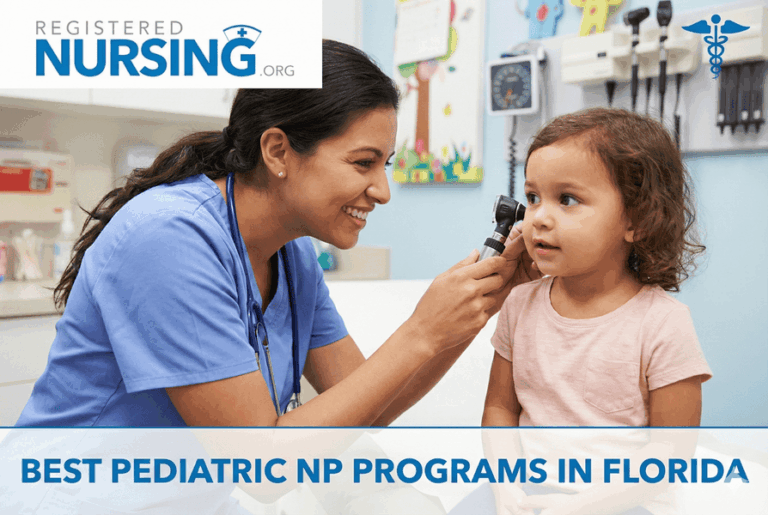
Florida’s growing population and diverse pediatric healthcare needs have created strong demand for qualified Pediatric Nurse Practitioners (PNPs). Whether you’re pursuing your first advanced practice credential through an MSN program or advancing your career with a DNP, Florida offers exceptional educational pathways to prepare you for this rewarding specialty.
In this article, you’ll learn:
- The differences between MSN and DNP Pediatric Nurse Practitioner programs in Florida
- What to expect from campus-based versus online program formats
- Key factors to consider when selecting a PNP program, including clinical placement support
- Career opportunities and salary expectations for PNPs across Florida
2026 Best Pediatric Nurse Practitioner Programs in Florida
Florida International University
Miami, FL - Public 4-Year - fiu.edu
MSN to DNP - Post-BSN to DNP (Pediatric Primary Care Nurse Practitioner)
Online Learning - Visit Website
Florida International University's online Post-BSN to DNP program with a Pediatric Primary Care Nurse Practitioner concentration prepares advanced nursing professionals for comprehensive pediatric healthcare. This doctoral program focuses on diagnosing, treating, and managing care for newborns, children, and young adults, with emphasis on preventive care and chronic condition management. The 77-credit curriculum develops advanced clinical skills and prepares graduates for national certification as pediatric nurse practitioners. As a doctoral-level program, entrance exam requirements should be verified directly with the university.
- Online doctoral nursing program
- 77 credit comprehensive curriculum
- Pediatric primary care specialization
- National certification preparation
- Advanced clinical practice focus
University of South Florida
Tampa, FL - Public 4-Year - usf.edu
BSN to MSN - Pediatric Primary Care Nurse Practitioner
Campus Based - Visit Website
The University of South Florida's Pediatric Primary Care Nurse Practitioner master's program prepares RNs for advanced practice with children. This 45-credit curriculum emphasizes health promotion, maintenance, and restoration within family contexts. Students develop expertise in pediatric care through rigorous academic and clinical training, with flexible part-time or full-time enrollment options. Graduates are prepared to take the Pediatric Nursing Certification Board exam. The program requires a graduate comprehensive exam for completion.
- 45 total credit hours
- Part-time or full-time options
- Prepares for PNCB certification
- Graduate comprehensive exam required
- Advanced pediatric nursing focus
BSN to DNP - BSN to DNP Pediatric Health Concentration (Pediatric Primary Care Nurse Practitioner)
Campus Based - Visit Website
University of South Florida's BSN to DNP Pediatric Health Concentration focuses specifically on Pediatric Primary Care Nurse Practitioner training. This program prepares registered nurses to provide comprehensive care from birth through young adulthood, with emphasis on preventive services and management of acute/chronic pediatric conditions. The curriculum offers part-time and full-time options with practical experience in ambulatory care settings. Graduates are eligible for PNCB certification. As a doctoral program, it requires entrance exams unless otherwise stated.
- Focus on Pediatric Primary Care
- Prepares for PNCB certification
- Flexible part-time and full-time options
- Ambulatory care practice focus
- Comprehensive pediatric health training
Understanding MSN vs. DNP Programs for Pediatric Nurse Practitioners
Both Master of Science in Nursing (MSN) and Doctor of Nursing Practice (DNP) programs prepare you to sit for the Pediatric Nursing Certification Board (PNCB) exam. The key differences lie in program length, depth of training, and career trajectory.
MSN Programs typically require 2-3 years of full-time study and focus on clinical skills, pediatric assessment, pharmacology, and direct patient care competencies. These programs prepare you for immediate entry into clinical practice as a certified PNP.
DNP Programs represent the terminal degree in nursing practice and require 3-4 years of study (or 1-2 years for BSN to DNP bridge programs). DNP curricula include advanced coursework in healthcare policy, leadership, quality improvement, and evidence-based practice. Many healthcare systems, including Nemours Children’s Health and Johns Hopkins All Children’s Hospital, increasingly prefer or require DNP preparation for leadership positions.
Campus-Based vs. Online PNP Programs in Florida
Campus-Based Programs
Traditional on-campus programs offer face-to-face interaction with faculty and peers, on-site simulation laboratories, and structured clinical coordination. Florida’s major nursing schools, located in cities like Miami, Tampa, Jacksonville, and Gainesville, provide robust campus experiences with access to university resources.
Advantages of campus programs:
- Direct mentorship from faculty specialists in pediatric care
- Networking opportunities with classmates and clinical preceptors
- Access to advanced simulation centers replicating pediatric emergency scenarios
- Structured clinical placement assistance through university partnerships
Online Programs
Online PNP programs deliver didactic coursework through virtual platforms while requiring students to complete clinical hours locally. This format offers flexibility for working nurses and those in rural areas like the Panhandle or Southwest Florida.
Advantages of online programs:
- Continue working while pursuing your degree
- Complete coursework on your schedule
- Reduced relocation costs
- Access to programs outside your immediate geographic area
Important consideration: All PNP programs, whether online or campus-based, require approximately 500-700 supervised clinical hours in pediatric settings. You’ll need to secure clinical placements at pediatric practices, children’s hospitals, or community health centers. Some programs provide clinical placement support, while others require students to arrange their own preceptorships.
Explore nurse practitioner schools in Florida.
What to Look for in a Florida PNP Program
Accreditation and Certification Pass Rates
Ensure your program holds accreditation from the Commission on Collegiate Nursing Education (CCNE) or Accreditation Commission for Education in Nursing (ACEN). Review each program’s certification exam pass rates; top programs maintain pass rates above 90%.
Clinical Placement Support
Strong programs maintain relationships with clinical sites throughout Florida. Look for schools partnering with institutions like:
- Nicklaus Children’s Hospital (Miami)
- AdventHealth for Children (Orlando)
- Tampa General Hospital’s Muma Children’s Hospital
- UF Health Shands Children’s Hospital (Gainesville)
- Wolfson Children’s Hospital (Jacksonville)
Programs offering dedicated clinical coordinators significantly reduce the stress of finding appropriate pediatric placements.
Faculty Expertise
Research faculty credentials and specialty areas. Faculty who practice as PNPs bring current, real-world insights into pediatric primary care, acute care subspecialties, and mental health.
Specialty Tracks
Some programs offer concentrations within the PNP specialty:
- Primary Care PNP (PNP-PC): Well-child visits, chronic disease management, developmental screening
- Acute Care PNP (PNP-AC): Hospital-based care, emergency departments, intensive care units
Determine which track aligns with your career goals before applying.
Clinical Experience in Florida’s Diverse Healthcare Settings
Florida’s unique demographic landscape provides exceptional learning opportunities. Your clinical rotations might include:
Urban Academic Medical Centers: Exposure to complex pediatric cases, subspecialty clinics, and interdisciplinary teams at teaching hospitals in Miami, Tampa, and Orlando.
Rural Health Clinics: Serve underserved populations in counties like Hendry, DeSoto, or Hamilton, where PNPs often function as primary providers for families with limited healthcare access.
Community Pediatric Practices: Learn outpatient care management in private practices and Federally Qualified Health Centers (FQHCs) throughout the state.
School-Based Health Centers: Address pediatric mental health, chronic disease management, and preventive care in educational settings across Florida’s 67 counties.
The state’s large Spanish-speaking population and growing Haitian and Caribbean communities offer valuable cultural competency training, which are essential skills for PNPs practicing in South Florida’s diverse communities.
Career Outlook for Pediatric Nurse Practitioners in Florida
Florida’s healthcare market offers robust opportunities for PNPs across multiple settings:
| Employment Setting | Average Annual Salary* | Common Employers |
| Children’s Hospitals | $110,000 – $125,000 | Nemours, Johns Hopkins All Children’s, Nicklaus |
| Private Pediatric Practices | $95,000 – $115,000 | Independent practices, multi-physician groups |
| Federally Qualified Health Centers | $90,000 – $105,000 | CHI Centers, HealthPoint, Caridad |
| School-Based Health | $85,000 – $100,000 | School districts, community health organizations |
| Urgent Care/Walk-In Clinics | $100,000 – $120,000 | CareSpot, MD Now, Urgent Team |
*Salaries vary by experience, credentials, and geographic location
The Bureau of Labor Statistics projects 40% growth for nurse practitioners nationally through 2031, which is significantly faster than average. Florida’s population growth, particularly among young families relocating to cities like Tampa, Jacksonville, and Fort Myers, further amplifies demand for pediatric providers.
Licensing Requirements for PNPs in Florida
After completing your program, you’ll follow these steps:
- National Certification: Pass either the PNCB Pediatric Nurse Practitioner certification exam
- Florida ARNP License: Apply through the Florida Board of Nursing with your certification credentials
- DEA Registration: Obtain prescriptive authority to manage pediatric medications
- Collaborative Practice: While Florida law requires a physician collaborator, many PNPs maintain significant clinical autonomy in their practice settings
Tips for Success in Your PNP Program
Build Your Clinical Network Early
Start connecting with potential preceptors during your first semester. Attend Florida Pediatric Society meetings and local pediatric nursing conferences to meet practitioners who might supervise your clinical hours.
Master Pediatric Pharmacology
Pediatric medication dosing based on weight and age requires precision. Dedicate extra study time to pharmacology courses; this knowledge is critical for both your certification exam and safe clinical practice.
Consider Your Geographic Flexibility
Students willing to complete clinical hours in underserved rural areas often find placements more easily and gain exposure to broader pediatric cases where PNPs serve as primary providers.
Frequently Asked Questions
Q: Can I work as a Registered Nurse while completing a PNP program?
A: Yes, many students continue working part-time or full-time, especially in online programs. However, clinical semesters require significant time commitment. Working in pediatric settings during your program provides relevant experience and potential preceptor connections.
Q: What happens if I can’t find my own clinical placements?
A: Contact your program’s clinical coordinator immediately if you struggle to secure sites. Some programs offer placement guarantee services or maintain dedicated clinical partnerships. Starting your search 6-9 months before clinical courses begin gives you the best chance of securing preferred locations.
Q: Is there financial aid available for PNP students in Florida?
A: Yes. Beyond federal student loans, explore the Florida Nursing Student Loan Forgiveness Program, HRSA’s Nurse Corps Scholarship Program (for students committed to underserved settings), and individual university scholarships. Many healthcare systems like BayCare Health System and Baptist Health offer tuition reimbursement for employees pursuing advanced degrees.
Q: Do Florida PNP programs require previous pediatric nursing experience?
A: Requirements vary by program. While pediatric RN experience strengthens your application and provides context for advanced coursework, many programs accept students from other nursing backgrounds. Strong academic performance and clear career goals can compensate for limited pediatric experience.
Latest Articles & Guides
One of the keys to success as a registered nurse is embracing lifelong learning. Our articles and guides address hot topics and current events in nursing, from education to career mobility and beyond. No matter where you are on your nursing journey, there’s an article to help you build your knowledge base.
Browse our latest articles, curated specifically for modern nurses.