Best Pediatric Nurse Practitioner Programs in Tennessee
- 2026 Best Pediatric Nurse Practitioner Programs in Tennessee
- Why Become a Pediatric Nurse Practitioner in Tennessee?
- Pediatric Nurse Practitioner Degree Pathways in Tennessee
- Primary Care vs. Acute Care PNP Tracks
- Online, Hybrid, and Campus Program Formats
- Clinical Training Opportunities in Tennessee
- What You'll Study in a Pediatric NP Program
- Major Employers for Pediatric Nurse Practitioners in Tennessee
- Tips for Choosing the Right PNP Program
- Frequently Asked Questions
- Latest Articles & Guides
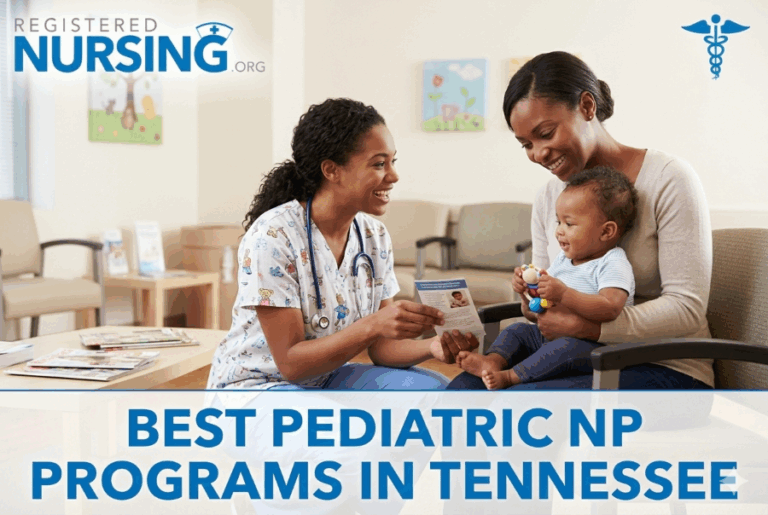
Pediatric Nurse Practitioners (PNPs) are advanced practice registered nurses who specialize in providing healthcare to infants, children, adolescents, and young adults. From preventive wellness visits to the treatment of complex illnesses, these professionals play a crucial role in improving pediatric health outcomes.
Tennessee offers several strong educational pathways for nurses who want to pursue this specialty. Graduate programs across the state offer Master of Science in Nursing (MSN), Doctor of Nursing Practice (DNP), and post-master's certificate options designed to prepare students for advanced pediatric care roles.
These programs may be offered online, hybrid, or campus-based, allowing working nurses to balance graduate education with professional responsibilities. Tennessee's large pediatric healthcare systems also provide excellent clinical training opportunities.
This guide explores the best Pediatric Nurse Practitioner programs in Tennessee, along with information on program formats, specialization tracks, and career opportunities across the state.
In this article, you'll learn:
- The differences between primary care and acute care PNP tracks
- How MSN, DNP, and certificate pathways prepare nurses for pediatric practice
- What to expect from online, hybrid, and campus-based programs
- Where Tennessee PNP students commonly complete clinical rotations
- Which healthcare organizations frequently hire pediatric nurse practitioners
2026 Best Pediatric Nurse Practitioner Programs in Tennessee
The University of Tennessee-Knoxville
Knoxville, TN - Public 4-Year - utk.edu

Graduate Certificate - Pediatric Primary Nurse Practitioner
Online & Campus Based - Visit Website
The University of Tennessee-Knoxville offers a Pediatric Nurse Practitioner graduate certificate program. This program prepares Advanced Practice Registered Nurses for primary pediatric care roles. It features a hybrid learning format with both online and on-campus components. Applicants need a master's degree in nursing, current APRN certification, and recent prerequisite coursework. The program requires 840 clinical hours and includes mandatory on-site sessions. Tuition details are available on the university's graduate fees page. The holistic admissions process prioritizes applicant essays.
- Hybrid program format.
- 840 clinical hours required.
- APRN certification needed.
- Master's degree prerequisite.
- Holistic admissions process.
- Mandatory on-site sessions.
- Primary pediatric care focus.
- Prerequisite courses required.
- Competency-based curriculum.
- State licensure considerations.
Graduate Certificate - Pediatric Acute Care Nurse Practitioner
Online & Campus Based - Visit Website
The University of Tennessee's Pediatric Acute Care Nurse Practitioner Graduate Certificate equips Advanced Practice Registered Nurses (APRNs) with specialized skills to provide comprehensive acute care in pediatric settings. This hybrid program prepares healthcare professionals to deliver high-quality, complex medical interventions for critically ill children. Designed for certified primary care pediatric nurse practitioners, the program offers advanced clinical training with a minimum of 840 clinical practice hours. Prospective students must hold a master's degree from an accredited nursing program and complete specific prerequisite courses within the past five years.
- Hybrid program format
- 840 clinical practice hours
- Advanced practice nursing focus
- Specialized pediatric acute care
- Requires prior pediatric certification
MSN to DNP - Pediatric Primary/Acute Care Dual Nurse Practitioner (Primary/Acute Care)
Online & Campus Based - Visit Website
The University of Tennessee's Pediatric Primary/Acute Care Dual Nurse Practitioner program prepares advanced practice nurses to deliver comprehensive healthcare for children from birth to young adulthood. This hybrid program addresses critical pediatric healthcare provider shortages, offering specialized training across diverse medical settings like emergency departments, intensive care units, and outpatient clinics. Graduates become highly skilled practitioners capable of managing acute, chronic, and complex pediatric conditions with advanced clinical expertise.
- Hybrid online curriculum
- High-fidelity simulation center
- Clinical rotations with mentorship
- Addresses pediatric provider shortage
- Multiple healthcare settings training
- On-campus visits twice semester
- Synchronous online course meetings
MSN to DNP - Primary Care Pediatric Nurse Practitioner
Online & Campus Based - Visit Website
The University of Tennessee's Primary Care Pediatric Nurse Practitioner program equips advanced nursing professionals to deliver comprehensive pediatric healthcare. Designed for those passionate about child health, this hybrid program prepares graduates to address critical provider shortages while offering specialized training in holistic, evidence-based care for children from birth to young adulthood. Students gain advanced clinical skills through high-fidelity simulation, online coursework, and extensive clinical rotations, positioning them for certification and meaningful pediatric healthcare roles.
- Hybrid online curriculum
- 600-840 clinical hours
- High-fidelity simulation training
- Pediatric Nursing Certification eligible
- Multiple healthcare settings
- Advanced practice registered nurse
- Synchronous online course meetings
- Mentored clinical rotations
Tennessee Tech
Cookeville, TN - Public 4-Year - tntech.edu

Graduate Certificate - Nursing, Post-Graduate Certificate, Pediatric Nurse Practitioner
Campus Based - Visit Website
Tennessee Tech's Post-Graduate Certificate in Pediatric Nurse Practitioner prepares nurses for advanced pediatric care. This 23-credit hour program includes 510 clinical hours. It builds on existing nursing expertise. The campus-based program focuses on pediatric health assessment and management. Admissions require a master's degree in nursing and current RN licensure. Costs vary by residency status. The program equips nurses for specialized pediatric roles.
- 23 credit hours.
- 510 clinical hours.
- Campus-based program.
- Post-graduate certificate level.
- Pediatric Nurse Practitioner focus.
- Requires master's in nursing.
- RN licensure needed.
- College of Nursing department.
MSN to DNP - Nursing Practice, Pediatric Nurse Practitioner-Primary Care Concentration, DNP (TTU-ETSU) (Pediatric Nurse Practitioner-Primary Care)
Online & Campus Based - Visit Website
Tennessee Tech's Doctor of Nursing Practice (DNP) program prepares advanced practice nurses specializing in pediatric primary care. This comprehensive professional degree equips healthcare professionals with advanced clinical skills and leadership expertise. Students can choose between BNS-DNP (89-92 credit hours) and MSN-DNP (35 credit hours) pathways, focusing on healthcare needs of specific populations. The program offers intensive training in pediatric nurse practitioner roles, emphasizing evidence-based practice and comprehensive patient care strategies.
- Terminal professional nursing degree
- Pediatric Primary Care Concentration
- Flexible DNP pathway options
- 89-92 credit hour program
- Advanced practice nurse training
BSN to DNP - Nursing Practice, Pediatric Nurse Practitioner-Primary Care Concentration, DNP (Pediatric Nurse Practitioner-Primary Care)
Online & Campus Based - Visit Website
Tennessee Technological University offers a Doctor of Nursing Practice (DNP) with a Pediatric Nurse Practitioner-Primary Care Concentration, designed for nurses aiming to specialize in pediatric primary care. This hybrid program blends online and campus learning, providing flexibility for working professionals. It prepares graduates for advanced practice roles, focusing on the healthcare needs of children. The program includes core requirements, concentration courses, and a DNP project. Admission requires a nursing background, with specific prerequisites for BSN-DNP and MSN-DNP tracks. Costs vary by track, offering a pathway for nurses at different career stages to advance their expertise in pediatric care.
- Hybrid learning format.
- Focus on pediatric primary care.
- BSN-DNP and MSN-DNP tracks available.
- Includes DNP project.
- Flexible for working professionals.
- Prepares for advanced practice roles.
- Core and concentration courses.
- Admission requires nursing background.
- Cost varies by track.
Vanderbilt University
Nashville, TN - Private 4-year - vanderbilt.edu

BSN to MSN - Pediatric Nurse Practitioner - Acute Care (Acute Care)
Online & Campus Based - Visit Website
Vanderbilt University's Pediatric Nurse Practitioner - Acute Care program is a groundbreaking specialty designed for experienced RNs seeking advanced pediatric care expertise. The intensive program prepares nurses to provide comprehensive, family-centered care for critically ill children up to age 21. Students complete 560 clinical hours, gaining robust experience in acute care settings. With a curriculum integrating the latest nursing education standards, graduates are equipped to excel in pediatric emergency departments, ICUs, and specialized clinics. The program boasts an impressive certification exam pass rate significantly above the national average, ensuring graduates are well-prepared for high-stakes pediatric acute care roles.
- 4 Full-time Semesters
- Online/Hybrid Learning Format
- 560 Clinical Practice Hours
- For Experienced RNs Only
- High PNCB Exam Pass Rate
- Small Cohort Size
- Clinical Placements Nationwide
BSN to MSN - Pediatric Nurse Practitioner - Primary Care (Primary Care)
Online & Campus Based - Visit Website
Vanderbilt University offers a Master of Science in Nursing (MSN) with a Pediatric Nurse Practitioner - Primary Care specialty. This hybrid program combines online coursework with seven brief in-person sessions. Students complete 630 clinical hours in pediatric primary care settings. The curriculum follows AACN Essentials standards and prepares graduates for CPNP-PC certification. Full-time students finish in four semesters (16 months), with part-time options available. Admissions require a BSN or equivalent, and the program is ranked #2 nationally for MSN-level PNP-PC programs. Costs and specific application dates vary; contact admissions for details.
- Hybrid online/in-person format.
- 630 clinical practice hours.
- Full-time: 4 semesters.
- Part-time plans available.
- Prepares for CPNP-PC certification.
- Low faculty-to-student ratios.
- Clinical placements in preferred areas.
- Focus on pediatric primary care.
- AACN Essentials curriculum.
- Accelerated specialty option.
East Tennessee State University
Johnson City, TN - Public 4-Year - etsu.edu

MSN to DNP - Nursing, DNP (Pediatric Nurse Practitioner-Primary Care)
Online & Campus Based - Visit Website
The Doctor of Nursing Practice (DNP) in Pediatric Nurse Practitioner-Primary Care at East Tennessee State University prepares advanced nursing professionals to deliver high-quality, patient-centered care for children across all ages. This specialized concentration focuses on comprehensive pediatric healthcare, including well-child assessments, acute illness management, and chronic condition treatment. Students develop advanced clinical skills through extensive practicum experiences, preparing them for national certification and leadership roles in diverse healthcare settings. The program combines rigorous academic coursework with practical training, emphasizing evidence-based practice and health promotion strategies.
- 77 total credits for BSN-DNP
- Comprehensive pediatric care focus
- National certification preparation
- Multiple practicum experiences
- Advanced clinical training
- Unencumbered RN licensure required
- Minimum 3.0 GPA mandatory
- Two years nursing experience needed
- Interview part of admission
- Personal statement required
BSN to DNP - Nursing, DNP (Pediatric Nurse Practitioner - Primary Care)
Online & Campus Based - Visit Website
The Pediatric Nurse Practitioner - Primary Care concentration at East Tennessee State University prepares nurses for advanced practice in pediatric care. This hybrid program combines online coursework with hands-on clinical experiences, focusing on health promotion, diagnosis, and management of children and adolescents. Graduates are eligible for national certification. The program requires a BSN or MSN, with specific admission criteria including nursing licensure and work experience. It emphasizes rural and underserved populations, aligning with ETSU's mission. The curriculum covers advanced health assessment, pathophysiology, and pharmacology, culminating in a DNP project. This program is ideal for nurses seeking to specialize in pediatric primary care.
- Hybrid program format
- Focus on pediatric primary care
- Eligible for national certification
- BSN or MSN required
- Emphasizes rural and underserved populations
- Includes advanced health assessment
- Covers pathophysiology and pharmacology
- DNP project required
- Nursing licensure needed
- Work experience required
South College
Knoxville, TN - Private 4-year - south.edu
BSN to MSN - Master of Science in Nursing (Pediatric Nurse Practitioner)
Online Learning - Visit Website
The Pediatric Nurse Practitioner-Primary Care Post-Graduate Certificate at South College is an online program for nurses with a graduate degree seeking specialization. It focuses on advanced pediatric care, covering topics like health assessments, pharmacology, and chronic condition management. The curriculum includes 44 credits with clinical practicums and a residency. Admissions require an unencumbered RN license and a master's in nursing, with GPA and professional experience considered. Costs involve tuition and clinical fees, but specific amounts are not detailed. This program prepares graduates for national certification and enhances skills in primary pediatric settings.
- Online program delivery.
- 44 total credits required.
- Post-graduate certificate level.
- Focus on pediatric primary care.
- Includes clinical practicum courses.
- Requires RN license for admission.
- Admission based on GPA review.
- Transfer credit up to 3 courses.
- Program not accepting new students.
- Prepares for national certification exams.
Why Become a Pediatric Nurse Practitioner in Tennessee?
Tennessee's healthcare landscape includes several nationally recognized pediatric healthcare systems, academic medical centers, and rural health networks. These institutions rely heavily on advanced practice nurses to expand pediatric care access.
Pediatric nurse practitioners are trained to diagnose and treat children from birth through young adulthood, providing family-centered care that includes health promotion, disease prevention, and management of acute and chronic conditions.
Key benefits of pursuing a PNP career in Tennessee include:
- High demand for pediatric providers in rural and underserved communities
- Strong clinical partnerships with leading children's hospitals
- Opportunities to work in outpatient clinics, hospitals, and specialty pediatric units
- Competitive salaries and career growth for nurse practitioners
Learn more about nurse practitioner schools in Tennessee.
Pediatric Nurse Practitioner Degree Pathways in Tennessee
Aspiring PNPs typically pursue one of three graduate-level pathways depending on their educational background.
| Degree Pathway | Best For | Typical Length | Career Outcome |
| MSN – Pediatric Nurse Practitioner | BSN-prepared nurses entering advanced pediatric practice | 2–3 years | PNP certification and clinical practice |
| DNP – Pediatric Nurse Practitioner | Nurses seeking doctoral-level leadership and advanced practice | 3–4 years | Clinical leadership and advanced practice |
| Post-Master's PNP Certificate | APRNs adding pediatric specialization | 1–2 years | Additional certification in pediatric care |
Many programs prepare graduates for certification through the Pediatric Nursing Certification Board (PNCB).
Primary Care vs. Acute Care PNP Tracks
When exploring pediatric nurse practitioner programs, students typically choose between two major specialization tracks.
Primary Care Pediatric Nurse Practitioner (PNP-PC)
Primary care PNPs provide routine and preventive healthcare for children in outpatient settings.
Typical responsibilities include:
- Wellness exams and developmental screenings
- Immunizations and preventive care
- Diagnosis and treatment of common illnesses
- Chronic disease management
Graduates often work in:
- Pediatric clinics
- Primary care practices
- School-based health centers
- Community health clinics
Primary care pediatric nurse practitioners are trained to care for children from birth through young adulthood and focus on health promotion and preventive care.
Pediatric Acute Care Nurse Practitioner (PNP-AC)
Acute care pediatric nurse practitioners treat critically ill children in hospital environments.
Typical responsibilities include:
- Managing complex pediatric illnesses
- Treating patients in intensive care or emergency settings
- Coordinating care for children with chronic or life-threatening conditions
Graduates often work in:
- Pediatric hospitals
- Intensive care units (PICU)
- Emergency departments
- Specialty pediatric clinics
Some programs even offer dual primary/acute care tracks, preparing graduates to practice in both outpatient and hospital settings.
Online, Hybrid, and Campus Program Formats
Students can choose from several learning formats when pursuing a pediatric nurse practitioner degree.
Online Programs
Online programs allow students to complete coursework remotely while completing clinical hours locally.
Typical features include:
- Flexible asynchronous lectures
- Online discussion and assignments
- Clinical rotations arranged in local healthcare settings
Online learning can be particularly beneficial for working nurses who need scheduling flexibility.
Hybrid Programs
Hybrid programs combine online coursework with periodic on-campus experiences such as:
- Simulation labs
- Skills intensives
- Research presentations
Hybrid learning provides flexibility while still offering hands-on educational experiences.
Campus Programs
Traditional campus programs provide structured learning through:
- In-person lectures
- On-campus simulation labs
- Faculty-supervised clinical training
These programs may be ideal for students who prefer face-to-face instruction and direct mentorship.
Clinical Training Opportunities in Tennessee
Clinical training is one of the most important components of pediatric nurse practitioner programs.
Students typically complete 600–1,000 supervised clinical hours in pediatric settings.
Common clinical training locations in Tennessee include:
- Monroe Carell Jr. Children's Hospital at Vanderbilt (Nashville)
- St. Jude Children's Research Hospital (Memphis)
- Le Bonheur Children's Hospital (Memphis)
- Dolly Parton Children’s Hospital (Knoxville)
- Pediatric clinics and family practices throughout the state
These experiences allow students to work with real pediatric patients while developing advanced diagnostic and treatment skills.
What You'll Study in a Pediatric NP Program
Graduate nursing programs combine advanced nursing science with pediatric specialization.
Core Graduate Courses
- Advanced Pathophysiology
- Advanced Pharmacology
- Advanced Health Assessment
- Evidence-Based Practice
- Healthcare Policy
Pediatric Specialty Courses
- Pediatric health promotion
- Pediatric pharmacology
- Pediatric acute and chronic illness management
- Developmental assessment
- Family-centered pediatric care
Students also complete a clinical practicum or doctoral project to apply their knowledge in real healthcare settings.
Major Employers for Pediatric Nurse Practitioners in Tennessee
Graduates of Tennessee PNP programs can find employment in a variety of healthcare settings.
Major Pediatric Employers
- Monroe Carell Jr. Children's Hospital at Vanderbilt
- St. Jude Children's Research Hospital
- Le Bonheur Children's Hospital
- East Tennessee Children's Hospital
- Regional pediatric clinics and healthcare networks
For example, St. Jude Children's Research Hospital offers specialized pediatric nursing programs and training opportunities that expose nurses to inpatient, outpatient, and surgical pediatric care.
Common Work Settings
| Setting | Typical Role |
| Pediatric clinics | Preventive and routine care |
| Children's hospitals | Acute and specialty care |
| Emergency departments | Pediatric emergency treatment |
| Community health clinics | Preventive care and outreach |
| School-based clinics | Pediatric health services |
Tips for Choosing the Right PNP Program
When comparing pediatric nurse practitioner programs, consider the following factors:
Accreditation
Look for programs accredited by CCNE or ACEN.
Clinical placement support
Programs that assist with clinical placements can simplify training.
Track options
Choose a program offering your preferred primary care or acute care track.
Program format
Online or hybrid formats may be ideal for working nurses.
Certification preparation
Programs should prepare graduates for PNP certification exams.
Frequently Asked Questions
Q: How long does it take to become a pediatric nurse practitioner in Tennessee?
- MSN programs: about 2–3 years
- DNP programs: about 3–4 years
- Post-master's certificates: about 12–24 months
Q: Can I complete a pediatric nurse practitioner program online in Tennessee?
Many programs offer online or hybrid coursework, though clinical training must still be completed in person.
Q: What settings do pediatric nurse practitioners work in?
PNPs commonly work in:
- Pediatric clinics
- Children's hospitals
- Emergency departments
- Pediatric specialty clinics
- Community health centers
Latest Articles & Guides
One of the keys to success as a registered nurse is embracing lifelong learning. Our articles and guides address hot topics and current events in nursing, from education to career mobility and beyond. No matter where you are on your nursing journey, there’s an article to help you build your knowledge base.
Browse our latest articles, curated specifically for modern nurses.