Affordable HBCU BSN Programs in Alabama
- 2026 Best Affordable HBCU BSN Programs in Alabama
- Why Choose an HBCU Nursing Program in Alabama?
- Understanding BSN Education and Career Benefits
- Typical BSN Curriculum and Clinical Training in Alabama
- Online and Hybrid BSN Options at Alabama HBCUs
- Admissions Overview
- Tuition and Financial Aid for HBCU Students
- Nursing Career Outlook in Alabama
- Tips for Choosing the Right HBCU Nursing Program
- Frequently Asked Questions (FAQs)
- Latest Articles & Guides
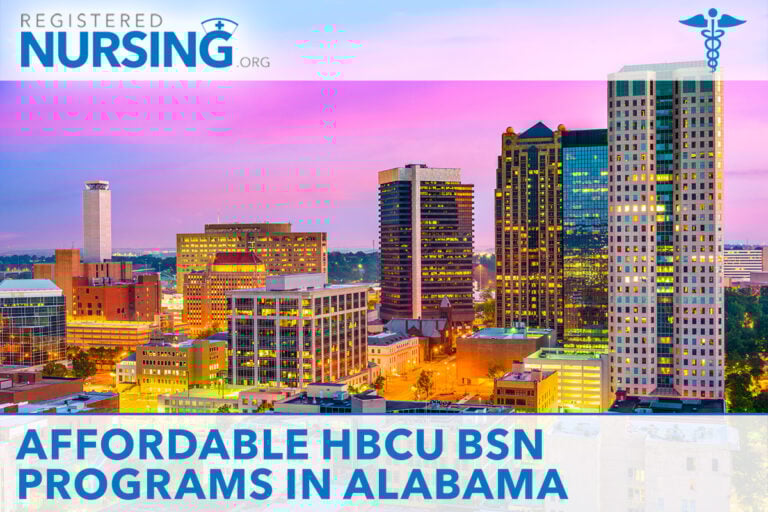
For students pursuing a nursing career in Alabama, Historically Black Colleges and Universities (HBCUs) offer affordable, high-quality Bachelor of Science in Nursing (BSN) programs rooted in community service and excellence. These programs combine rigorous academics with a mission-driven commitment to increasing diversity and leadership in healthcare.
Alabama's HBCUs play a vital role in addressing the state's nursing shortage and improving health equity. They prepare graduates to pass the NCLEX-RN exam, enter clinical practice, and serve communities across the Deep South.
In this article, you'll learn:
- Which HBCUs in Alabama offer accredited, affordable BSN programs
- What tuition and clinical training opportunities to expect
- Online and hybrid BSN options for working nurses
- Career outlook and major employers for BSN graduates in Alabama
See our guide to HBCU nursing schools to learn more about options across the nation.
2026 Best Affordable HBCU BSN Programs in Alabama
Tuskegee University
Tuskegee, AL - Private 4-year - tuskegee.edu

Bachelor's - Nursing
Campus Based - Visit Website
Tuskegee University, an HBCU, offers an affordable Bachelor of Science in Nursing program on campus that prepares students for diverse healthcare careers. Accredited by ACEN, it emphasizes hands-on learning and a comprehensive curriculum, leading to strong NCLEX pass rates and a 100% employment rate for graduates. Admission requires meeting specific academic criteria, including ACT or SAT entrance exams. Affordability is enhanced through financial aid and scholarships for eligible students, making it accessible. This program focuses on building both theoretical knowledge and practical experience without a specific concentration, supporting aspiring nurses from various backgrounds.
- ACEN accredited program.
- 100% employment rate.
- Strong NCLEX pass rates.
- Comprehensive nursing curriculum.
- Hands-on learning focus.
- Financial aid available.
- Scholarships for eligible students.
- Campus-based learning.
- Practical experience emphasized.
- Theoretical knowledge foundation.
Oakwood University
Huntsville, AL - Private 4-year - www2.oakwood.edu

Bachelor's - Bachelor of Science in Nursing, RN-BSN Track
Campus Based - Visit Website
Oakwood University's HBCU BSN program provides comprehensive nursing education with a unique emphasis on bio-psychosocial and spiritual patient care. This campus-based program requires ACT or SAT entrance exams and prepares students through hands-on clinical experiences that develop critical thinking and ethical healthcare practices. The program maintains exceptional NCLEX pass rates, with recent cohorts achieving perfect 100% scores. As an affordable Seventh Day Adventist HBCU, Oakwood offers competitive tuition rates and focuses on producing highly qualified nurses ready for diverse healthcare settings.
- Campus-based program
- Focuses on bio-psychosocial care
- Includes spiritual needs
- High NCLEX pass rates
- Hands-on clinical experiences
- Competitive admission requirements
- Prepares for professional roles
- Emphasizes ethical practices
- Strong critical thinking focus
- Comprehensive care training
Why Choose an HBCU Nursing Program in Alabama?
HBCUs have a rich legacy of producing exceptional nurses and healthcare leaders who serve both local and global communities. In Alabama, these institutions are not only affordable but deeply connected to the communities they serve.
Key reasons to consider an HBCU BSN program in Alabama:
- Affordability: Lower tuition rates for in-state students compared to private universities.
- Supportive Learning Environments: Smaller class sizes, mentoring, and culturally inclusive education.
- Accreditation and Quality: CCNE or ACEN accreditation ensures strong licensure outcomes.
- Community Commitment: Programs emphasize serving rural and underserved populations across Alabama.
Did you know?
According to the Alabama Board of Nursing, more than 25% of nursing graduates in the state come from minority-serving institutions, many of which are HBCUs.
Understanding BSN Education and Career Benefits
A Bachelor of Science in Nursing (BSN) provides the foundation for becoming a Registered Nurse (RN) and is increasingly preferred by Alabama employers. A BSN combines classroom learning, clinical experience, and leadership training.
Why earn a BSN instead of an ADN?
- Access to higher salaries and advancement opportunities
- Better preparation for leadership, community health, and specialty roles
- Preferred qualification at hospitals seeking Magnet® recognition
Alabama Nursing Demand Snapshot
| Metric | Detail |
| RN Employment Growth | 5–7% projected (2024–2030) |
| Average RN Salary | $69,000–$74,000 statewide |
| Major Hiring Areas | Birmingham, Montgomery, Huntsville, Mobile |
| Typical BSN Program Length | 4 years (traditional), 12–24 months (RN to BSN) |
Hospitals, long-term care facilities, and community clinics across Alabama continue to expand their nursing staff, making now an ideal time to enroll in a BSN program.
Learn more about nursing schools in Alabama.
Typical BSN Curriculum and Clinical Training in Alabama
Alabama HBCU BSN programs include foundational nursing science, clinical reasoning, and leadership courses alongside required clinical practice hours.
Sample Core Courses:
- Anatomy & Physiology
- Nursing Fundamentals and Pharmacology
- Health Assessment and Pathophysiology
- Adult Health Nursing
- Maternal-Child and Pediatric Nursing
- Community and Public Health Nursing
- Nursing Leadership and Management
Common Clinical Training Sites
| Region | Clinical Site Example | Partner HBCUs | Focus Area |
| Birmingham | UAB Hospital, Brookwood Baptist | Miles College | Acute care and community outreach |
| Montgomery | Baptist Health, Jackson Hospital | Alabama State University | Medical-surgical and maternal-child health |
| Huntsville | Huntsville Hospital System | Oakwood University | Primary care and gerontology |
| Mobile | USA Health, Providence Hospital | Bishop State Community College (feeder program) | Critical care and public health |
Skills Gained:
- Patient assessment and evidence-based decision making
- Culturally competent care for diverse populations
- Leadership and teamwork in interprofessional settings
- Community and population health engagement
These hands-on experiences prepare graduates to serve in Alabama's wide range of healthcare environments, from urban hospitals to rural clinics.
Online and Hybrid BSN Options at Alabama HBCUs
For students balancing work or family responsibilities, some HBCUs in Alabama offer online or hybrid RN to BSN programs designed for licensed RNs seeking to earn their bachelor's degree.
Flexible BSN Pathways Include:
- Alabama State University (Montgomery): Offers a hybrid RN to BSN completion track allowing working nurses to complete courses online while fulfilling clinicals locally.
- Oakwood University (Huntsville): Provides an online BSN completion program focused on nursing leadership, ethics, and evidence-based practice.
- Tuskegee University: Incorporates technology-enhanced learning modules for advanced nursing courses with in-person clinicals.
Benefits of Online and Hybrid Learning:
- Continue working while completing coursework
- Access lectures and assignments asynchronously
- Complete clinical hours at a local hospital or community health site
Tip: Online RN to BSN students often complete their clinical hours through their current healthcare employer, saving both time and money.
Admissions Overview
Most Alabama HBCUs share similar admissions requirements for traditional BSN or RN to BSN programs.
General Admissions Requirements:
- High school diploma or GED (traditional BSN)
- Minimum GPA (typically 2.75–3.0)
- ACT or TEAS test scores
- Background check and current immunizations
- For RN to BSN: active RN license in Alabama
Competitive Applicant Qualities:
- Prior CNA or healthcare experience
- Volunteer work or leadership in community health
- Strong performance in math and science prerequisites
Applying early improves your chances of admission and maximizes eligibility for financial aid.
Tuition and Financial Aid for HBCU Students
Affordability is one of the greatest advantages of attending an HBCU in Alabama. Most institutions offer reduced in-state tuition, scholarships, and need-based financial assistance.
Common Financial Aid Resources for Alabama Nursing Students
| Resource | Type | Eligibility |
| Alabama Board of Nursing Loan Repayment | State Grant | Licensed RNs serving in Alabama |
| HRSA Nurse Corps Scholarship | Federal | Nursing students in accredited programs |
| HBCU Institutional Scholarships | University | Merit- or need-based |
| Minority Nursing Association Awards | Private | Underrepresented nursing students |
Tip: Many HBCUs in Alabama partner with local hospital systems (such as Baptist Health or Huntsville Hospital) that offer tuition reimbursement or guaranteed employment after graduation.
Nursing Career Outlook in Alabama
Nursing graduates from Alabama HBCUs are highly employable across the state's expanding healthcare system. With several major hospital networks, rural health programs, and community initiatives, BSN-prepared nurses are in strong demand.
Top Employers for BSN Graduates in Alabama:
- UAB Health System (Birmingham): The state's largest employer of RNs with multiple specialty units.
- Baptist Health (Montgomery): Partner to many central Alabama nursing programs.
- Huntsville Hospital System: A large network offering critical care and family health nursing roles.
- Mobile Infirmary Health: Known for surgical and maternal health services.
- DCH Regional Medical Center (Tuscaloosa): Employs many HBCU graduates in leadership and acute care roles.
- Alabama Department of Public Health: Hires BSN-prepared nurses for community health and outreach positions.
Sample Career Roles and Salaries
| Role | Typical Setting | Salary Range (Alabama) |
| Registered Nurse (BSN) | Hospital or clinic | $65,000–$75,000 |
| Nurse Manager | Hospital or leadership role | $80,000–$95,000 |
| Public Health Nurse | County health department | $60,000–$70,000 |
BSN graduates can also pursue graduate degrees such as MSN or DNP to become nurse practitioners or nurse educators, both of which are in high demand across Alabama.
Tips for Choosing the Right HBCU Nursing Program
Finding the right nursing program means balancing accreditation, cost, and fit with your career goals.
Tips to Guide Your Decision:
- Verify the program's CCNE or ACEN accreditation and Alabama Board of Nursing approval.
- Review NCLEX-RN pass rates for the past three years.
- Ask about clinical partnerships and whether placements are arranged for you.
- Consider online or hybrid options if you need schedule flexibility.
- Explore financial aid opportunities, including scholarships and employer reimbursement.
Questions to Ask Admissions Advisors:
- What is the average class size in nursing courses?
- Where do students complete their clinical hours?
- What is your NCLEX-RN pass rate?
- Are there internship or guaranteed job placement programs for graduates?
Alabama's HBCUs stand out for combining affordability, academic excellence, and a mission to produce compassionate, culturally competent nurses. Whether studying at Alabama State University, Oakwood University, or Tuskegee University, students receive hands-on training and support that prepare them to make a meaningful impact in their communities.
With hybrid and online options available, aspiring nurses across Alabama can pursue their BSN on a schedule and budget that works for them—while joining a proud legacy of HBCU nursing excellence.
Frequently Asked Questions (FAQs)
Q: How much does a BSN program at an Alabama HBCU cost?
A: Most in-state students pay between $8,000 and $12,000 per year at public HBCUs, while private institutions like Tuskegee University average closer to $15,000–$20,000 annually.
Q: Do HBCU nursing programs in Alabama differ from other nursing programs?
A: HBCU nursing programs follow the same state and national accreditation standards as other nursing schools, meaning graduates are equally qualified to take the NCLEX-RN and become licensed nurses. What sets Alabama's HBCU programs apart is their mission-driven focus on cultural competence, community health, and mentorship. For example, Alabama State University's College of Health Sciences and Oakwood University's Department of Nursing emphasize service to underserved populations and leadership development within diverse healthcare environments – values deeply embedded in the HBCU tradition.
Q: What is the job outlook for nurses with a BSN in Alabama?
A: Excellent. Healthcare systems statewide are expanding, particularly in rural and community health. Employers such as UAB Health System, Baptist Health, and Huntsville Hospital actively recruit BSN-prepared nurses from Alabama HBCUs.
Latest Articles & Guides
One of the keys to success as a registered nurse is embracing lifelong learning. Our articles and guides address hot topics and current events in nursing, from education to career mobility and beyond. No matter where you are on your nursing journey, there’s an article to help you build your knowledge base.
Browse our latest articles, curated specifically for modern nurses.