Best Family Nurse Practitioner Programs in Washington
- 2026 Best Family Nurse Practitioner Programs in Washington
- Why Washington Is a Great State for FNP Students
- FNP Pathways At-a-Glance: MSN vs. DNP vs. Post-Master's Certificate
- Program Formats in Washington: Online, Hybrid, and Campus
- Clinical Rotations in Washington: Where Students Often Train
- Admissions Snapshot: What Washington Programs Commonly Expect
- Cost, Aid, and Employer Support in Washington
- FNP Certification and Licensure in Washington
- What Washington Employers Often Look For in New FNPs
- A Quick "Program Fit" Checklist
- FAQs
- Latest Articles & Guides
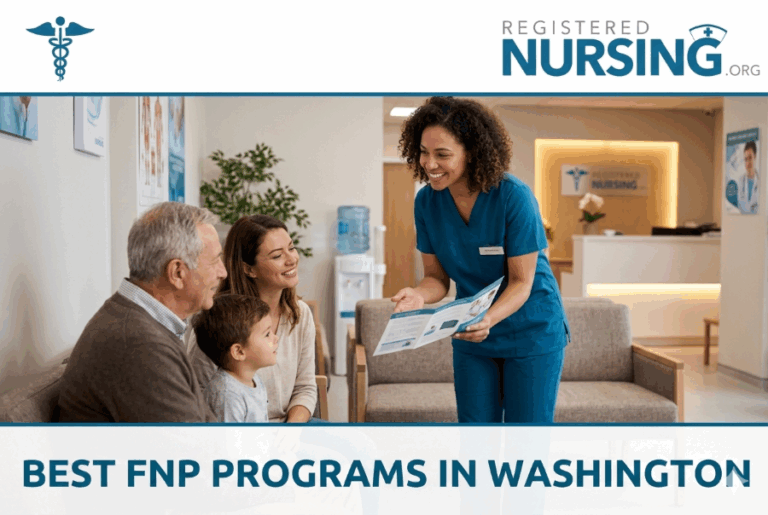
Washington state is a strong place to become a Family Nurse Practitioner (FNP), with major health systems, rural and frontier communities that need primary care providers, and a growing focus on integrated, team-based care. Whether you're aiming to practice in Seattle, Spokane, Tacoma, Vancouver, Bellingham, or the Olympic Peninsula, the right FNP program can prepare you for advanced practice while helping you build local clinical connections.
This article will cover:
- How Washington's FNP programs differ across MSN, DNP, and post-master's certificates
- What to look for in online, hybrid, and on-campus formats
- How clinical placements typically work in Washington (and where students often train)
- Licensing and certification basics for FNP practice in WA
- Smart questions to ask before you apply
2026 Best Family Nurse Practitioner Programs in Washington
Pacific Lutheran University
Tacoma, WA - Private 4-year - plu.edu

Graduate Certificate - Post Graduate Nurse Practitioner Certificate (Family Nurse Practitioner)
Campus Based - Visit Website
Pacific Lutheran University offers a Family Nurse Practitioner Post Graduate Certificate program for nurses seeking advanced specialization. This 28-month campus-based program requires 44 credit hours with classes typically scheduled Thursday evenings and Fridays. The curriculum includes advanced pathophysiology, pharmacotherapeutics, physical assessment, and extensive clinical training across five semesters. Students complete 840 clinical hours in family practice settings. Admission requires a gap analysis of previous coursework to ensure compliance with AACN DNP Essentials competencies. The program prepares graduates for national certification as Family Nurse Practitioners.
- 28-month program length
- 44 total credit hours
- Campus-based program format
- Fall program start
- Thursday/Friday class schedule
- 840 clinical hours required
- Advanced pathophysiology coursework
- Advanced pharmacotherapeutics included
- Advanced physical assessment training
- Primary care procedures instruction
MSN to DNP - Doctor of Nursing Practice (Family Nurse Practitioner (FNP))
Online & Campus Based - Visit Website
Pacific Lutheran University's Doctor of Nursing Practice (DNP) with a Family Nurse Practitioner concentration provides advanced healthcare professionals a pathway to leadership and specialized clinical expertise. This comprehensive program offers flexible full-time and part-time options, preparing nurses to develop quality healthcare systems and improve patient outcomes. Graduates become eligible for Advanced Registered Nurse Practitioner (APRN) licensure after completing the program and passing national certification exams.
- Three program pathway options
- Full-time and part-time study
- Small cohort sizes
- Clinical placements arranged
- CCNE accredited program
- Leadership-focused curriculum
- Inter-professional team preparation
MSN to DNP - Doctor of Nursing Practice (Psychiatric Mental Health Nurse Practitioner (PMHNP))
Online & Campus Based - Visit Website
Pacific Lutheran University's Doctor of Nursing Practice (DNP) in Psychiatric Mental Health Nurse Practitioner (PMHNP) prepares advanced nursing professionals to lead transformative healthcare solutions. This rigorous program offers flexible full-time and part-time options, enabling nurses to develop specialized skills in mental health treatment. Graduates gain expertise in developing quality healthcare systems, collaborating across interdisciplinary teams, and driving significant patient outcome improvements. With small cohort sizes and personalized clinical placements, students receive high-quality, individualized education preparing them for leadership roles in psychiatric nursing.
- Three pathways to DNP
- CCNE Accredited Program
- Full and part-time options
- Specialized PMHNP concentration
- Clinical placements arranged by faculty
BSN to DNP - Doctor of Nursing Practice (Family Nurse Practitioner)
Online & Campus Based - Visit Website
Pacific Lutheran University's Doctor of Nursing Practice (DNP) with a Family Nurse Practitioner concentration is designed for nursing professionals aiming to elevate their careers. This hybrid program blends online coursework with in-person clinical experiences, offering flexibility for working nurses. It prepares graduates for advanced practice roles, focusing on family healthcare across the lifespan. The program emphasizes leadership, quality improvement, and evidence-based practice. Admission requires a BSN or MSN, with specific prerequisites. Financial aid options are available to support students. The curriculum is tailored to meet the needs of diverse learners, ensuring graduates are ready to make a significant impact in healthcare settings.
- Hybrid program format
- Family Nurse Practitioner focus
- Flexible full-time/part-time options
- Clinical placements arranged by PLU
- Small cohort sizes
- Leadership and quality improvement focus
- BSN or MSN admission paths
- Financial aid available
- Prepares for national certification
- Evidence-based practice curriculum
Gonzaga University
Spokane, WA - Private 4-year - gonzaga.edu

MSN to DNP - Doctor of Nursing Practice (Family Nurse Practitioner)
Online & Campus Based - Visit Website
Gonzaga University's Doctor of Nursing Practice (DNP) with a Family Nurse Practitioner concentration offers a comprehensive online program designed for aspiring advanced practice nurses. Students gain extensive clinical preparation through 1,000 practicum hours, learning to provide comprehensive care across patient lifespans. The rigorous 78-credit program balances online coursework with strategic on-campus immersions, preparing graduates for national certification and advanced practice licensure. With a flexible hybrid format and competitive per-credit tuition of $1,170, this program equips nurses to excel in diverse primary care settings like clinics, urgent care centers, and community health centers.
- 78 Total Credits
- 1,000 Practicum Hours
- Online with On-Campus Immersions
- Average 5-Year Completion Time
- Prepares for National Certification
- Minimum 8 On-Campus Immersions
- Faculty Clinical Site Visits
- Comprehensive DNP Project Required
BSN to DNP - Post-Baccalaureate DNP Family Nurse Practitioner
Online Learning - Visit Website
Gonzaga University's Post-Baccalaureate Doctor of Nursing Practice (DNP) Family Nurse Practitioner program prepares advanced practice nurses to provide comprehensive healthcare across all life stages. The rigorous 78-credit online program equips students with advanced clinical skills, featuring 1,000 practicum hours and a flexible 5-year completion timeline. With minimal on-campus immersions and a focus on evidence-based practice, graduates are prepared to take the national certification exam and pursue advanced practice licensure in diverse healthcare settings like private practices, clinics, and community health centers.
- 78 Total Credits
- 1,000 Clinical Practicum Hours
- Average 5-Year Completion
- Online with On-Campus Immersions
- National Certification Eligible
- Multi-Setting Clinical Preparation
- Advanced Health Assessment Focus
- $1,170 Per Credit
- 8 On-Campus Immersions
- Faculty Clinical Site Visits
Seattle University
Seattle, WA - Private 4-year - seattleu.edu

MSN to DNP - Family Nurse-Adult Gerontology Primary Care Nurse Practitioner
Campus Based - Visit Website
Seattle University's Doctor of Nursing Practice in Family Nurse-Adult Gerontology Primary Care prepares advanced practice nurses to deliver comprehensive primary care across diverse populations. This rigorous 3-4 year program offers exceptional training with a 95% board pass rate and high employment potential. Students gain expertise in evidence-based healthcare, learning to provide quality care for patients of all ages while developing leadership skills to address complex healthcare challenges. The program provides multiple certification pathways, including Adult-Gerontology and Family Nurse Practitioner tracks.
- Doctorate in Nursing Practice
- 4 years non-nurses, 3 years RNs
- CCNE Accredited Program
- 85.7% Job Placement Rate
- 109-166 Total Credits
- In-Person Learning Format
- ANCC/AANPCB Certification Eligible
- State-of-the-Art Clinical Lab
Washington State University
Pullman, WA - Public 4-Year - wsu.edu

MSN to DNP - Doctor of Nursing Practice (Family Nurse Practitioner)
Online & Campus Based - Visit Website
Washington State University's Doctor of Nursing Practice (DNP) Family Nurse Practitioner (FNP) track prepares advanced nursing professionals to deliver comprehensive primary care across all age groups. This hybrid program combines online learning with strategic in-person lab experiences, offering a flexible pathway for nurses seeking autonomous practice. Students can complete the program in 3-4 years, with tuition ranging from approximately $87,000-$145,000 depending on residency status. Admission requires a nursing bachelor's degree, minimum 3.0 GPA, unencumbered RN license, and preferred one year of nursing experience. The program emphasizes evidence-based practice, leadership skills, and clinical expertise, positioning graduates to independently diagnose, treat, and manage patient care in diverse healthcare settings.
- Hybrid online/campus program
- Independent practice preparation
- 3-4 year completion options
- Comprehensive primary care focus
- Evidence-based curriculum
- Practicum in Washington/Idaho/Oregon
- 1,000 total practicum hours
- CCNE accredited program
- Multiple campus location options
University of Washington-Tacoma Campus
Tacoma, WA - Public 4-Year - tacoma.uw.edu

MSN to DNP - Family Nurse Practitioner
Online & Campus Based - Visit Website
The University of Washington's Doctor of Nursing Practice Family Nurse Practitioner track prepares advanced nursing professionals to deliver comprehensive, holistic healthcare across the lifespan. Students learn to perform comprehensive health assessments, diagnose and manage acute and chronic conditions, and prescribe therapies. The program offers pre-arranged clinical placements, cutting-edge simulation training, and opportunities to practice in diverse settings from primary care to specialized medical services. Graduates are eligible for national certification and can work independently or within healthcare teams.
- #2 Public DNP Nursing School
- 9-quarter full-time program
- Pre-arranged clinical placements
- Practice across patient lifespan
- National certification eligible
- Multiple practice settings
- State-of-art simulation center
- Leadership skill development
- Veteran's health opportunities
Seattle Pacific University
Seattle, WA - Private 4-year - spu.edu

MSN to DNP - Family Nurse Practitioner (DNP)
Campus Based - Visit Website
Seattle Pacific University's Doctor of Nursing Practice (DNP) in Family Nurse Practitioner prepares advanced practice nurses to lead transformative healthcare systems. This comprehensive program equips students with clinical expertise, leadership skills, and a Christian-centered approach to patient care. Designed for registered nurses with a minimum of 12 months of experience, the program requires a Bachelor's or Master's in Nursing with a 3.0 GPA. The rigorous 11-quarter, full-time curriculum integrates evidence-based practice, advanced clinical training, and interprofessional collaboration across diverse healthcare settings.
- 100 total credit program
- Full-time 11-quarter schedule
- Minimum 3.0 GPA required
- 12+ months RN experience needed
- Advanced clinical practicum included
- Christian values integrated
- Interprofessional collaboration focus
- Leadership and transformation emphasis
BSN to DNP - Doctor of Nursing Practice (Family Nurse Practitioner)
Campus Based - Visit Website
Seattle Pacific University's Doctor of Nursing Practice (DNP) prepares advanced practice nurses to lead healthcare transformation. Designed for RNs with a BSN or MSN, this comprehensive program equips students with clinical expertise, leadership skills, and a Christian values-based approach to healthcare. The 11-quarter, full-time program focuses on evidence-based practice, interprofessional collaboration, and advanced clinical competencies. Graduates develop skills to advocate for quality care, translate research into practice, and address complex healthcare challenges across diverse populations.
- 100 total credit minimum
- 11-quarter full-time program
- Cohort-based learning model
- Requires active RN license
- Minimum 3.0 GPA required
- Christian values foundation
- Advanced clinical practice focus
- Interprofessional collaboration emphasis
- DNP Scholarly Project requirement
- Comprehensive clinical practicums
Why Washington Is a Great State for FNP Students
Washington blends dense metro healthcare networks with rural access challenges, creating strong demand for primary care clinicians who can manage patients across the lifespan.
What makes WA stand out for FNP training:
- Robust clinical ecosystems in the Puget Sound region (multi-specialty systems, academic medicine, community clinics)
- High-need rural regions across Central/Eastern WA and coastal communities
- A wide range of practice settings, from family medicine clinics and urgent care to tribal health and FQHCs
Local examples of clinical/employment landscapes (varies by program partnerships):
- Large systems in Western WA (Seattle/Tacoma metro area)
- Major Eastern WA networks around Spokane
- Community health centers across the state (including rural primary care networks)
Explore nurse practitioner schools in Washington state.
FNP Pathways At-a-Glance: MSN vs. DNP vs. Post-Master's Certificate
Washington programs typically offer three main routes to FNP preparation.
| Pathway | Best For | Typical Length | Outcome |
| MSN-FNP | BSN-prepared RNs seeking NP entry | 2–3 years | Master's + FNP certification eligibility |
| DNP-FNP | Nurses who want the terminal practice degree | 3–4 years | Doctorate + leadership/systems focus |
| Post-Master's FNP Certificate | MSN-prepared nurses adding FNP | 1–2 years | Certificate + FNP certification eligibility |
- Choose MSN if you want the most direct path to practice.
- Choose DNP if you're interested in leadership, policy, complex systems improvement, or academic roles.
- Choose the post-master's FNP certificate if you already hold an MSN in another population focus and want an FNP credential.
Program Formats in Washington: Online, Hybrid, and Campus
Most prospective students in Washington are balancing work, family, and commuting, so program format matters.
Online FNP Programs
Online coursework can be ideal if you:
- Work full-time as an RN
- Live far from a major campus
- Prefer structured weekly learning with recorded lectures
Important reality check: even "fully online" NP programs require in-person clinical rotations.
Hybrid Programs
Hybrid formats combine online learning with in-person intensives (skills labs, simulations, assessments). Hybrid can be a good fit if you want:
- Hands-on skill verification
- Face-to-face faculty time
- A cohort experience without weekly commuting
On-Campus Programs
Campus programs can offer:
- More in-person simulation and lab time
- Stronger on-campus community
- Easier access to local faculty networks
Washington-specific tip: If you're in a rural county, online/hybrid options may expand access, but confirm how the program supports clinical placements in your region.
Clinical Rotations in Washington: Where Students Often Train
Clinical placements vary by program, but Washington FNP students commonly complete rotations in:
- Family medicine and internal medicine clinics
- Community health centers / FQHCs
- Rural health clinics
- Urgent care
- Women's health / OB-GYN clinics
- Pediatrics
- Geriatrics / long-term care
Regional examples students may encounter (depending on affiliation and availability)
- Puget Sound area outpatient networks (Seattle/Tacoma)
- Spokane-area primary care and specialty clinics
- Central WA community clinics (Yakima Valley and surrounding areas)
- Coastal/rural primary care settings (Olympic Peninsula and beyond)
Clinical Placement Question to Ask:
"Do you place students in Washington, or do students find their own preceptors?"
The answer affects your timeline, especially in competitive metro markets.
Admissions Snapshot: What Washington Programs Commonly Expect
While requirements vary, many FNP programs look for:
- Active, unencumbered RN license (Washington or compact eligibility if applicable)
- BSN from an accredited school (for MSN/DNP entry)
- GPA often 3.0+ (sometimes higher for competitive programs)
- Resume/CV and professional references
- Statement of goals (why FNP, why now, why this program)
- Some programs prefer 1–2 years of RN experience (especially in primary care-adjacent settings)
Application edge for WA students: A clear interest in Washington's health needs (rural primary care, underserved communities, behavioral health integration) can strengthen your statement
Cost, Aid, and Employer Support in Washington
Tuition ranges widely by institution and residency status. Beyond tuition, plan for:
- Clinical travel (fuel, ferry routes, lodging in rural placements)
- Immunizations, background checks, drug screens
- NP student malpractice insurance
- Certification exam and licensing fees
Common ways WA nurses fund school:
- Employer tuition reimbursement (large health systems often offer some support)
- Federal loans via FAFSA
- Scholarships through nursing associations, foundations, and universities
- HRSA/NHSC-style programs (where eligible) if planning for underserved areas
Budget-Smart Move: If you're choosing between two similar programs, compare total cost of attendance, not just tuition (fees + travel + required intensives add up fast).
FNP Certification and Licensure in Washington
Most graduates pursue national FNP certification (commonly through AANP or ANCC). After certification, you apply for Washington APRN licensure.
While details can change, generally you should expect:
- Proof of graduation from an accredited NP program
- National certification documentation
- Background check and state application requirements
Tip: If you plan to work near state borders (e.g., Portland/Vancouver area or Idaho border), think ahead about multi-state licensure needs and clinical placements.
What Washington Employers Often Look For in New FNPs
Graduating is step one; being job-ready is the goal. Employers in Washington often value:
- Strong primary care clinical hours (breadth across lifespan)
- Comfort with chronic disease management (diabetes, HTN, asthma/COPD)
- Behavioral health awareness and referral coordination
- Familiarity with team-based care models and community resources
- Cultural humility and experience in diverse populations
High-demand practice settings across WA often include:
- Community clinics and FQHCs
- Family medicine and internal medicine practices
- Urgent care
- Rural clinics and access-focused networks
A Quick "Program Fit" Checklist
Before you apply, confirm these essentials:
- Is the program accredited and aligned with FNP certification eligibility?
- Are you offered a clear clinical placement plan in Washington?
- Does the curriculum cover pediatrics, women's health, geriatrics, and complex chronic care?
- Is there flexibility for part-time pacing if you're working?
- Are there on-campus requirements (intensives) you can realistically attend?
FAQs
Q: How competitive are Washington FNP programs?
A: It depends on the school and format. Programs near major metro areas can be competitive, and clinical placement availability can influence admissions and progression.
Q: Can I switch specialties later with a post-master's certificate?
A: Often, yes. Many MSN-prepared nurses complete post-master's certificates to add a new population focus (like FNP), provided they meet prerequisites and clinical hour requirements.
Q: What's one mistake applicants make when choosing an FNP program?
A: Underestimating clinical logistics. Even a strong online curriculum can become stressful if clinical placements are difficult to secure where you live.
Latest Articles & Guides
One of the keys to success as a registered nurse is embracing lifelong learning. Our articles and guides address hot topics and current events in nursing, from education to career mobility and beyond. No matter where you are on your nursing journey, there’s an article to help you build your knowledge base.
Browse our latest articles, curated specifically for modern nurses.