
No-Cost CNA Programs: What to Know

- What Is a No-Cost CNA Program?
- Why Employers Offer Free CNA Training
- Typical CNA Program Costs (For Comparison)
- Where to Find No-Cost CNA Programs
- National Examples of No-Cost CNA Training Programs
- What Does a Free CNA Program Include?
- Pros and Cons of No-Cost CNA Programs
- How Long Are No-Cost CNA Programs?
- Eligibility Requirements
- What Happens After You Complete Training?
- Are No-Cost CNA Programs Legitimate?
- Tips for Choosing the Right Free CNA Program
- Can You Take CNA Training Online for Free?
- Who Benefits Most from No-Cost CNA Programs?
- Common Misconceptions About "Free" CNA Programs
- Making Your Decision
- Frequently Asked Questions
- Latest Articles & Guides
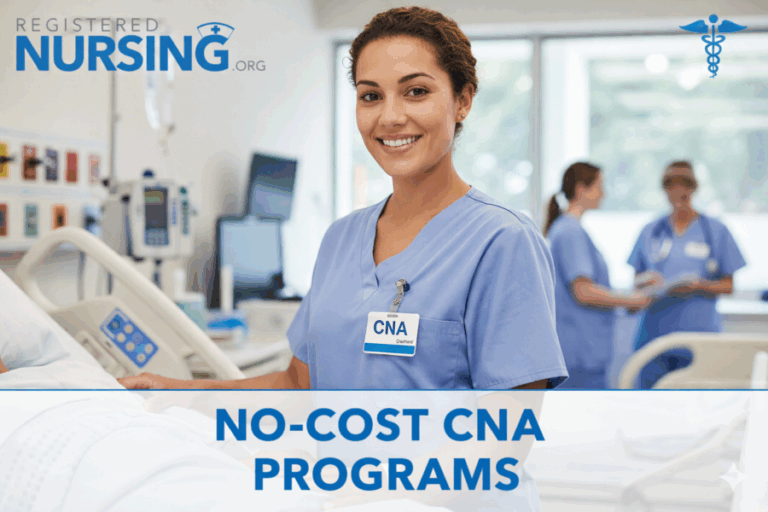
Certified Nursing Assistants (CNAs) are in high demand across hospitals, nursing homes, rehabilitation centers, and home health agencies. If you’re interested in entering the healthcare field but concerned about tuition costs, you may be able to enroll in a no-cost CNA program.
While "free" CNA programs do exist, they often come with specific requirements. Understanding how these programs work can help you take advantage of available opportunities without unexpected surprises.
In this guide, you'll learn:
- What "no cost" CNA programs really mean
- Where to find free CNA training opportunities
- Eligibility requirements and common obligations
- Pros and cons of employer-sponsored programs
- Tips for choosing the right option
What Is a No-Cost CNA Program?
A no-cost CNA program is a training pathway where students do not pay upfront tuition. Instead, the cost is covered by:
- Healthcare employers
- State workforce development programs
- Community grants or scholarships
- Federal funding initiatives
- Reimbursement programs
However, "free" does not always mean there are no conditions. Some programs require you to work for a sponsoring employer for a certain period after completing training.
Why Employers Offer Free CNA Training
Healthcare systems face ongoing staffing shortages, particularly in long-term care and entry-level patient care roles. Offering free CNA training helps facilities:
- Recruit motivated candidates
- Reduce turnover
- Build internal career ladders
- Strengthen community workforce pipelines
For prospective students, this creates an opportunity to enter the healthcare field without taking on educational debt.
Typical CNA Program Costs (For Comparison)
Understanding what you’re saving helps put free programs into perspective.
| Expense Category | Typical Cost Range |
| Tuition | $500 – $2,500 |
| Textbooks & Materials | $100 – $300 |
| Uniforms & Supplies | $50 – $200 |
| State Exam Fee | $75 – $150 |
| Background Check | $30 – $75 |
| Total Average Cost | $750 – $3,000+ |
No-cost programs may cover some or all of these expenses. Learn more about typical CNA program costs and explore traditional CNA training programs for comparison.
Where to Find No-Cost CNA Programs
1. Employer-Sponsored CNA Training
Many long-term care facilities and nursing homes offer paid training programs. In these programs:
- The facility covers tuition
- Students may receive a stipend or hourly wage during training
- Graduates agree to work for the employer for a set period (often 6–12 months)
This is one of the most common ways to receive free CNA training.
Example:
Large nursing home chains, regional healthcare systems, and rehabilitation centers frequently advertise "earn while you learn" CNA programs.
2. Workforce Development Grants
State and local workforce agencies often fund CNA programs for:
- Unemployed individuals
- Low-income applicants
- Career changers
- Veterans
- Dislocated workers
Programs may be funded through:
- Workforce Innovation and Opportunity Act (WIOA)
- State workforce commissions
- Local job training partnerships
These programs typically require proof of eligibility but do not require employment commitments.
3. High School or Community Partnerships
Some high schools, adult education centers, and community colleges partner with healthcare employers to offer reduced-cost or fully funded CNA training.
This option is often available to:
- High school seniors
- Recent graduates
- Adult learners returning to school
4. Medicaid-Approved Nursing Facility Training
Federal regulations require Medicaid-certified nursing facilities to reimburse CNA training and testing costs if:
- The student is employed by the facility within 12 months of completing training
In some cases, facilities cover training upfront to simplify the process.
National Examples of No-Cost CNA Training Programs
Several major healthcare systems and federally funded programs offer tuition-free or employer-sponsored CNA training to help address workforce shortages.
Examples include:
- University of Maryland Medical Center (UMMC) – Has offered paid CNA training through workforce development initiatives, preparing participants for certification and employment within the system.
- Northwestern Medicine – Provides internal CNA training pathways for eligible employees transitioning into patient care roles.
- Adventist HealthCare CNA Academy – Operates a covered CNA Academy model that includes classroom and clinical instruction leading to certification and potential employment.
- Job Corps – A nationwide federal program that offers free CNA training, often including housing and career placement support.
Availability varies by region and hiring needs.
What Does a Free CNA Program Include?
Most no-cost CNA programs still include the same state-required components as paid programs:
- Classroom instruction (typically 75–150 hours depending on state)
- Clinical training in a healthcare setting
- Skills lab practice
- Preparation for the state competency exam
Some programs also cover:
- State certification exam fees
- Background checks
- CPR certification
- Uniforms and textbooks
Always confirm what is included before enrolling.
Pros and Cons of No-Cost CNA Programs
Advantages
- No upfront tuition expense
- Fast entry into the workforce (4–12 weeks typical)
- Potential paid training
- Immediate employment opportunities
- Lower financial risk
Potential Drawbacks
- Employment commitment requirements
- Limited flexibility in clinical placement
- Strict attendance policies
- May be tied to long-term care settings only
Before enrolling, review any contract carefully.
How Long Are No-Cost CNA Programs?
CNA programs are short-term training programs.
| Program Type | Typical Length |
| Full-Time | 4–8 weeks |
| Part-Time | 8–12 weeks |
| Evening/Weekend | 8–16 weeks |
Free programs follow the same timeframe as paid programs because training hours are regulated by state boards of nursing.
Eligibility Requirements
Eligibility varies by program, but you may need:
- High school diploma or GED (sometimes not required)
- Minimum age (often 16–18 depending on state)
- Background check clearance
- TB test and immunizations
- Drug screening
- Basic English proficiency
Workforce-funded programs may also require income verification or unemployment documentation.
What Happens After You Complete Training?
After completing a CNA training program, you must:
- Pass your state's CNA competency exam (written + skills test)
- Be added to your state's nurse aide registry
- Begin employment
If you completed an employer-sponsored program, you will typically begin working immediately at the sponsoring facility.
Learn more about:
Are No-Cost CNA Programs Legitimate?
Yes, but it's important to verify that:
- The program is state-approved
- Clinical hours meet state requirements
- Graduates are eligible to take the state certification exam
You can confirm program approval through your state's board of nursing or nurse aide registry.
Tips for Choosing the Right Free CNA Program
Before enrolling, ask:
- Is the program state-approved?
- What expenses are covered?
- Is there an employment contract?
- What happens if I leave before the required work period?
- What is the job placement rate?
- Does the facility have strong staff retention?
Choosing a reputable program protects your time and career goals.
Can You Take CNA Training Online for Free?
Fully online CNA programs are rare because clinical hours must be completed in person. However, some programs offer:
- Hybrid learning (online theory + in-person clinical)
- Employer-sponsored hybrid models
Be cautious of programs claiming to offer fully online CNA certification without clinical hours; these are unlikely to meet state requirements.
Who Benefits Most from No-Cost CNA Programs?
These programs are especially beneficial for:
- Individuals entering healthcare for the first time
- Career changers seeking a quick transition
- Students planning to pursue LPN or RN programs later
- Those with limited financial resources
Many nursing students start as CNAs to gain hands-on patient care experience before advancing their education. Learn more about entry-level nursing programs.
Common Misconceptions About "Free" CNA Programs
Myth: Free means lower quality.
Reality: Many employer-sponsored programs are highly structured and closely supervised.
Myth: You're locked into a long-term employment contract.
Reality: Most commitments range from 6–12 months.
Myth: You can't advance your career.
Reality: Many employers offer tuition assistance for LPN and RN programs after CNA employment.
Making Your Decision
No-cost CNA programs can provide a practical, affordable entry point into the healthcare field. Whether funded by employers, workforce agencies, or state initiatives, these programs remove one of the biggest barriers to entering a healthcare career: tuition costs.
However, prospective students should carefully review program details, understand any employment commitments, and confirm state approval before enrolling.
Frequently Asked Questions
Are no-cost CNA programs really completely free?
Many no-cost CNA programs cover tuition and training expenses upfront, but some require you to meet certain conditions, such as working for the sponsoring employer after certification. Always confirm what costs are included and whether there are any contractual obligations.
What happens if I don't meet the work requirement after an employer-sponsored CNA program?
If you leave before completing the required employment period (often 6–12 months), you may be responsible for repaying some or all of the training costs. The repayment amount and terms vary by employer, so it's important to review the agreement carefully before enrolling.
Do free CNA programs include the state certification exam?
Some programs cover the cost of the CNA competency exam, while others require you to pay the testing fee separately. Be sure to ask whether exam fees, background checks, uniforms, and textbooks are included.
Latest Articles & Guides
One of the keys to success as a registered nurse is embracing lifelong learning. Our articles and guides address hot topics and current events in nursing, from education to career mobility and beyond. No matter where you are on your nursing journey, there’s an article to help you build your knowledge base.
Browse our latest articles, curated specifically for modern nurses.