Best Pediatric Nurse Practitioner Programs in New York
- 2026 Best Pediatric Nurse Practitioner Programs in New York
- PNP Roles in New York: Primary Care vs Acute Care
- New York PNP Pathways: MSN vs DNP vs Post-Master's Certificates
- Online, Hybrid, and Campus PNP Options In New York
- New York Clinical Training Examples for PNP Students
- Certification Basics: What PNP Students Typically Prepare For
- New York NP Practice and Licensure Considerations
- Salary and Outlook: Why PNP Demand Remains Strong
- FAQs
- Latest Articles & Guides
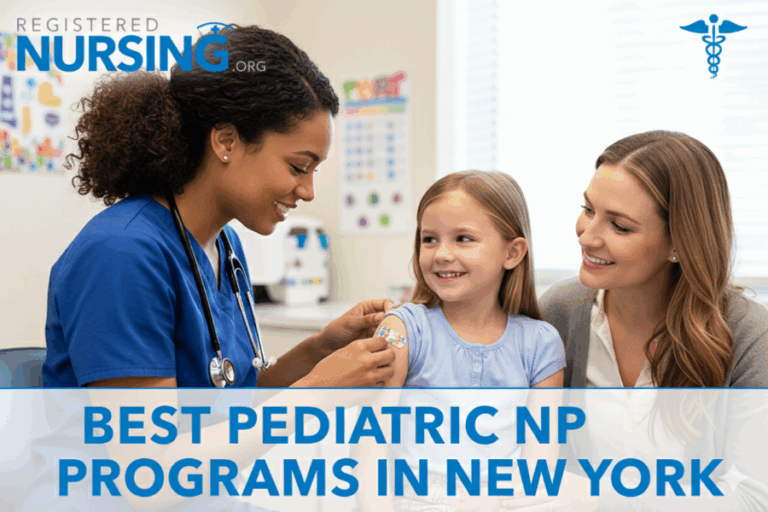
With its diverse population, New York is one of the most dynamic states in the country to train to become a Pediatric Nurse Practitioner (PNP). From high-acuity children's hospitals in NYC to pediatric primary care and community health programs across Long Island, the Hudson Valley, Upstate, and Western NY, the state offers a wide range of patient populations and clinical settings.
In this article, you'll learn:
- The difference between MSN, DNP, and post-master's PNP certificates
- How New York programs structure online, hybrid, and campus learning
- New York-specific clinical training examples (primary care, specialty, and acute care)
- How PNP certification works (including PNCB exams) and how that connects to NY practice
- What to look for when comparing "best" PNP programs in New York
2026 Best Pediatric Nurse Practitioner Programs in New York
Stony Brook University
Stony Brook, NY - Public 4-Year - stonybrook.edu

BSN to MSN - Pediatric Primary Care Nurse Practitioner
Online & Campus Based - Visit Website
Stony Brook University's Pediatric Primary Care Nurse Practitioner program is a rigorous 45-credit hybrid program that prepares advanced nursing professionals to provide comprehensive healthcare to children and families. This distance education program with on-site requirements focuses on developing expert providers who can promote, maintain, and restore child health across various settings. Students learn to identify health risks, diagnose and manage acute and chronic pediatric conditions while developing critical skills in health promotion, leadership, and patient advocacy. The program requires entrance exams for master's level admission. Graduates are equipped to function as educators, consultants, and change agents in pediatric healthcare.
- 45-credit distance education program
- Hybrid learning with on-site requirements
- Prepares pediatric nurse practitioners
- Advanced clinical practice courses
- Evidence-based practice focus
- Leadership and advocacy training
- Comprehensive pediatric health management
BSN to MSN - Nursing, MS (Pediatric Primary Care Nurse Practitioner)
Campus Based - Visit Website
Stony Brook University's Nursing, MS program with a Pediatric Primary Care Nurse Practitioner concentration prepares nurses as expert providers of primary healthcare to children and families. This 45-credit campus-based program focuses on promoting health, identifying risks, and managing acute and chronic illnesses through advanced health assessment, clinical pharmacology, and evidence-based practice. The program develops skills for roles as educators, leaders, consultants, advocates, and change agents. As a master's level program, it requires entrance exams for admission. The curriculum includes comprehensive clinical practice courses and prepares graduates for advanced pediatric nursing roles.
- Pediatric Primary Care concentration.
- 45 total credits required.
- Distance education format.
- On-site requirements included.
- Prepares expert healthcare providers.
- Focuses on children's health.
- Covers acute and chronic illnesses.
- Includes clinical practice courses.
- Advanced health assessment training.
- Clinical pharmacology coursework.
RN to MSN - Pediatric Primary Care Nurse Practitioner
Online Learning - Visit Website
Stony Brook University offers an online Master of Science in Pediatric Primary Care Nurse Practitioner program designed for nurses aiming to specialize in pediatric care. This flexible program equips students with skills to provide comprehensive healthcare to children from infancy through adolescence, making it ideal for working professionals. The curriculum covers advanced pediatric nursing practices, health assessment, and disease prevention. Admission requires a BSN, RN license, and relevant experience. As a master's level program, it requires entrance exams. Graduates are prepared for certification and rewarding careers in pediatric healthcare settings with financial aid options available.
- Online Master of Science
- Pediatric Primary Care focus
- Flexible for working professionals
- BSN and RN license required
- Prepares for certification
- Comprehensive pediatric curriculum
- Financial aid available
- Advanced nursing practices covered
- Health assessment training
- Disease prevention strategies
New York University
New York, NY - Private 4-year - nyu.edu

BSN to MSN - Pediatrics Nurse Practitioner Primary Care/Acute Care (Primary Care/Acute Care)
Online & Campus Based - Visit Website
NYU's Pediatrics Nurse Practitioner Primary Care/Acute Care dual-focus program prepares registered nurses to provide comprehensive pediatric care across multiple settings. This hybrid program combines online coursework with clinical immersion, developing skills to assess, diagnose, and treat infants through young adults in both primary and acute care environments. Students complete at least 415 clinical hours with expert PNPs, gaining advanced procedural training and telehealth principles. The program prepares graduates for multiple national certification options, emphasizing evidence-based practice and interprofessional education while developing critical thinking skills for diverse pediatric healthcare challenges.
- Hybrid learning model
- Clinical placements with expert PNPs
- National certification preparation
- Interprofessional education opportunities
- Advanced procedural skill training
- Minimum 415 clinical hours
- Multiple certification options
- Evidence-based practice focus
- Telehealth principles integrated
BSN to MSN - Pediatrics Nurse Practitioner Primary Care
Online & Campus Based - Visit Website
New York University's Pediatric Nurse Practitioner Primary Care program offers MS or DNP degrees through a hybrid format that prepares RNs for advanced pediatric roles. The curriculum includes core and advanced courses in pathophysiology, pharmacology, and pediatric care, with clinical placements in primary and specialty settings. Admission requires a BSN and pediatric experience, with the program emphasizing evidence-based practice, leadership skills, and family-centered care. Graduates are eligible for national certification and state licensure, with opportunities for prescription privileges and DEA number eligibility upon completion of this comprehensive pediatric primary care program.
- Hybrid program format.
- MS or DNP degree options.
- Prepares for national certification.
- Clinical placements arranged.
- Requires BSN and experience.
- Core and advanced courses.
- Focus on pediatric primary care.
- Evidence-based practice emphasis.
- Interactive educational experiences.
- Expert faculty support.
Graduate Certificate - Advanced Certificate: Pediatric NP Acute Care (Acute Care)
Online & Campus Based - Visit Website
New York University's post-master's Advanced Certificate in Pediatric Nurse Practitioner Acute Care prepares experienced nurses for specialized roles in pediatric acute care settings through a hybrid model. This 11-13 credit program combines online learning with two on-campus intensives, can be completed in one year with spring semester entry, and requires at least one year of pediatric experience. The curriculum focuses specifically on acute, complex, and chronic illness management, preparing graduates for CPNP-AC certification and New York State licensure with prescription privileges. Faculty arrange clinical placements in specialty settings, emphasizing evidence-based practice, interprofessional education, and culturally sensitive healthcare.
- Post-master's advanced certificate program.
- Hybrid model with online and on-campus components.
- 11-13 credits required.
- Can be completed in one year.
- Spring semester entrance.
- Distance learning with two on-campus intensives.
- Prepares for CPNP-AC certification exam.
- Meets New York State licensure requirements.
- Clinical placements arranged by faculty.
- Individualized attention and goals.
Graduate Certificate - Advanced Certificate: Pediatric NP Acute Care (Primary Care)
Online & Campus Based - Visit Website
NYU's Advanced Certificate in Pediatric NP Acute Care enables Primary Care and Family Nurse Practitioners to transition into pediatric critical care roles. This hybrid program requires 11-13 credits delivered through distance learning with two campus intensives, preparing experienced NPs to manage complex pediatric cases in emergency and intensive care settings. Designed for completion in one year with spring entry, the program emphasizes acute care skills development through clinical simulation and expert faculty guidance. Graduates are prepared for CPNP-AC certification, with clinical placement support and individualized experiences enhancing their ability to provide comprehensive pediatric acute care across diverse healthcare environments.
- 11-13 credit distance learning
- Two 2.5-day campus intensives
- Hybrid learning model
- Prepares for CPNP-AC exam
- Completed in one year
- Spring semester entry
- Clinical placement support
- Pediatric certification preparation
- Individualized clinical experiences
- Expert faculty interaction
MSN to DNP - Pediatric Nurse Practitioner (DNP)
Campus Based - Visit Website
NYU's Doctor of Nursing Practice in Pediatric Nurse Practitioner prepares advanced clinical leaders through a campus-based program requiring 72 credits and 1000 clinical hours. This DNP program develops expert practitioners capable of transforming pediatric healthcare through evidence-based practice, health policy integration, and interprofessional leadership. Admission requires a 3.5 GPA, active RN license, and clinical experience, with multiple entry pathways available. The comprehensive curriculum focuses on designing innovative healthcare solutions and improving patient outcomes, culminating in a DNP project that addresses complex pediatric health challenges while preparing graduates for advanced clinical leadership roles.
- 72 total program credits
- 1000 clinical practice hours
- Multiple entry pathway options
- Advanced clinical leadership training
- Evidence-based practice focus
- Interprofessional healthcare approach
- 3.5 GPA minimum requirement
- Active RN license needed
- DNP project completion required
- Healthcare policy integration
University of Rochester
Rochester, NY - Private 4-year - rochester.edu
BSN to MSN - Pediatric Nurse Practitioner
Online & Campus Based - Visit Website
The University of Rochester's Pediatric Nurse Practitioner hybrid program prepares advanced nursing professionals to deliver comprehensive healthcare for children across diverse settings. This program focuses on holistic care from well-child screenings to managing complex pediatric conditions, including behavioral health issues like ADHD. Graduates gain expertise to work in primary care offices, schools, hospitals, and specialty practices. The program offers multiple degree pathways and prepares students for national certification. As a master's level program, it requires entrance exams as part of admissions.
- Hybrid program format
- National certification preparation
- Multiple degree pathways
- Comprehensive pediatric care focus
- Advanced behavioral health training
BSN to MSN - Pediatric/Neonatal Nurse Practitioner (Neonatal)
Online & Campus Based - Visit Website
University of Rochester's Pediatric/Neonatal Nurse Practitioner program offers a specialized Neonatal concentration in a hybrid format. This master's program prepares nurses for advanced care of low- and high-risk neonates and infants, particularly in NICU settings like the Gosnell Family Neonatal Intensive Care Unit. Students gain clinical experience focused on neonatal specialties and become eligible for dual national certification. The curriculum combines pediatric and neonatal training for comprehensive infant care. Admissions require a BSN degree and relevant experience, with entrance exams typically required for this graduate-level program.
- Hybrid program format.
- Neonatal concentration available.
- Master's degree option.
- Clinical experience at Gosnell NICU.
- Dual national certification eligibility.
- Prepares for NICU settings.
- Focus on low- and high-risk infants.
- Pediatric and neonatal specialties combined.
- Advanced nursing care training.
- Curriculum includes neonatal pathways.
CUNY Lehman College
Bronx, NY - Public 4-Year - lehman.edu
MSN to DNP - Doctor of Nursing Practice (Pediatric Nurse Practitioner)
Campus Based - Visit Website
CUNY Lehman College's Doctor of Nursing Practice (DNP) program offers a specialized Pediatric Nurse Practitioner concentration for advanced nursing professionals. This practice-focused doctoral program requires a master's degree with a minimum 3.2 GPA, current nursing licensure, and professional certification. The 39-credit curriculum emphasizes evidence-based practice, healthcare policy, and advanced clinical methodologies, preparing nurses for leadership roles in pediatric care. The program requires one year of advanced practice experience and focuses on complex healthcare systems. No entrance exam is required for this doctoral program.
- 39-credit practice-focused DNP
- Family/Pediatric Nurse Practitioner tracks
- Master's degree prerequisite
- Minimum 3.2 graduate GPA
- Advanced nursing leadership focus
- Requires current nursing license
- One year advanced practice experience
- Complex healthcare systems curriculum
- Evidence-based practice emphasis
- Health policy coursework included
BSN to DNP - Doctor of Nursing Practice (BS TO DNP PROGRAM) (Pediatric Nurse Practitioner)
Campus Based - Visit Website
Lehman College's BS to DNP program with a Pediatric Nurse Practitioner concentration prepares baccalaureate-prepared nurses for advanced practice. This campus-based program requires a BSN degree with a 3.2 GPA, current national certification, and at least one year of Advanced Practice Nurse experience. The 39-credit curriculum focuses on advanced nursing practice, healthcare leadership, evidence-based practice, and pediatric specialization. Application requirements include transcripts, three letters of reference, a personal statement, and a nursing essay. No entrance exam is required for this doctoral pathway program.
- Campus-based program
- Pediatric Nurse Practitioner concentration
- 39 credits coursework
- Requires baccalaureate degree
- Minimum GPA 3.2
- Current national certification needed
- One year APN experience required
- Three letters of reference
- Personal statement required
- Nursing essay part of application
Molloy University
Rockville Centre, NY - Private 4-year - molloy.edu

BSN to MSN - Pediatric Nurse Practitioner - Primary Care (Primary Care)
Online & Campus Based - Visit Website
Molloy University's Pediatric Nurse Practitioner - Primary Care master's program prepares nurses for comprehensive healthcare of children from infancy through young adulthood. This hybrid program requires the GRE entrance exam and focuses specifically on primary care, emphasizing health maintenance, illness prevention, and patient education. The 42-credit curriculum includes advanced clinical training with INACSL-endorsed simulations and multiple practicum courses. Applicants need a 3.0 minimum undergraduate GPA and one year of clinical experience. Graduates achieve nearly 100% certification exam pass rates, ready to provide sophisticated pediatric care across various healthcare settings.
- 42 total credit program
- Hybrid learning format
- Advanced clinical training
- 3.0 minimum undergraduate GPA
- One year clinical experience required
- INACSL Clinical Simulation endorsement
- Multiple practicum courses
- National certification preparation
- Primary care pediatric focus
Columbia University in the City of New York
New York, NY - Private 4-year - columbia.edu

MSN to DNP - Pediatric Primary Care Nurse Practitioner
Campus Based - Visit Website
Columbia University's Doctor of Nursing Practice in Pediatric Primary Care Nurse Practitioner program prepares advanced nursing professionals through rigorous academic and clinical training. This DNP program emphasizes evidence-based practice and advanced clinical interventions for comprehensive pediatric healthcare. Students develop specialized skills in diagnosing, treating, and managing pediatric populations across various healthcare settings. The program requires an entrance exam for admission. Columbia's curriculum focuses on patient-centered care, equipping graduates with expert knowledge to deliver high-quality pediatric primary care services.
- Advanced Pediatric Nursing Specialization
- Doctor of Nursing Practice Degree
- Comprehensive Clinical Training
- Evidence-Based Pediatric Healthcare
- Specialized Patient Care Skills
Upstate Medical University
Syracuse, NY - Public 4-Year - upstate.edu

BSN to DNP - Bachelor of Science to Doctor of Nursing Practice (Pediatric Nurse Practitioner)
Campus Based - Visit Website
The Pediatric Nurse Practitioner track in Upstate Medical University's BS to DNP program delivers specialized training through a three-year hybrid format. Students complete 87 credit hours and 200 project hours, gaining extensive clinical experience focused on pediatric healthcare. The curriculum emphasizes evidence-based practice, leadership skills, and inter-professional education, preparing graduates to provide holistic care to children in various settings. With competitive tuition of $25,120 annually for NYS residents, this program requires an entrance exam for doctoral-level admission and offers advanced career opportunities in pediatric nursing.
- Pediatric Nurse Practitioner specialization
- 3-year hybrid program
- 87 credit hours total
- 200 clinical project hours
- $25,120 annual tuition for NYS residents
- Advanced leadership training
- Evidence-based practice focus
- Multiple workplace options
- Inter-professional education opportunities
Teachers College at Columbia University
New York, NY - Private 4-year - tc.columbia.edu
MSN to DNP - Pediatric Primary Care Nurse Practitioner Program
Campus Based - Visit Website
The Pediatric Primary Care Nurse Practitioner program at Teachers College, Columbia University is a rigorous doctoral-level program that prepares advanced nursing professionals to deliver comprehensive healthcare to children from infancy through adolescence. This campus-based program emphasizes evidence-based practice and advanced clinical skills, equipping graduates to work in diverse settings like pediatric clinics, hospitals, and community health centers. As a doctorate-level program, it requires an entrance exam such as the GRE. The program's focus on holistic patient care and specialized clinical training makes it particularly strong for those seeking to make meaningful contributions to child health and wellness.
- Doctoral-level nursing program
- Pediatric primary care focus
- Advanced clinical training
- Comprehensive child healthcare
- Evidence-based practice emphasis
PNP Roles in New York: Primary Care vs Acute Care
Most PNP programs align to one of two tracks:
Pediatric Primary Care Nurse Practitioner (PNP-PC)
Focused on outpatient and longitudinal care, including:
- Well-child visits, immunizations, screenings
- Common pediatric illnesses and chronic conditions (asthma, ADHD, diabetes)
- Growth/development, school and behavioral concerns
- Family education and care coordination
Common New York Settings: pediatric primary care offices, school-based health centers, FQHC/community health clinics, pediatric specialty outpatient practices.
Pediatric Acute Care Nurse Practitioner (PNP-AC)
Focused on high-acuity and hospital-based pediatrics, including:
- Inpatient pediatrics, ED/urgent consults, specialty services
- Complex conditions, acute deterioration, post-op care
- PICU/NICU-aligned team care (program-dependent)
- Rapid diagnostics, procedures (scope varies), discharge planning
Common New York Settings: children's hospitals, academic medical centers, specialty inpatient units, pediatric EDs, complex care programs.
New York PNP Pathways: MSN vs DNP vs Post-Master's Certificates
MSN PNP Programs
Best for BSN-prepared RNs seeking the most direct path to advanced pediatric practice.
Typical outcomes:
- Graduate NP education in a pediatric population focus
- Preparation for national certification aligned to your track
- Strong fit for students seeking faster entry into clinical practice
DNP PNP Programs
Best for students who want pediatric NP preparation plus doctoral-level training in:
- Evidence-based practice and outcomes improvement
- Leadership, quality/safety, and systems thinking
- Population health and program development
Why New York students choose DNP: strong alignment with large, complex health systems and pediatric specialty networks across NYC and major Upstate metros.
Post-Master's PNP Certificates
Best for MSN-prepared nurses or APRNs changing or adding a pediatric population focus (PC or AC).
Common reasons NY nurses choose this route:
- Transitioning from another NP population (e.g., family) into pediatrics
- Expanding into pediatric specialty or hospital-based practice
- Aligning credentials to a pediatric role requirement
Explore nurse practitioner schools in New York.
Quick Comparison Table: Which PNP Degree Makes Sense?
| Pathway | Best For | Typical Timeframe | End Result |
| MSN | BSN RNs entering pediatric advanced practice | ~2–3 years | PNP track prep + certification eligibility |
| BSN to DNP | RNs wanting doctoral training + pediatrics | ~3–4 years | PNP track prep + DNP credential |
| Post-Master's PNP Certificate | MSN/APRN adding pediatrics | ~1–2 years | New pediatric population focus + certification eligibility |
| Post-MSN DNP | Certified APRNs who want the DNP | ~1–2+ years | DNP credential (role typically stays aligned with existing cert) |
Online, Hybrid, and Campus PNP Options In New York
Most New York students will see one of these formats:
Online Coursework + In-Person Clinicals
- Didactic courses online (case work, discussions, exams)
- Clinicals completed in-person at approved New York sites with qualified preceptors
Hybrid Programs
- Online learning with required on-campus intensives (skills, simulation, assessments)
- Often a strong fit for nurses balancing shifts across NYC/Long Island/Upstate
Campus-Based Programs
- In-person classes and labs
- Clinical rotations commonly supported through regional partnerships
Scheduling Tip: If you're commuting (e.g., Westchester ↔ NYC, Long Island ↔ Manhattan, or Capital Region ↔ Hudson Valley), confirm how often intensives occur and whether dates are published far in advance.
New York Clinical Training Examples for PNP Students
New York offers unusually broad pediatric clinical variety. Strong clinical planning typically includes multiple settings to meet age-range and acuity requirements.
Primary Care Clinical Examples (PNP-PC)
- Pediatric primary care practices (well-child + acute visits)
- School-based health centers (adolescents, behavioral screening, chronic disease support)
- Community clinics/FQHCs serving diverse families and languages
- Pediatric specialty clinics (endocrine, pulmonary, GI, developmental pediatrics)
Acute Care Clinical Examples (PNP-AC)
- Inpatient pediatrics and specialty units
- Pediatric ED consult experiences (program-dependent)
- Children's hospital service lines (cardiology, neuro, hem/onc)
- Complex care and medically fragile pediatrics programs
Clinical Placement Tip: Ask programs exactly how they support affiliation agreements and preceptor approvals in New York. Even when students find sites, schools often require formal contracts and credential verification; start outreach early.
Certification Basics: What PNP Students Typically Prepare For
PNP certification is typically administered through the Pediatric Nursing Certification Board (PNCB) for primary care (CPNP-PC) and acute care (CPNP-AC), aligned with your educational track.
PNCB also outlines eligibility requirements and time-limited eligibility policy updates (important for planning exam timing).
Choosing Programs with Certification in Mind:
When comparing PNP programs, confirm that the curriculum and clinical experiences align with the certification exam you plan to take (PC vs. AC).
New York NP Practice and Licensure Considerations
New York's NP credentialing is handled through the New York State Education Department (NYSED) Office of the Professions, which outlines NP certification requirements and application steps, including that applicants must be licensed as an RN in NY (or apply for NY RN licensure first).
New York also describes NP practice requirements, including written practice protocols and a written practice agreement with a collaborating physician until the NP completes 3,600 hours of experience as a licensed/certified NP.
NY Planning Tip: If you're early-career, ask programs how they prepare students for New York's practice agreement/protocol expectations and how employers typically structure onboarding for new NPs.
Salary and Outlook: Why PNP Demand Remains Strong
Nationally, the Bureau of Labor Statistics projects 35% employment growth for nurse practitioners (and related APRN roles) from 2024–2034. While PNP earnings vary by region and setting, New York's pediatric demand is driven by a blend of high-volume metro care, specialty pediatrics, and access needs in many Upstate communities.
FAQs
Q: Do New York PNP Programs Offer Online Options?
A: Many programs offer online or hybrid coursework, but clinicals are always in-person and must be completed at approved sites, often within New York for students planning to work in-state.
Q: What's the Difference Between PNP-PC and PNP-AC?
A: PNP-PC focuses on outpatient and long-term pediatric care, while PNP-AC focuses on inpatient and high-acuity pediatrics (children's hospitals, specialty units, complex care).
Q: Can I Become a PNP if I Already Have an MSN?
A: Often, yes. Many nurses pursue a post-master's PNP certificate to add a pediatric population focus without completing another full degree.
Q: What Should I Ask Programs About Clinical Placements In New York?
A: Ask whether the school places, assists, or expects you to secure all preceptors, and how they handle affiliation agreements and timeline realities across NYC/Long Island/Upstate.
Latest Articles & Guides
One of the keys to success as a registered nurse is embracing lifelong learning. Our articles and guides address hot topics and current events in nursing, from education to career mobility and beyond. No matter where you are on your nursing journey, there’s an article to help you build your knowledge base.
Browse our latest articles, curated specifically for modern nurses.