

What you’ll learn in this article…
- CHPN certification requires an active RN license plus two years of hospice experience.
- Median RN pay exceeds $86,000 nationally, with top states surpassing $120,000.
- Hospice job demand is accelerating as the aging population drives rapid sector growth.
A hospice nurse provides skilled comfort care to patients in the final weeks or months of life, focusing on symptom management, pain control, and quality of life rather than curative treatment. Unlike palliative care, which can begin at diagnosis and run alongside treatment, hospice care is reserved for patients with a prognosis of six months or less and a decision to forgo aggressive intervention.
Hospice nurses are not exclusively registered nurses. The care team includes RNs who lead clinical planning and medication management, licensed practical nurses who deliver direct care under RN supervision, and certified nursing assistants who provide personal care and support. Each role requires state licensure or certification, but the education pathways, scope of practice, and earning potential differ significantly.
Pay varies by credential and setting. In 2026, hospice RNs typically earn between $70,000 and $90,000 annually, while long-term care nurses and LPNs working in similar settings earn $45,000 to $60,000 and CNAs average $30,000 to $40,000. Specialty certification such as CHPN often correlates with higher wages and more competitive placements, particularly in home hospice and inpatient palliative units.
How to Become a Hospice Nurse
Every hospice nurse in the United States starts with one non-negotiable credential: an active, unencumbered nursing license from a state board of nursing. From there, the path splits into three tracks, RN, LPN, and aide, each with a different timeline and scope of practice.
The RN Pathway (Most Common)
Registered nurses do the bulk of hospice case management, symptom control, and family teaching. The standard route looks like this:
- Earn a nursing degree: An Associate Degree in Nursing (ADN) takes about two years; a Bachelor of Science in Nursing (BSN) takes four. If you are weighing your options, a comparison of LPN, ADN, and BSN nursing degrees can help clarify the cost and timeline differences. Many hospice agencies now prefer or require the BSN, especially for case manager roles.
- Pass the NCLEX-RN: This is the national licensure exam. You cannot practice as an RN until you pass it and your state board issues your license.
- Build one to two years of bedside experience: Most hospice employers want clinical exposure in oncology nursing, geriatrics, med-surg, or critical care before hiring you into end-of-life work. This is where you learn to assess deteriorating patients, manage pain regimens, and communicate through hard conversations.
- Apply to a hospice agency: New hires typically complete an orientation covering the Medicare hospice benefit, symptom management protocols, and interdisciplinary team workflow.
- Sit for the CHPN after two years: The Certified Hospice and Palliative Nurse credential requires 500 hours of hospice practice in the most recent 12 months, or 1,000 hours in the past 24 months. It is optional but strongly valued.
The LPN Pathway
Can an LPN be a hospice nurse? Yes. Licensed practical nurses (LPNs, or LVNs in California and Texas) complete a 12 to 18 month practical nursing program, pass the NCLEX-PN, and work under RN supervision. In hospice, LPNs handle routine visits, medication administration, wound care, and patient monitoring, but the RN case manager retains overall care planning authority. LPNs with hospice experience can pursue the CHPLN certification through the Hospice and Palliative Credentialing Center.
The CNA and Hospice Aide Pathway
Certified nursing assistants enter through a state-approved CNA training program (usually 75 to 150 hours) and a competency exam. For a full overview of that process, see the guide on how to become a certified nursing assistant. Hospice aides provide personal care, bathing, repositioning, and companionship, often forming the closest daily bond with patients and families. After gaining hospice experience, aides can earn the CHPNA credential to formally recognize their specialty skill set.
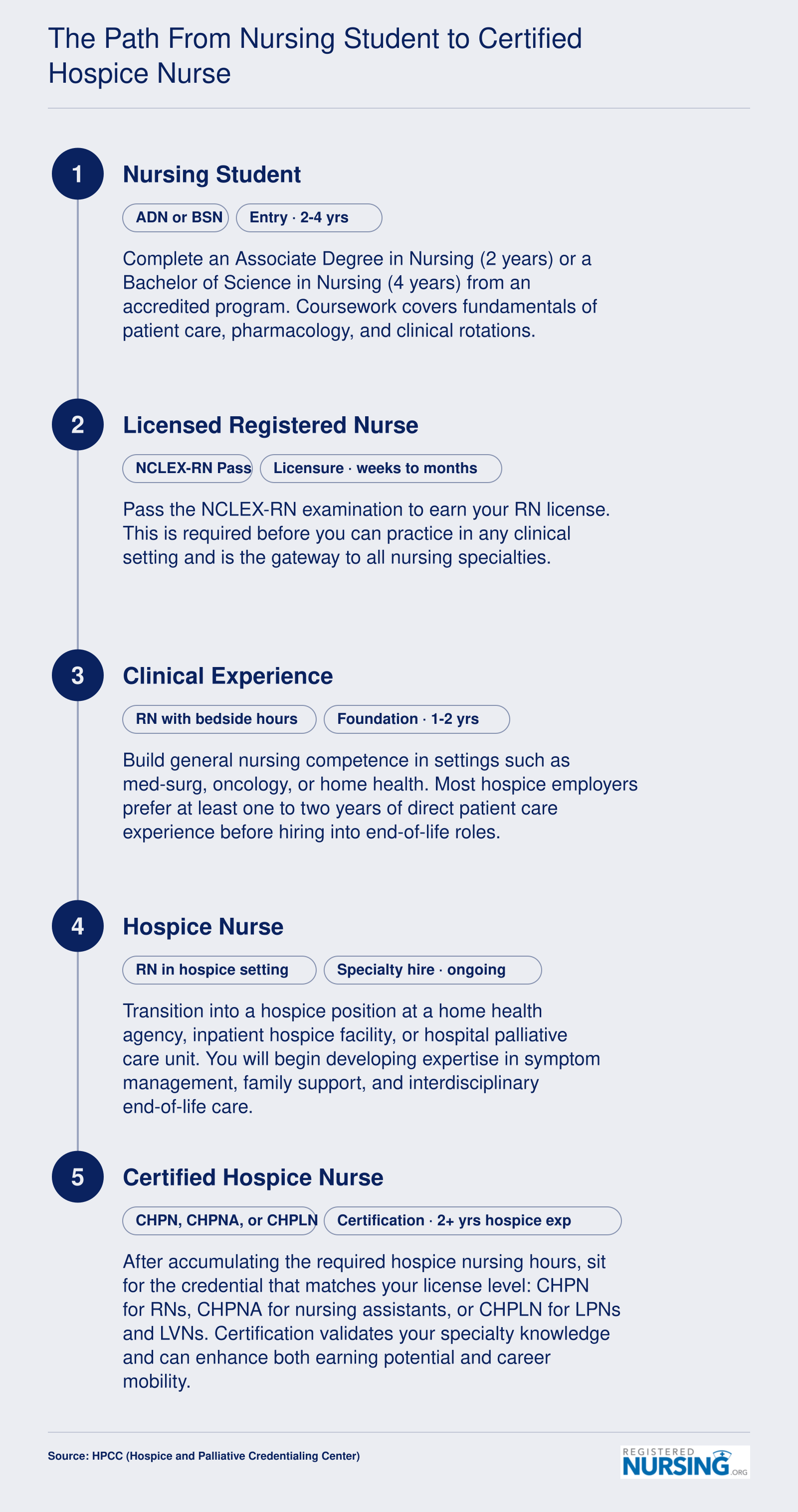
The Path From Nursing Student to Certified Hospice Nurse
Becoming a certified hospice nurse is a clear, structured journey that builds clinical depth at every stage. Here is the typical career ladder, from your first nursing course to earning a nationally recognized hospice credential.
Hospice Nurse Certifications: CHPN, CHPNA, and CHPLN Explained
Which certification is right for your hospice nursing career: CHPN, CHPNA, or CHPLN? The answer depends on your current licensure level and professional goals. Each credential is administered by the National Board for Certification of Hospice and Palliative Nurses (NBCHPN) and validates specialized competency in end-of-life care, but they serve different roles within the care team.
CHPN: Certified Hospice and Palliative Nurse
The CHPN credential is designed for registered nurses who want to demonstrate advanced expertise in hospice and palliative care nursing. To qualify, candidates typically need an active RN license and a specified amount of clinical experience in hospice or palliative settings. The certification exam covers pain and symptom management, ethical considerations, patient and family education, and interdisciplinary collaboration. Earning a CHPN signals to employers that you possess specialized knowledge beyond general nursing practice.
CHPNA: Certified Hospice and Palliative Nursing Assistant
The CHPNA is intended for certified nursing assistants (CNAs) who work directly with hospice patients. This credential recognizes the unique skills required to provide compassionate personal care, assist with activities of daily living, and support patients and families during the dying process. Eligibility generally requires current certification or licensure as a nursing assistant along with documented hospice care experience. The CHPNA exam focuses on comfort care, communication with patients nearing end of life, and the emotional dimensions of hospice work.
CHPLN: Certified Hospice and Palliative Licensed Nurse
The CHPLN credential is tailored for licensed practical nurses (LPNs) and licensed vocational nurses (LVNs) practicing in hospice settings. This certification acknowledges the distinct scope of practice for LPNs/LVNs, including medication administration, wound care nursing, and patient monitoring under RN or physician supervision. Candidates must hold an active LPN or LVN license and meet experience requirements before sitting for the exam.
How to Verify Requirements and Pass Rates
Exact eligibility criteria, application procedures, and exam pass rates are published on the NBCHPN website. Prospective candidates should review the most current handbook for each credential, as requirements may change. For a broader overview of what the credentialing process entails, Hospice Nurse Certification resources can help orient you before you apply.
Comparing the Certifications
- CHPN: For RNs seeking to specialize and advance in hospice leadership or clinical roles.
- CHPNA: For CNAs who want formal recognition of their hospice expertise.
- CHPLN: For LPNs/LVNs looking to validate their specialized skills in end-of-life care.
Choosing the right certification depends on your license type and where you see your career heading. All three credentials can enhance your professional standing, and employer surveys from organizations like the Hospice and Palliative Nurses Association (HPNA) suggest that certified hospice professionals are often viewed favorably during hiring and promotion decisions.
Benefits of CHPN Certification for Your Career
Choosing to pursue CHPN certification versus remaining a non-certified hospice RN marks a deliberate career decision. The certified route often unlocks higher earning potential, more competitive job placements, and enhanced professional standing.
Earning Potential and Pay Differentials
While exact figures vary by region and employer, CHPN-certified nurses generally command higher hourly wages and annual salaries than hospice RNs without the credential. Industry compensation reports and self-reported salary databases suggest that the premium reflects the specialized knowledge and commitment that certification represents. Employers often adjust pay scales to attract and retain certified staff, leading to measurable income growth over a full career. Nurses who pursue certification may see incremental raises or step increases that accumulate significantly across decades.
Career Advancement and Job Competitiveness
The CHPN credential serves as a distinguishing factor on résumés, signaling to hiring managers that an applicant has mastered the nuances of end-of-life care, pain management, and family support. In competitive markets, having this certification can mean the difference between an interview invitation and a pass. It also opens doors to leadership roles, such as charge nurse, case manager, or educator, that may be restricted to certified nurses. As organizations increasingly pursue Magnet designation or other quality benchmarks, the demand for certified nurses continues to rise, and CHPN holders often find themselves first in line for promotions.
Employer Incentives and Certification Bonuses
Some health systems and hospice agencies offer direct financial incentives for nurses who obtain or maintain the CHPN credential. These can include one-time bonuses upon initial certification, annual differentials added to hourly pay, or reimbursement for exam and renewal fees. While not universal, such perks are common enough that inquiring about certification incentives during a job interview is a smart move. Even in the absence of a formal bonus, certified nurses often negotiate higher starting salaries more effectively because they bring verified expertise to the table.
Professional Credibility and Personal Satisfaction
Beyond dollars and cents, CHPN certification validates a nurse's expertise in the eyes of colleagues, patients, and families. The process of studying for the exam deepens clinical knowledge, leading to greater confidence on the job. Many certified hospice nurses also report a stronger sense of professional identity and fulfillment. This intangible benefit can translate into higher job satisfaction and lower burnout, which are critical in a specialty as emotionally demanding as geriatric nursing and hospice care. Colleagues and patients alike perceive the credential as a mark of dedication, which can strengthen therapeutic relationships and interdisciplinary collaboration.
Questions to Ask Yourself
Hospice Nurse Salary: National Overview
Because the U.S. Bureau of Labor Statistics does not classify hospice nursing as a separate occupation, hospice RN wages are reported under the broader Registered Nurses category. In practice, hospice nurse salaries generally fall within this range, though actual pay can vary based on employer type, geographic location, and years of experience. The table below draws from the most recent Occupational Employment and Wage Statistics data published by the BLS (2024) and reflects roughly 3.28 million registered nurses employed nationally.
| Wage Measure | Annual Salary |
|---|---|
| 25th Percentile | $78,610 |
| Median (50th Percentile) | $93,600 |
| Mean (Average) | $98,430 |
| 75th Percentile | $107,960 |
Hospice Nurse Salary by State
Registered nurse salaries vary significantly across the country, and the table below shows annual wages for RNs in 25 states based on the most recent Occupational Employment and Wage Statistics from the U.S. Bureau of Labor Statistics (2024 data). Keep in mind that hospice-specific pay may differ from these general RN averages depending on the employer, care setting, and whether you hold a specialty certification such as the CHPN. Nurses working in home hospice, for instance, may see different compensation structures than those in inpatient hospice facilities.
| State | Total RN Employment | 25th Percentile | Median Salary | 75th Percentile | Mean Salary |
|---|---|---|---|---|---|
| Rhode Island | 10,760 | $83,870 | $99,960 | $112,540 | $99,770 |
| Arizona | 64,430 | $81,390 | $96,890 | $105,450 | $95,230 |
| New Hampshire | 16,580 | $79,720 | $96,830 | $105,500 | $94,620 |
| Maryland | 48,980 | $81,470 | $96,830 | $104,840 | $96,650 |
| Colorado | 54,510 | $81,790 | $96,520 | $104,370 | $95,470 |
| Delaware | 13,260 | $82,600 | $92,610 | $108,360 | $95,450 |
| Texas | 261,050 | $77,450 | $90,010 | $102,200 | $91,690 |
| Virginia | 77,420 | $77,650 | $88,820 | $100,920 | $90,930 |
| New Mexico | 17,510 | $82,630 | $88,260 | $104,720 | $94,360 |
| Pennsylvania | 146,840 | $78,570 | $87,610 | $102,030 | $90,830 |
| Georgia | 97,410 | $76,600 | $86,560 | $104,790 | $91,960 |
| Illinois | 139,900 | $79,150 | $86,410 | $103,660 | $91,130 |
| Idaho | 14,540 | $78,020 | $86,100 | $100,220 | $89,770 |
| Wisconsin | 64,960 | $79,570 | $86,070 | $100,680 | $90,450 |
| Michigan | 104,210 | $80,030 | $85,670 | $101,210 | $90,580 |
| Vermont | 7,240 | $79,980 | $85,150 | $104,110 | $92,710 |
| Maine | 16,280 | $76,890 | $82,860 | $98,000 | $87,440 |
| Florida | 218,100 | $77,070 | $82,850 | $99,260 | $88,200 |
| Utah | 25,780 | $77,030 | $82,270 | $101,530 | $88,240 |
| North Carolina | 108,510 | $74,710 | $81,860 | $98,720 | $86,270 |
| Wyoming | 5,180 | $75,540 | $81,790 | $100,910 | $88,020 |
| Montana | 10,540 | $77,800 | $81,560 | $100,510 | $88,480 |
| Ohio | 138,360 | $77,420 | $81,250 | $97,440 | $86,110 |
| Oklahoma | 32,870 | $75,320 | $81,160 | $96,460 | $85,800 |
| Nebraska | 24,180 | $76,430 | $81,020 | $93,140 | $82,890 |
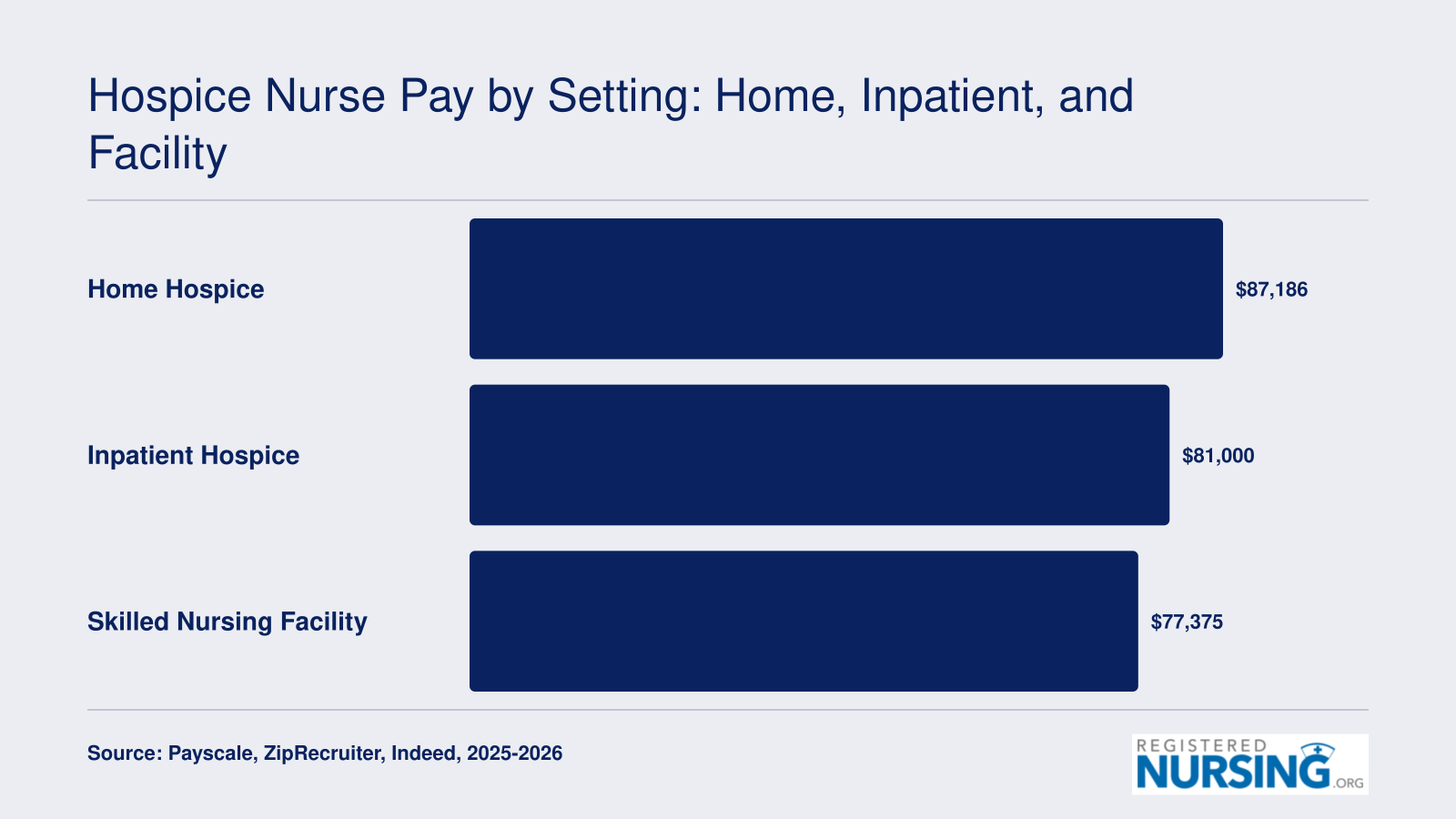
Hospice Nurse Pay by Setting: Home, Inpatient, and Facility
Hospice nurse compensation varies meaningfully depending on where you practice. Home hospice nurses often earn more in base pay, partly because the role demands independent clinical judgment and significant travel. Inpatient hospice units and skilled nursing facility contracts tend to offer structured shift differentials, especially for evening, night, and weekend hours, while home hospice positions more commonly include mileage reimbursement or a company vehicle allowance.
CHPNA Salary and How It Compares to General CNA Pay
A Certified Hospice and Palliative Nursing Assistant (CHPNA) is a nursing aide who has passed a specialty exam demonstrating advanced competency in end-of-life care. The credential is not just a title upgrade. It signals that the holder can do more than routine daily care tasks, and that difference shows up in both job responsibilities and, to a degree, in pay.
What CHPNA Roles Actually Involve
A standard CNA helps patients with bathing, dressing, mobility, and vital signs. A CHPNA does all of that, but also takes on tasks that sit closer to the clinical picture of a dying patient. Those responsibilities include monitoring and reporting symptom changes such as pain escalation, changes in breathing, or skin breakdown to the supervising nurse; providing comfort measures like positioning, mouth care, and soothing communication during distressing episodes; supporting family members through the immediate period surrounding death; and assisting with respectful after-death care. The work is emotionally demanding and requires a specific skill set that general CNA training does not fully cover.
CHPNA Salary vs. General CNA Pay
As of 2026, CHPNA wages reported nationally run between roughly $14.66 and $18.75 per hour, with a median near $16.62 and a mean around $17.34.1 Hospice CNAs more broadly, including those without formal certification, average closer to $20.13 per hour according to healthcare staffing data, which reflects the specialized nature of the setting overall.2
For context, general CNAs nationally earn a median hourly wage of around $18.96, with annual figures in the $37,000 to $40,000 range depending on the data source and year.3 That means CHPNA-certified aides are not always earning more than the general CNA median on paper. The gap between CHPNA wages and broader hospice CNA averages is roughly 6 percent in favor of the hospice setting overall.
Does the CHPNA Credential Raise Your Pay?
The honest answer is: sometimes, but not automatically. The CHPNA credential is most reliably associated with improved job competitiveness rather than an immediate wage jump. Hospice agencies and inpatient palliative care units often prefer or require certified aides when hiring, which means the credential can open doors that stay closed to non-certified applicants. In competitive markets, that positioning can translate to better starting offers or faster advancement. In lower-wage regions, the pay premium may be modest, but the professional credibility the certification builds still carries weight when applying to preferred employers or negotiating for better assignments. Nurses seeking additional context on how specialty credentials affect pay across different clinical settings may also find it useful to compare roles like oncology nurse or cardiac care nurse, where certification similarly shapes hiring and compensation.
What Does a Hospice Nurse Do? Duties and Daily Life
Hospice nursing asks you to hold clinical precision and human compassion in the same hands at the same time. The role is genuinely demanding, but understanding what a typical day looks like helps you decide whether it fits how you want to practice.
The Shape of a Typical Day
Most home hospice RNs start the morning by reviewing their caseload: checking overnight nurse messages, scanning any after-hours notes, and prioritizing visits based on patient acuity. From there, a full day usually involves four to six home visits, though the number can shift depending on patient complexity and geography.
Each visit centers on pain and symptom assessment, medication review, wound care nurse evaluation when relevant, and family education. Teaching a caregiver how to administer oral morphine correctly, or explaining what changes to expect in the final days of life, can take as long as the clinical assessment itself. After each visit, documentation must be completed, often in real time using electronic platforms such as Homecare Homebase or MatrixCare. Electronic charting advantages and disadvantages are worth understanding before you start, because charting is not a side task in hospice work and routinely accounts for two to three hours of a nurse's day.
Caseload and Interdisciplinary Teamwork
A home hospice RN typically carries a caseload of 10 to 15 active patients. Inpatient hospice nurses generally manage smaller panels, because patients in a facility setting require more frequent hands-on intervention.
Once or twice a week, most hospice nurses participate in an interdisciplinary team (IDT) meeting. These gatherings bring together nurses, social workers, chaplains, physicians or nurse practitioners, and aides to review each patient's goals, update care plans, and coordinate support for families. Collaboration with interdisciplinary team is where clinical knowledge and whole-person care intersect most visibly.
On-Call and Weekend Responsibilities
On-call coverage is a standard part of the role. Many agencies structure this as a rotating schedule, with nurses taking evening or overnight call one to two times per week and one weekend shift roughly every four to six weeks, though schedules vary widely by employer and region. On-call shifts involve triaging phone calls, adjusting medication orders, and occasionally making urgent home visits to manage a symptom crisis or support a family at the time of death.
The combination of direct patient care, family education, documentation, team collaboration, and on-call duty makes hospice nursing one of the more multidimensional roles in the profession.
Where Do Hospice Nurses Work?
Where is hospice care actually delivered, and what does each setting mean for your daily work as a hospice nurse? Understanding the primary work environments will help you choose a path that fits your clinical style, desired autonomy, and lifestyle needs.
Home Hospice: The Most Common Setting
Home hospice is the backbone of hospice nursing, accounting for 56 percent of all hospice care delivered as of 2025 to 2026.1 In this setting, you travel to patients' private residences, providing end-of-life care in their own bedrooms, living rooms, and familiar surroundings. You typically work alone during visits, enjoying high autonomy but also shouldering full responsibility for assessment, symptom management, family education, and coordination with the interdisciplinary team. Patient volume varies: expect four to six visits daily, often spread across a rural or suburban territory. Nurses who cover wide geographic areas may find our rural nursing guide useful for navigating the unique challenges of distance-based practice. This role suits nurses who thrive on independence, enjoy driving, and value the intimacy of one-on-one patient relationships. Lifestyle trade-offs include irregular hours, mileage on your vehicle, and occasional on-call shifts for urgent symptom crises.
Inpatient Hospice Units: Hospital-Based and Acute Care
Inpatient hospice units, including dedicated hospice facilities and hospital-based palliative units, serve only 7 percent of hospice patients1 but represent the most acute, medically complex cases. Here you work alongside a full clinical team with immediate physician and specialty support, managing patients who require continuous monitoring for uncontrolled pain, severe dyspnea, or rapid symptom changes. You typically care for four to six patients per shift in a structured facility setting. This environment offers less autonomy than home care but provides collaborative learning, mentorship, and the security of backup staff, much like what critical care nurses experience in high-acuity units. Lifestyle is more predictable, with scheduled shifts and no driving between sites.
Nursing Facilities and Assisted Living: Blended Models
Nursing homes and skilled nursing facilities account for 19 percent of hospice care, while assisted living facilities represent 21 percent.1 In these settings, you deliver hospice services within an existing residential care community, collaborating closely with facility staff who handle daily custodial care. Your role focuses on hospice-specific symptom management, family support, and coordinating the hospice plan of care with the facility's nursing team. Patient volume and autonomy fall between home and inpatient models. This setting works well for nurses who prefer consistent locations, shared responsibility, and less driving but still want diverse patient encounters across multiple facilities.
Hospice Nursing Job Growth and Demand
The demand for hospice nurses is not just growing, it is accelerating. Several converging forces are pushing hospice care to the front of the healthcare conversation, and nurses who specialize in this field are increasingly sought after across the country.
Broader Nursing Growth as a Baseline
The Bureau of Labor Statistics projects a 6 percent growth rate for registered nurses nationally between 2022 and 2032, translating to roughly 177,000 new RN positions over that decade.1 The profession already employs more than 3.3 million RNs nationwide as of 2024,2 and demand shows no sign of slowing. Analysts have estimated a shortage of approximately 78,600 full-time RNs by 2025,3 a gap that makes experienced nurses, especially those with specialty credentials, considerably more valuable. Our nursing shortage fact sheet breaks down the drivers behind that gap in greater detail.
Why Hospice Demand Is Outpacing General Nursing Growth
Hospice nursing is growing faster than general RN employment for reasons that go well beyond staffing shortages.
- Aging baby boomers: The largest generation in American history is now well into its 60s and 70s, driving a sustained increase in the number of patients who will eventually need end-of-life care.
- Expanding Medicare hospice benefit: Policy changes have broadened eligibility and extended coverage windows, enrolling more patients than ever before. The National Hospice and Palliative Care Organization has consistently reported year-over-year increases in total hospice enrollment, with well over 1.7 million Medicare beneficiaries receiving hospice services in recent reporting periods.
- Shift toward home-based care: Families and patients increasingly prefer to spend final months at home rather than in institutional settings. Home health RN roles grew at a remarkable 61 percent rate in the decade leading into the mid-2020s,4 and home-based hospice is a direct beneficiary of that trend.
Geographic Hotspots for Hospice Hiring
Not every state feels the demand equally. States with older or rapidly aging populations tend to see the heaviest hospice hiring activity. Florida and Arizona, long known as retirement destinations, consistently rank among the top states for hospice employment opportunities. Pennsylvania, with its large rural population of older adults, also sees persistent demand. Coastal states with high Medicare enrollment generally follow a similar pattern.
For nurses considering a specialty pivot, these regional trends are worth factoring into both job search strategy and salary expectations, since local market conditions shape compensation as much as credentials do.
Burnout, Coping, and Support Resources for Hospice Nurses
The nursing profession has grown more intentional about addressing mental health in recent years, but hospice and palliative care nurses still face some of the highest emotional demands in healthcare. Research published through the National Institutes of Health indicates that roughly 60 to 70 percent of hospice nurses experience moderate to high levels of burnout,1 while studies on compassion fatigue place moderate-to-high rates at approximately 75 to 80 percent of the workforce.2 Those numbers are significant, and anyone considering this specialty deserves an honest look at both the challenges and the resources available.
The Emotional Reality
Is hospice nursing emotionally difficult? Yes. Hospice nurses form meaningful relationships with patients and families, then experience repeated loss as part of the job. About 24 percent of hospice nurses report clinically significant emotional exhaustion,3 and around 26 percent meet the threshold for severe compassion fatigue.2 Secondary traumatic stress is also widespread, with some studies finding that more than 95 percent of hospice nurses score above the 75th percentile on secondary traumatic stress measures.4 Yet the picture is not entirely bleak. Many of the same studies show that hospice nurses score well on compassion satisfaction measures, and nearly half report average or above-average satisfaction with their professional quality of life.4 Nurses in this field frequently describe their work as among the most meaningful they have ever done, even when it is hard.
Concrete Coping Strategies
Protecting your well-being in hospice nursing requires deliberate, ongoing effort. Research suggests that resilience-related factors account for more than 40 percent of the variance in compassion fatigue outcomes,5 meaning the skills you build genuinely matter. Self-care for nurses is not a luxury in this specialty; it is a professional necessity. Strategies that have shown benefit include:
- Structured debriefing: Many hospice teams hold formal debriefs after patient deaths so nurses can process grief in a supported setting rather than carrying it home in silence.
- Peer support groups: Connecting with colleagues who understand the daily realities of end-of-life care can reduce isolation. Some employers schedule regular group sessions; others facilitate informal buddy systems.
- Mindfulness-based stress reduction (MBSR): Programs rooted in meditation, body awareness, and breathing exercises have been shown to lower emotional exhaustion scores among palliative care providers.
- Employee Assistance Programs (EAPs): Most hospice employers offer confidential counseling through an EAP. Utilization rates tend to be low, but nurses who take advantage of these services often wish they had started sooner.
- Boundary setting and time off: Scheduling genuine rest, not just days away from the building, is essential. Compassion fatigue intensifies when nurses skip vacations or routinely take on extra shifts.
Professional Organizations and Programs
Several organizations provide targeted support for hospice nurses:
- Hospice and Palliative Nurses Association (HPNA): Offers webinars, peer mentoring networks, and resources focused specifically on nurse well-being in end-of-life care settings.
- End-of-Life Nursing Education Consortium (ELNEC): Provides training modules that include self-care components alongside clinical education, helping nurses develop resilience skills early in their hospice careers.
- Employer-provided bereavement programs: Larger hospice agencies often run memorial services, remembrance events, or chaplain-led grief support groups for staff. If your employer does not offer something similar, it is worth requesting it.
A Balanced Perspective
Honesty about burnout risk does not mean discouraging people from hospice nursing. It means preparing them. Understanding why new nurses are leaving the profession can also help hospice teams build retention strategies before talented clinicians burn out and walk away. Nurses who enter this specialty with realistic expectations, a personal coping plan, and awareness of available resources tend to build longer, more fulfilling careers. The emotional weight is real, but so is the deep sense of purpose that comes from helping patients live their final days with dignity and comfort. If you are drawn to this work, invest just as seriously in your own well-being as you do in your patients' care.
Common Questions About Hospice Nursing
Below are answers to some of the most frequently asked questions about hospice nursing. Each response draws on the topics covered throughout this guide, from education pathways and certifications to salary comparisons and daily responsibilities.
Is a hospice nurse an RN?
Can an LPN be a hospice nurse?
What certifications do hospice nurses need?
How much do CHPN-certified nurses earn compared to non-certified hospice RNs?
What does a hospice nurse do on a daily basis?
Is hospice nursing emotionally difficult?
Explore More
- Ambulatory Care Nurse
- Burn Unit Nurse
- Cardiac Nurse
- Cath Lab Nurse
- Charge Nurse
- Chief Nursing Officer (CNO)
- Correctional Nurse
- CVOR Nurse
- Dermatology Nurse
- Developmental Disability Nurse
- Director of Nursing
- Domestic Violence Nurse
- Emergency Room Nurse
- ENT Nurse
- ET Nurse
- Fertility Nurse
- Flight/Transport Nurse
- Forensic Nurse Salary & Career Guide
- Genetic Nurse
- Geriatric Nurse
- Health Policy Nurse
- Healthcare Administrator
- Healthcare Manager
- Home Health Nurse
- Camp Nurse
- GI Nurse
- Holistic Nurse
- Labor and Delivery Nurse
- Nurse Writer
- Psychiatric Nurse
- School Nurse
- Telemetry Nurse
- Travel Nurse
- Aesthetic Nurse
- Infusion/IV Nurse
- Oncology Nurse
- ICU Nurse
- Infection Control Nurse
- Legal Nurse Consultant
- LTC Nurse
- Managed Care Nurse
- Medical-Surgical Nurse
- Military (Combat) Nurse
- Missionary Nurse
- Mother Baby Nurse
- Nephrology Nurse
- Neuroscience Nurse
- NICU Nurse
- Nurse Administrator
- Nurse Attorney
- Nurse Care Coordinator
- Nurse Case Manager
- Nurse Entrepreneur
- Nurse Executive
- Nurse Health Coach
- Nurse Manager
- Obstetric (OB) Nurse
- Occupational Health Nurse
- Operating Room Nurse
- Ophthalmic Nurse
- Organ Procurement Coordinator
- Orthopedic Nurse
- Pain Management Nurse
- Palliative Care Nurse
- Parish Nurse
- Patient Advocate Nurse
- Pediatric Endocrinology Nurse
- Perianesthesia (PACU) Nurse
- Perinatal Nurse
- Plastic Surgery Nurse
- Public/Community Health Nurse
- Radiology Nurse
- Rehabilitation Nurse
- Research Nurse
- Respiratory Nurse
- Rheumatology Nurse
- Substance Abuse Nurse
- Telephone Triage Nurse
- Transcultural Nursing
- Transplant Nurse
- Trauma Nurse
- Wound Care Nurse (WOCN)