

What you’ll learn in this article…
- AGN-BC is the only active genetics nursing certification as of 2025.
- A BSN is typically the minimum degree for genetics nursing roles.
- RN employment is projected to grow 6% through 2033.
Fewer than 1,000 registered nurses in the United States currently hold an active genetics specialty credential, yet demand for genomic expertise at the bedside continues to climb as precision medicine reshapes how clinicians diagnose, treat, and prevent disease. A genetic nurse is a registered nurse who specializes in helping patients understand inherited conditions, interpret genomic test results, and evaluate personal and family risk factors.
The gap between supply and demand creates real opportunity, but also real confusion about how to enter the field, which certifications still matter after recent credentialing changes, and what the salary premium actually looks like. Precision medicine is no longer confined to academic medical centers; community hospitals, oncology and cardiac care nurses in specialty practices, and telehealth platforms all need nurses with genomic literacy.
Genetic Nurse Vs. Genetic Counselor: Key Differences
What is the difference between a genetic nurse and a genetic counselor, and which career path should you pursue?
Both genetic nurses and genetic counselors work at the intersection of genetics and patient care, but they arrive from distinct educational backgrounds, hold different licensures, and perform complementary yet separate roles in clinical practice. Understanding these differences will help you choose the right path for your career goals.
Education and Licensure Pathways
Genetic nurses begin their careers by earning a Bachelor of Science in Nursing (BSN), passing the NCLEX-RN, and becoming licensed as registered nurses.1 Many then pursue a Master of Science in Nursing (MSN) or Doctor of Nursing Practice (DNP) with a focus on genetics, genomics, or advanced practice nursing. Their foundation is broad clinical nursing practice, enhanced by specialized genetics training.
Genetic counselors follow a different route. After earning a bachelor's degree in any field (often biology, psychology, or health sciences), they complete a two-year master's program in genetic counseling accredited by the Accreditation Council for Genetic Counseling.2 These programs combine coursework in genetics, counseling techniques, and supervised clinical rotations. Graduates then pursue certification through the American Board of Genetic Counseling (ABGC), earning the Certified Genetic Counselor (CGC) credential, which is required for licensure in most states.3 State genetic counseling boards regulate their practice separately from nursing boards.
Scope of Practice and Daily Responsibilities
Genetic nurses maintain a broader clinical nursing scope of practice, with added genetics expertise layered into their role. They may provide direct patient care, administer treatments, coordinate care across specialties, educate patients about genetic conditions, and interpret genetic test results within the context of comprehensive nursing assessment. Their work often spans oncology nursing, high-risk obstetrics, pediatrics, research, and care coordination.
Genetic counselors focus exclusively on genetics. Their scope centers on risk assessment, ordering and interpreting genetic tests, explaining test results and inheritance patterns, and providing psychosocial counseling to help families make informed decisions. They do not perform general nursing tasks such as medication administration, wound care nursing, or patient monitoring. Their practice is rooted in counseling theory and genetic science rather than bedside nursing.
Work Settings and Earnings
Both professions work in hospitals, academic medical centers, outpatient clinics, and research settings. Genetic counselors also practice frequently in physicians' offices, diagnostic laboratories, telehealth, and industry roles. Genetic nurses often work in hospital units, school nursing, insurance review, and public health.
Nationally, registered nurses in genetics earned a median annual wage of $80,010 in 2022.1 Genetic counselors earned a higher median of $98,910 in 2024, reflecting their specialized master's-level training and focused scope.3
Certification Options
Genetic nurses pursue voluntary certifications such as the Advanced Genetics Nursing Board Certification (AGN-BC) through the American Nurses Credentialing Center, or credentials from the Genetic Nursing Credentialing Commission.1 Genetic counselors must obtain and maintain ABGC certification to practice in most states, making it functionally required rather than optional.3
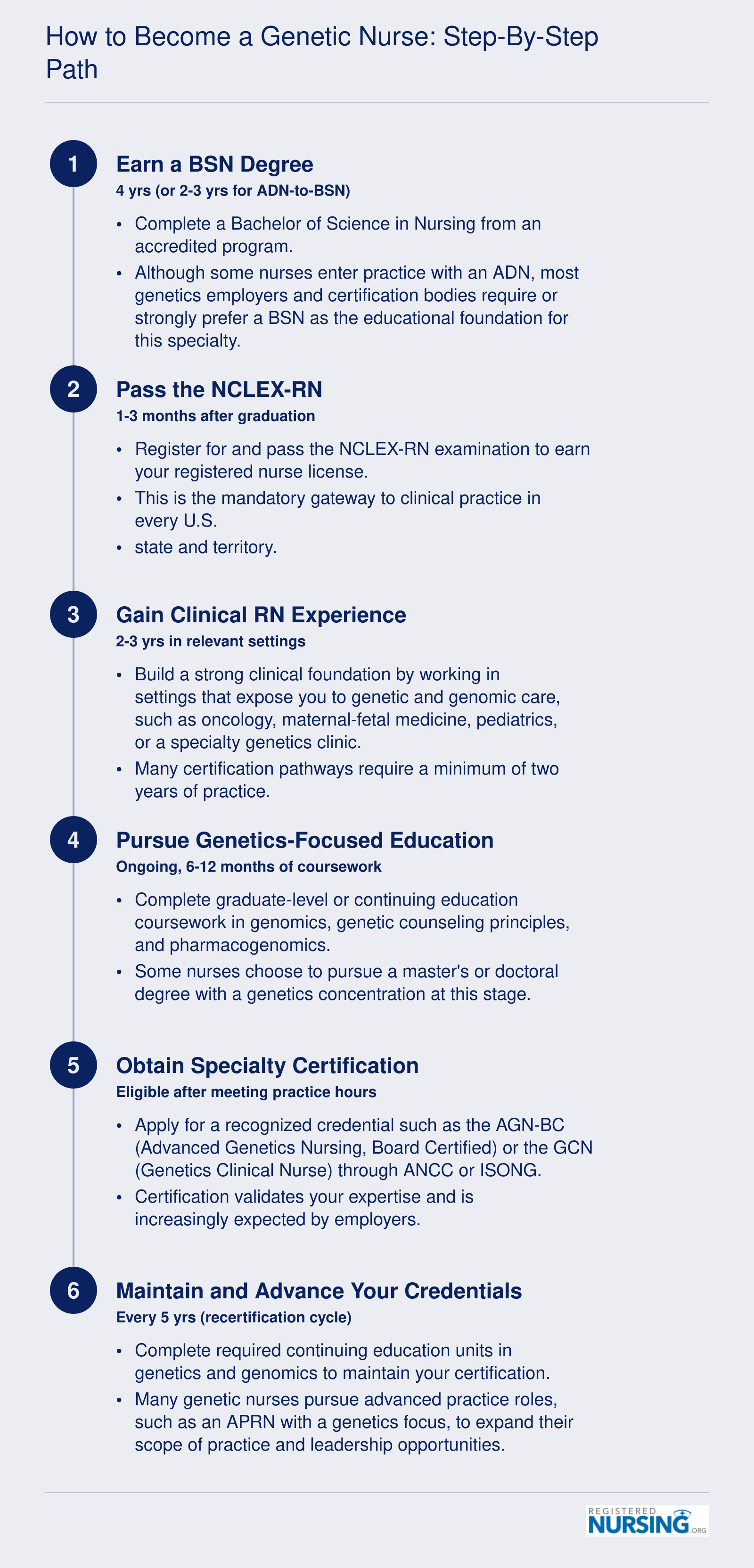
How to Become a Genetic Nurse: Step-By-Step Path
Becoming a genetic nurse requires a deliberate combination of nursing education, clinical experience, and specialty credentialing. While an ADN can launch a general nursing career, a BSN is typically required or strongly preferred for genetics specialization. Here is the standard credentialing ladder most aspiring genetic nurses follow.
Education Requirements: ADN Vs. BSN and Beyond
An ADN vs. BSN nursing degree comparison can clarify your starting point: an Associate Degree in Nursing (ADN) qualifies you to sit for the NCLEX-RN and earn your registered nurse license, but most genetics nursing positions require a Bachelor of Science in Nursing (BSN) as the minimum credential. The reason is straightforward: genomics-focused roles demand coursework and research literacy that ADN programs rarely cover in sufficient depth.
Why a BSN Is the Practical Starting Point
Genetics nursing draws heavily on the sciences that underpin genomic medicine. BSN curricula typically include the foundational courses that prepare you for this specialty, though you may need to seek out electives or additional classes depending on your program. Recommended undergraduate coursework includes:
- Genetics: Human genetics or medical genetics, covering inheritance patterns, chromosomal abnormalities, and gene expression.
- Molecular biology: Cell biology at the molecular level, including DNA replication, transcription, and translation.
- Biochemistry: Metabolic pathways and protein function relevant to pharmacogenomics.
- Statistics: Biostatistics or applied statistics, which builds the research literacy needed to interpret genetic testing data and clinical studies.
A BSN also emphasizes evidence-based practice and scholarly inquiry, skills that are essential when you are explaining risk assessments or coordinating care based on emerging genomic research.
MSN and DNP Pathways for Advanced Practice
Nurses who want to practice at the advanced level, such as a genetic nurse practitioner, typically pursue a Master of Science in Nursing (MSN) or a best DNP programs with a genetics or genomics focus. Several programs offer structured pathways:
- The University of Pittsburgh offers a 12-credit Health Care Genetics Minor available to enrolled MSN or DNP nursing students, including those on nurse practitioner tracks.1 The university's DNP nurse practitioner programs, which range from 36 to 45 credits, also include a dedicated course in human genetics and clinical applications.2
- Vanderbilt University School of Nursing offers a DNP Genetics Fellowship designed for family nurse practitioners. This 48-month program requires 35 credits and 500 clinical hours along with a scholarly project. Applicants must hold a completed MSN with family nurse practitioner preparation.3
- The University of California, San Francisco School of Nursing provides a five-unit Genomics Concentration open to all master's and doctoral students in the nursing school.4
These programs prepare nurses for certification and clinical roles that integrate genetic and genomic knowledge into patient care at the highest level.
Post-Baccalaureate Certificates as a Bridge
Working RNs who already hold a BSN but lack formal genomics training have another option. Some institutions offer post-baccalaureate certificates that serve as a bridge into the specialty without requiring a full graduate degree. East Tennessee State University, for example, offers a Post-Baccalaureate Certificate in Health Care Genetics and Genomics designed for nurses and other health professionals.5 The program covers genetics, genomics, epigenetics, pharmacogenetics, genetic testing, and genetic counseling, giving practicing nurses a focused path into the field while they continue working.
Whether you are choosing your first nursing degree or mapping out an advanced practice trajectory, aligning your education with the science of genomics is the single most important step toward a career in genetic nursing.
Questions to Ask Yourself
Genetic Nurse Certifications and Credentials: AGN-BC, GCN, and APNG
The genetic nursing credentialing landscape underwent a major consolidation in February 2025, leaving only one active specialty certification for registered nurses practicing in genetics today. Nurses exploring genetic nursing credentials will encounter three acronyms: AGN-BC, GCN, and APNG, but only the first remains available for new applicants in 2026.
AGN-BC: The Current Standard for Genetic Nurses
The Advanced Genetics Nursing, Board Certified (AGN-BC) credential, administered by the Nurse Portfolio Credentialing Commission (NPCC), is the sole active certification for RNs specializing in genetics as of 2026.2 Unlike traditional exam-based certifications, AGN-BC uses a portfolio evaluation format that assesses your cumulative clinical expertise and professional development.
To qualify for AGN-BC, you must hold an active RN license, document 1,500 hours of clinical practice in genetics nursing, and complete 50 continuing education hours in genetics-related topics, including at least 15 hours specifically in pharmacology.2 The portfolio submission fee typically ranges from $300 to $395, and most applicants spend three to six months compiling documentation and evidence of their practice. This timeline reflects the intensive nature of portfolio preparation: organizing case studies, supervisor attestations, and proof of competency in genetic assessment, risk evaluation, and patient education.
GCN and APNG: Legacy Credentials No Longer Offered
The Genetic Clinical Nurse (GCN) and Advanced Practice Nurse in Genetics (APNG) credentials both carry legacy status in 2026, meaning they are no longer available to new applicants but remain valid for nurses who earned them before the transition to NPCC.3 If you see colleagues or job postings referencing GCN or APNG, these reflect certifications granted under previous credentialing bodies. Nurses holding these legacy credentials can maintain them through their original renewal pathways, but new applicants should focus exclusively on AGN-BC.
Choosing the Right Credential for Your Career Stage
AGN-BC is designed for experienced RNs practicing in genetics, regardless of whether you hold an associate or bachelor's degree. The 1,500-hour clinical requirement ensures applicants have built a substantial foundation in genetic nursing before pursuing board certification. Entry-level RNs new to genetics should plan to accumulate at least 18 to 24 months of full-time practice in a genetics-focused role before applying. Advanced practice registered nurses (APRNs) working in genetics also pursue AGN-BC, as it remains the recognized standard for documenting specialized competence in this field. Other nursing specialties that rely on portfolio-style evidence of clinical competency, such as oncology nursing, follow a similar philosophy of demonstrating depth of practice before earning a specialty credential.
Continuing Education and Recertification Requirements
Genetic nursing credentials require renewal every five years, with the Advanced Genetics Nurse, Board Certified (AGN-BC) credential mandating 60 continuing education (CE) hours per cycle.1 The Genetic Nursing Credentialing Commission, which oversees AGN-BC certification through Nurse Portfolio Certification, requires that at least 25 of those hours focus on pharmacology, reflecting the growing importance of pharmacogenomics in patient care. ANCC credentials for advanced practice genetics nurses follow a similar five-year cycle, requiring 75 total CE hours with 25 in pharmacology.3 As of January 2026, these renewal standards reflect the profession's commitment to keeping clinicians current in a rapidly evolving field.4
Required CE Hours and Acceptable Topics
For AGN-BC renewal, all 60 hours must fall under professional development categories directly related to genetics and genomics.2 Acceptable topics include cancer genetics, prenatal screening, ethical issues in genetic testing, pharmacogenomics, and emerging genomic technologies. Advanced practice nurses holding ANCC genetics credentials must complete 75 CE hours, again with 25 dedicated to pharmacology. Both pathways allow online and in-person education, as long as the provider is accredited and the content aligns with genetics nursing practice. Nurses navigating these requirements will find APRN continuing education and CEU credits a useful starting point for understanding accreditation standards across specialties.
Where to Find Genetics CE
The International Society of Nurses in Genetics (ISONG) offers webinars, conferences, and online modules tailored to genetics nursing. The American Nurses Association (ANA) periodically releases genetics-focused courses, and the National Human Genome Research Institute (NHGRI) provides free educational resources on genomics that may qualify for CE credit when paired with accredited sponsors. For a broader overview of how contact hours are counted and applied, RN contact hours and continuing education units can clarify the process. Many academic medical centers and genomics laboratories also host workshops and grand rounds that count toward renewal hours.
Why CE Matters in Genomics
Genomic science moves faster than most clinical specialties. Guidelines for BRCA testing, polygenic risk scores, and carrier screening evolve annually, and pharmacogenomic evidence reshapes prescribing practices continually. Completing CE is not a checkbox exercise but a professional imperative to deliver safe, evidence-based care. Nurses who let certifications lapse face a late fee of $125 for AGN-BC renewal1 and risk practicing with outdated knowledge in a field where discoveries regularly change clinical protocols. Staying current protects patients and sustains the credibility of genetics nursing as a specialty.
What Does a Genetic Nurse Do Day to Day?
Genetic nursing has moved from specialty corners of academic hospitals into mainstream care settings, and the daily routine now reflects that shift. A typical workday blends clinical coordination, patient education, and meticulous documentation across a widening range of conditions and care environments.
Reviewing Family Histories and Ordering Tests
Most mornings begin with chart review. Genetic nurses pull detailed family histories, often spanning three or more generations, to identify patterns of inherited disease. They confirm cancer diagnoses in relatives, document ages of onset, and note ethnic backgrounds that influence carrier risk. Once a risk profile emerges, the nurse coordinates genetic testing orders, selecting appropriate panels for hereditary cancer syndromes, cardiovascular conditions, or metabolic disorders. This step requires familiarity with laboratory options, turnaround times, insurance authorization pathways, and the clinical utility of each test.
Interpreting Results and Counseling Patients
When results return, genetic nurses work alongside geneticists and genetics nurse vs. genetic counselor professionals to interpret findings. They prepare patients for appointments, explain the difference between pathogenic variants and variants of uncertain significance, and discuss what a positive or negative result means for treatment and family planning. Much of the day is spent in one-on-one conversations, translating complex genomic language into actionable next steps. Patients often arrive anxious or confused, so the nurse balances clinical accuracy with empathy, ensuring informed decisions about cascade testing, prophylactic surgery, or enhanced surveillance.
Documentation and Interdisciplinary Collaboration
Documentation consumes a significant portion of each shift. Genetic nurses maintain pedigrees in electronic health records for nurses, update risk assessments as new family data surfaces, and ensure informed consent forms meet regulatory standards. They also serve as a liaison between disciplines, coordinating care plans with oncologists who manage high-risk patients, obstetricians monitoring pregnancies with fetal anomalies, pediatricians tracking developmental delays, and genetic counselors handling psychosocial dimensions. This interdisciplinary team collaboration model ensures that genomic insights are woven into every stage of patient care, from diagnosis through long-term follow-up.
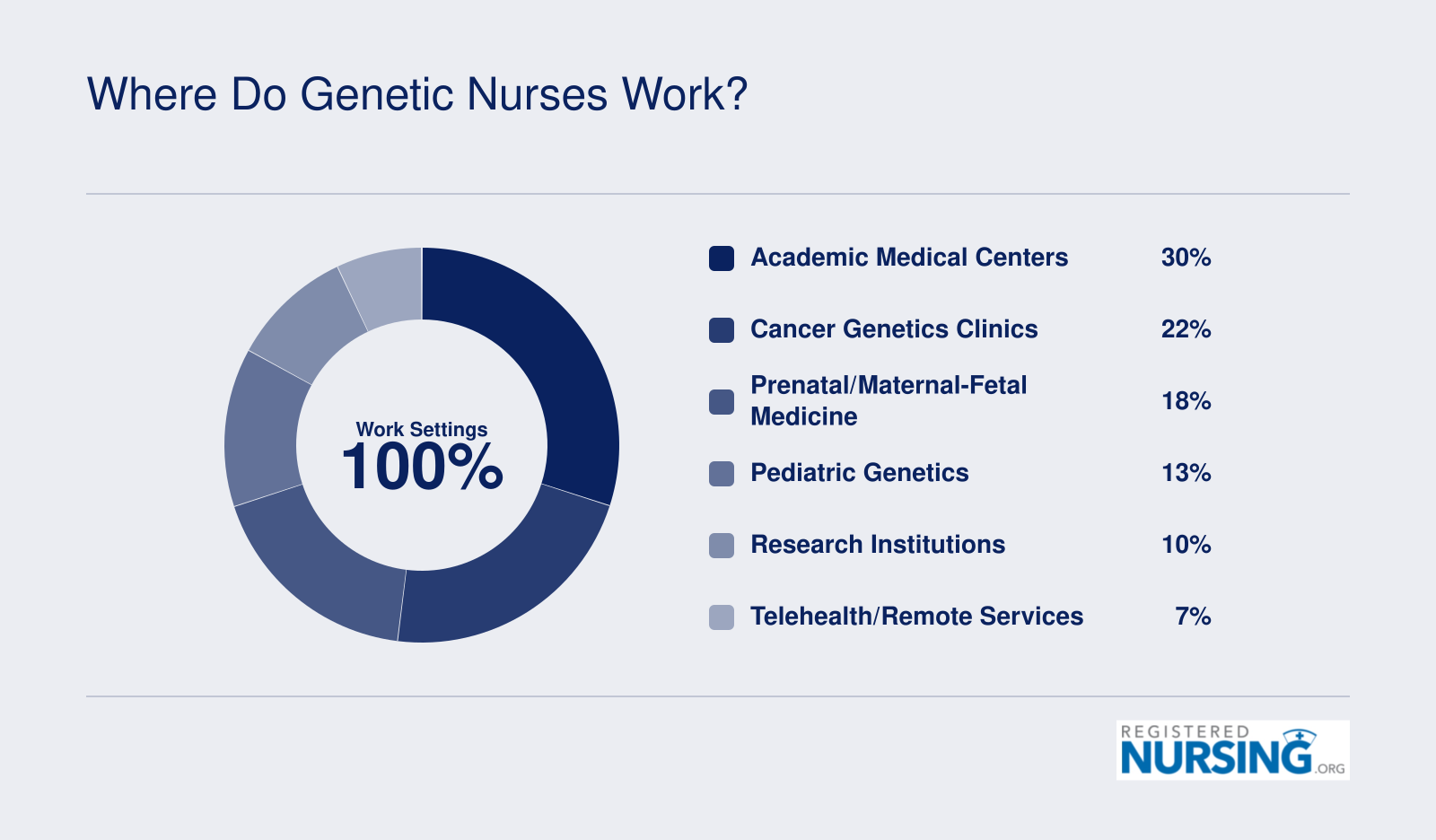
Where Do Genetic Nurses Work?
Genetic nurses practice across a diverse range of clinical and research settings. As genomic medicine becomes more integrated into standard care, these professionals are finding opportunities well beyond traditional hospital roles. Notably, telehealth platforms now allow genetic nurses to conduct remote risk assessments and patient education, expanding access to underserved and rural communities.
Genetic Nurse Salary by State and Setting
Because the Bureau of Labor Statistics does not track genetic nurses as a separate occupation, the figures below reflect registered nurse salaries reported through the 2024 Occupational Employment and Wage Statistics program. Genetic nurses with advanced certifications or graduate degrees often earn at the higher end of these ranges, particularly in academic medical centers and specialty genetics clinics. Geographic cost of living and employer type also play a significant role in overall compensation.
| State | Total RN Employment | 25th Percentile | Median Salary | 75th Percentile | Mean Salary |
|---|---|---|---|---|---|
| Rhode Island | 10,760 | $83,870 | $99,960 | $112,540 | $99,770 |
| Arizona | 64,430 | $81,390 | $96,890 | $105,450 | $95,230 |
| New Hampshire | 16,580 | $79,720 | $96,830 | $105,500 | $94,620 |
| Maryland | 48,980 | $81,470 | $96,830 | $104,840 | $96,650 |
| Colorado | 54,510 | $81,790 | $96,520 | $104,370 | $95,470 |
| Delaware | 13,260 | $82,600 | $92,610 | $108,360 | $95,450 |
| Texas | 261,050 | $77,450 | $90,010 | $102,200 | $91,690 |
| Virginia | 77,420 | $77,650 | $88,820 | $100,920 | $90,930 |
| New Mexico | 17,510 | $82,630 | $88,260 | $104,720 | $94,360 |
| Pennsylvania | 146,840 | $78,570 | $87,610 | $102,030 | $90,830 |
| Georgia | 97,410 | $76,600 | $86,560 | $104,790 | $91,960 |
| Illinois | 139,900 | $79,150 | $86,410 | $103,660 | $91,130 |
| Idaho | 14,540 | $78,020 | $86,100 | $100,220 | $89,770 |
| Wisconsin | 64,960 | $79,570 | $86,070 | $100,680 | $90,450 |
| Michigan | 104,210 | $80,030 | $85,670 | $101,210 | $90,580 |
| Vermont | 7,240 | $79,980 | $85,150 | $104,110 | $92,710 |
| Maine | 16,280 | $76,890 | $82,860 | $98,000 | $87,440 |
| Florida | 218,100 | $77,070 | $82,850 | $99,260 | $88,200 |
| Utah | 25,780 | $77,030 | $82,270 | $101,530 | $88,240 |
| North Carolina | 108,510 | $74,710 | $81,860 | $98,720 | $86,270 |
| Wyoming | 5,180 | $75,540 | $81,790 | $100,910 | $88,020 |
| Montana | 10,540 | $77,800 | $81,560 | $100,510 | $88,480 |
| Ohio | 138,360 | $77,420 | $81,250 | $97,440 | $86,110 |
| Oklahoma | 32,870 | $75,320 | $81,160 | $96,460 | $85,800 |
| Nebraska | 24,180 | $76,430 | $81,020 | $93,140 | $82,890 |
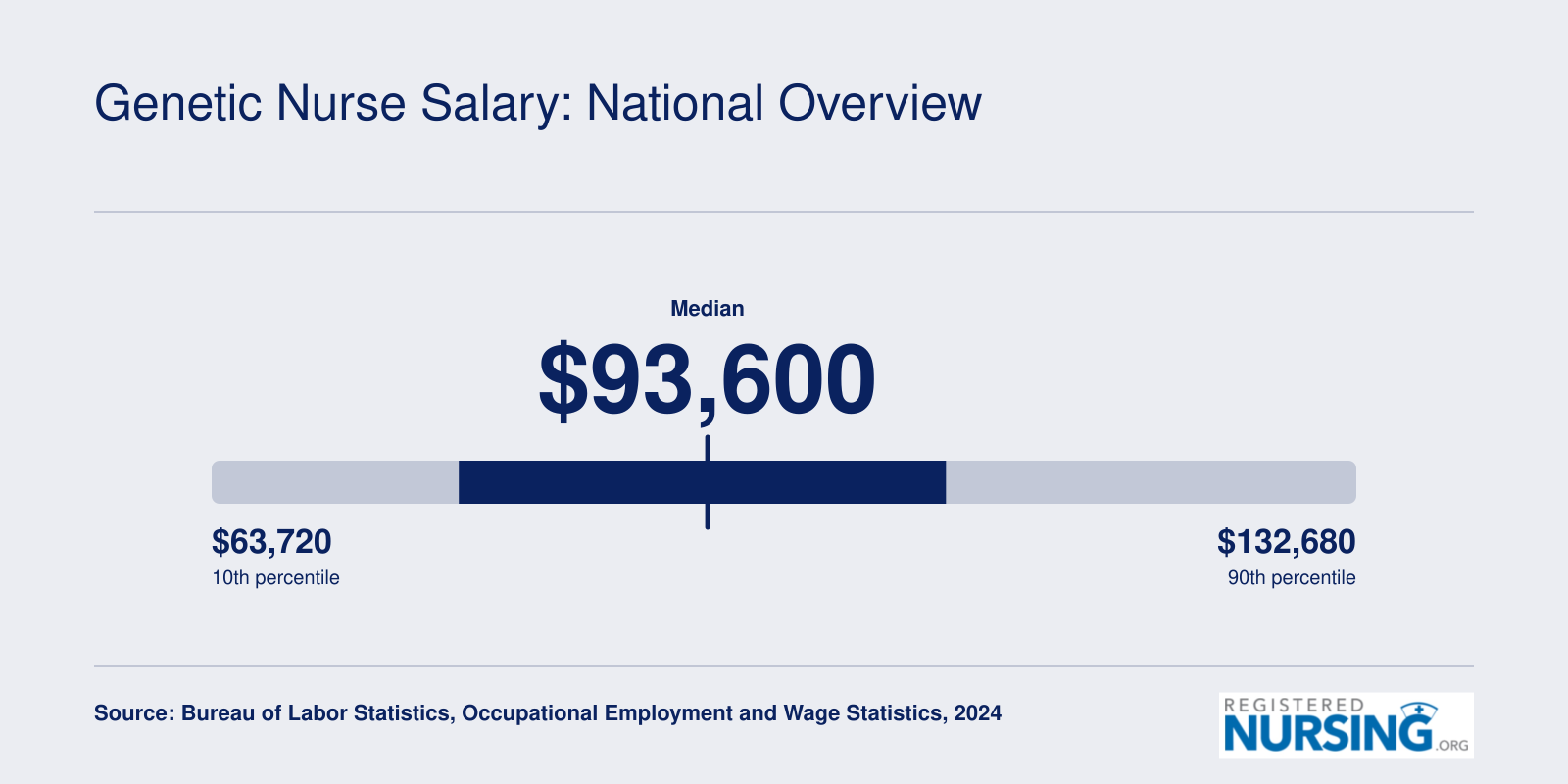
Genetic Nurse Salary: National Overview
Because the Bureau of Labor Statistics does not track genetic nurses as a separate occupation, the registered nurse salary distribution serves as the most reliable baseline. Nurses who earn a genetics specialization credential and work in specialized clinical or research settings can expect compensation toward the upper end of this range, particularly with advanced certification such as the AGN-BC or APNG.
Job Outlook and Career Advancement
The core question for nurses considering this specialty is whether the investment in genetics training translates into meaningful career growth, not just professional satisfaction. The data and trajectory of precision medicine both point clearly in one direction.
Overall RN Demand Sets a Strong Foundation
According to the Bureau of Labor Statistics Occupational Outlook Handbook, registered nursing is projected to grow 5 percent from 2024 to 2034, a rate the BLS categorizes as faster than average.1 That growth represents roughly 166,100 new positions nationally, with approximately 189,100 job openings expected each year across the decade when accounting for replacement needs.1 With more than 3.3 million RNs currently employed across the country, nursing remains one of the largest healthcare occupations, and that scale creates substantial room for subspecialty growth.
Genetics is considered a high-growth subspecialty within that broader field. The rapid adoption of precision medicine protocols, expanded pharmacogenomics programs at health systems, and the mainstreaming of genomic testing in oncology nursing and cardiology are all driving demand for nurses who can interpret and apply genetic data at the bedside and in consultation.
Pathways to Advanced Practice
For nurses who want to move beyond the staff RN role, the genetic nurse practitioner pathway offers both clinical depth and a meaningful salary premium. The route runs through an MSN or DNP, followed by APRN licensure in the appropriate specialty track. Understanding why a DNP degree is becoming essential helps contextualize why more genetic nurses are pursuing doctoral-level preparation. Nurses who combine advanced practice licensure with formal genomics training can command salaries that reflect both their prescriptive authority and their specialized knowledge, generally well above RN-level compensation. Exact figures vary by region, employer, and clinical focus, but the premium is consistent across published surveys.
Emerging and Evolving Roles
The specialty is generating new role categories that did not exist a decade ago:
- Pharmacogenomics nurse: Embedded in pharmacy or oncology teams, guiding medication selection based on a patient's genetic profile.
- Research genomics coordinator: Managing clinical trials focused on gene therapies, rare disease studies, or population-level genomics research.
- Direct-to-consumer genetics consultant: Helping patients interpret results from consumer testing companies within a clinical or telehealth context.
Leadership and Policy Opportunities
Experienced genetic nurses are increasingly stepping into roles that shape how genomics is delivered at an institutional and systems level. Genetics program director positions exist at academic medical centers and large health systems. Clinical genomics educators train the next generation of staff nurses in applying genomic concepts to everyday care. Some nurses move into policy roles focused on genomic data privacy, equitable access to genetic testing, and the ethical use of predictive data in treatment decisions. These leadership tracks reward both clinical credibility and the ability to communicate complex science across disciplines.
Common Questions About Genetic Nursing Careers
Genetic nursing is a growing specialty that blends clinical care with genomic science. Below are answers to some of the most frequently asked questions about entering and advancing in this field.
- How much does a genetic nurse make compared to a regular RN?
- Genetic nurses generally earn salaries comparable to or slightly above the national average for registered nurses, depending on their credentials and work setting. Nurses who hold advanced practice roles or specialized certifications in genetics often command higher pay. Exact figures vary by state, employer, and experience level, but the specialized knowledge required can translate into a competitive salary advantage.
- Do you need a BSN to become a genetics nurse?
- While an ADN qualifies you for RN licensure, most employers and certification bodies in genetic nursing prefer or require a BSN at minimum. The BSN curriculum provides deeper exposure to research methods, genomics coursework, and evidence-based practice, all of which are foundational to this specialty. If you hold an ADN, an RN to BSN bridge program is a practical path forward.
- What is the difference between a genetic nurse and a genetic counselor?
- Genetic counselors typically hold a master's degree in genetic counseling and focus on risk assessment, test interpretation, and psychosocial support. Genetic nurses are licensed RNs who provide direct clinical care, coordinate treatment plans, administer medications, and educate patients about hereditary conditions. Both roles collaborate closely, but nurses carry a broader clinical scope that includes hands-on patient care.
- Can you become a genetic nurse practitioner?
- Yes. Nurses can pursue an MSN or DNP with a focus on genetics or genomics to practice as an Advanced Practice Registered Nurse in genetics. The Advanced Practice Nurse in Genetics (APNG) credential recognizes this level of expertise. Genetic nurse practitioners can diagnose conditions, order and interpret genetic tests, prescribe treatments, and lead multidisciplinary care teams. Preparing for graduate admissions is an important step, and reviewing nurse practitioner school interview questions can help you get ready for that process.
- How long does it take to become a certified genetic nurse?
- The timeline depends on your starting point. Earning a BSN typically takes four years, followed by gaining clinical experience in a genetics setting, which most certification bodies require. From the start of nursing school to certification (such as the GCN or AGN-BC), expect roughly five to seven years. Nurses who already hold an RN license can shorten this timeline significantly.
- Are genetic nursing jobs available in telehealth?
- Yes, telehealth is an expanding avenue for genetic nurses. Many genetics clinics and healthcare systems now offer remote genetic counseling, patient education, and follow-up consultations via telehealth platforms. Nurses interested in this format may also want to explore remote nursing jobs more broadly, as the field of virtual care continues to grow. This is especially valuable for patients in rural or underserved areas who lack access to in-person genetics specialists, and nurses considering this path can learn more about what it means to work as a telephone triage and telehealth nurse. Telehealth roles may involve pre-test counseling, results disclosure, and care coordination conducted virtually.
Explore More
- Ambulatory Care Nurse
- Burn Unit Nurse
- Cardiac Nurse
- Cath Lab Nurse
- Charge Nurse
- Chief Nursing Officer (CNO)
- Correctional Nurse
- CVOR Nurse
- Dermatology Nurse
- Developmental Disability Nurse
- Director of Nursing
- Domestic Violence Nurse
- Emergency Room Nurse
- ENT Nurse
- ET Nurse
- Fertility Nurse
- Flight/Transport Nurse
- Forensic Nurse Salary & Career Guide
- Geriatric Nurse
- Health Policy Nurse
- Healthcare Administrator
- Healthcare Manager
- Home Health Nurse
- Hospice Nurse
- Camp Nurse
- GI Nurse
- Holistic Nurse
- Labor and Delivery Nurse
- Nurse Writer
- Psychiatric Nurse
- School Nurse
- Telemetry Nurse
- Travel Nurse
- Aesthetic Nurse
- Infusion/IV Nurse
- Oncology Nurse
- ICU Nurse
- Infection Control Nurse
- Legal Nurse Consultant
- LTC Nurse
- Managed Care Nurse
- Medical-Surgical Nurse
- Military (Combat) Nurse
- Missionary Nurse
- Mother Baby Nurse
- Nephrology Nurse
- Neuroscience Nurse
- NICU Nurse
- Nurse Administrator
- Nurse Attorney
- Nurse Care Coordinator
- Nurse Case Manager
- Nurse Entrepreneur
- Nurse Executive
- Nurse Health Coach
- Nurse Manager
- Obstetric (OB) Nurse
- Occupational Health Nurse
- Operating Room Nurse
- Ophthalmic Nurse
- Organ Procurement Coordinator
- Orthopedic Nurse
- Pain Management Nurse
- Palliative Care Nurse
- Parish Nurse
- Patient Advocate Nurse
- Pediatric Endocrinology Nurse
- Perianesthesia (PACU) Nurse
- Perinatal Nurse
- Plastic Surgery Nurse
- Public/Community Health Nurse
- Radiology Nurse
- Rehabilitation Nurse
- Research Nurse
- Respiratory Nurse
- Rheumatology Nurse
- Substance Abuse Nurse
- Telephone Triage Nurse
- Transcultural Nursing
- Transplant Nurse
- Trauma Nurse
- Wound Care Nurse (WOCN)